Analytical skills Normal Reading Comprehension Worksheets for Ages 4-5
5 filtered results
-
From - To
Enhance your child's analytical skills with our engaging Normal Reading Comprehension Worksheets, specifically designed for ages 4-5. These worksheets promote critical thinking and help young learners understand and interpret stories through fun illustrations and relatable scenarios. Each activity encourages kids to answer questions, make predictions, and draw conclusions based on the text, fostering their ability to analyze information effectively. Our user-friendly format makes it easy for parents and educators to guide children in developing essential reading comprehension skills. With a mix of challenging and enjoyable exercises, these worksheets are perfect for building a strong foundation in literacy. Explore the joy of reading today!
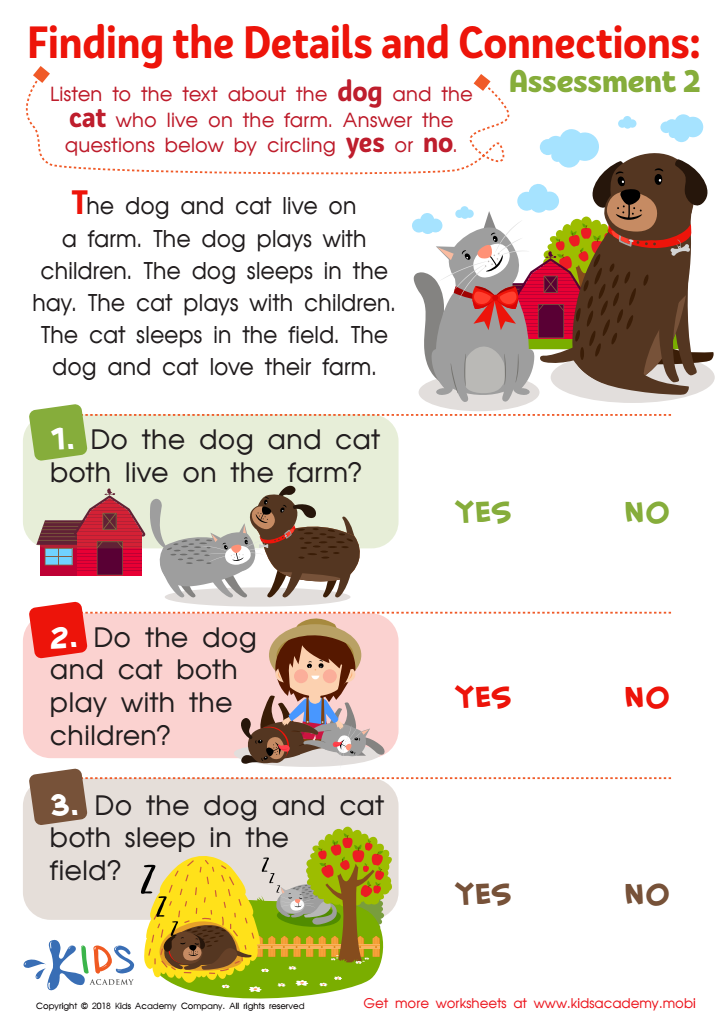
Finding the Details and Connections: Assessment 2 Worksheet
 Assign to My Students
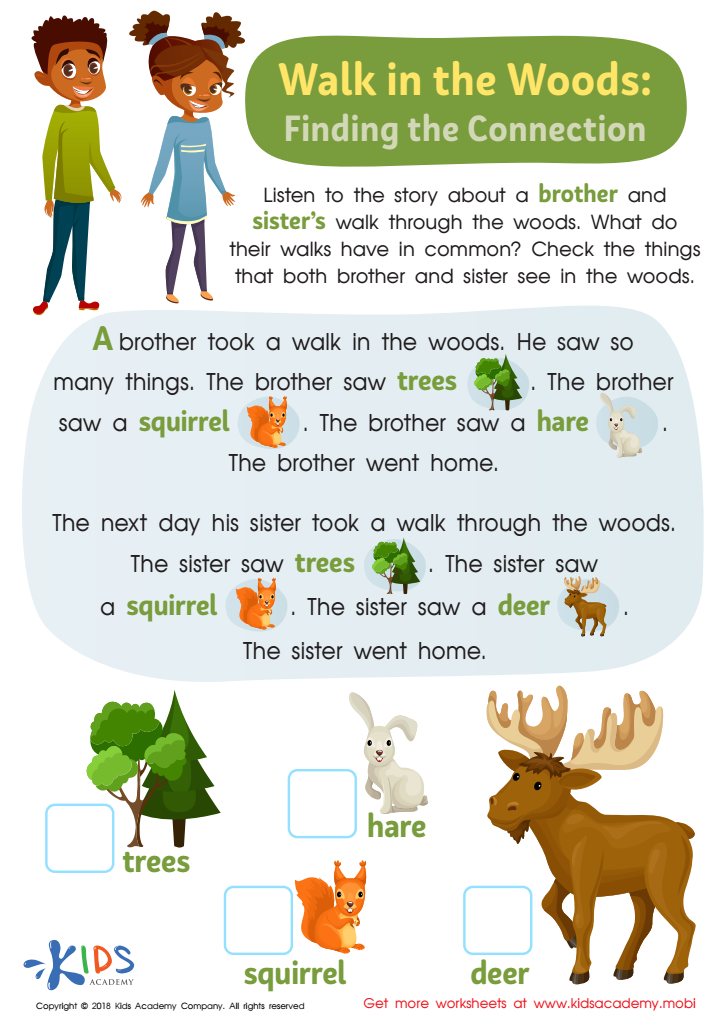
Walk In the Woods: Finding Connections Worksheet
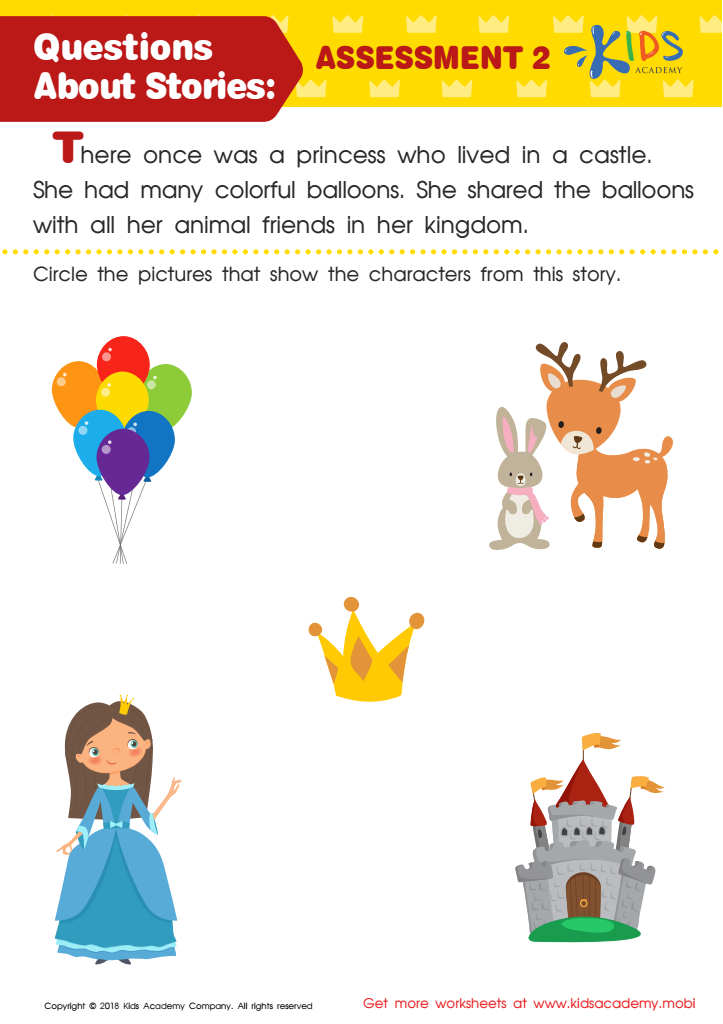
Questions About Stories: Assessment 2 Worksheet
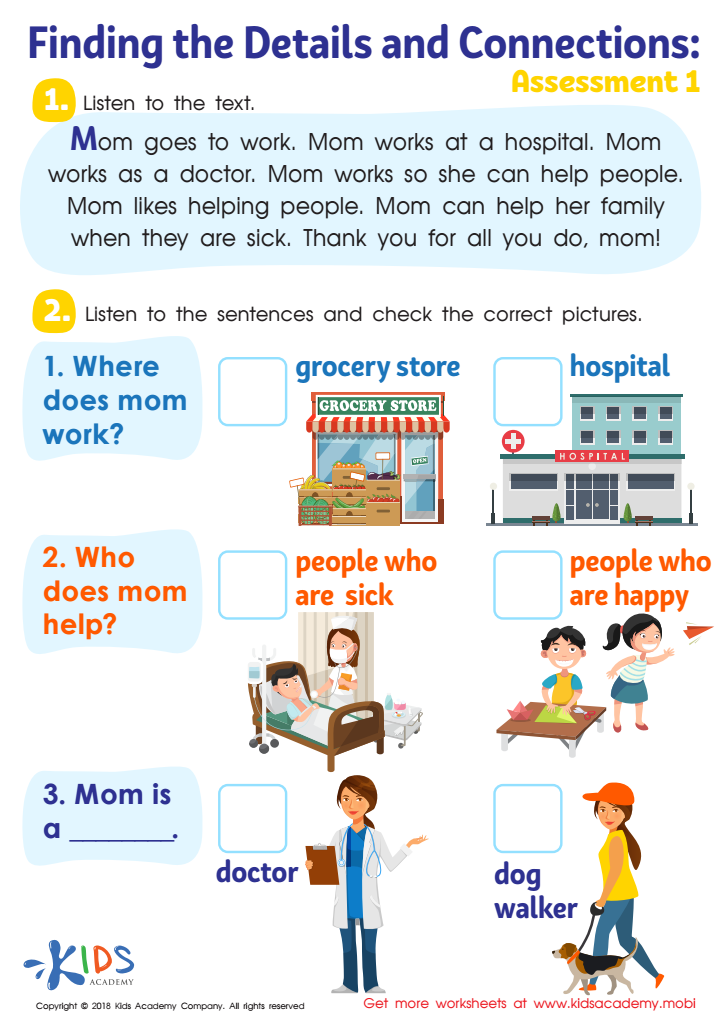
Finding the Details and Connections: Assessment 1 Worksheet
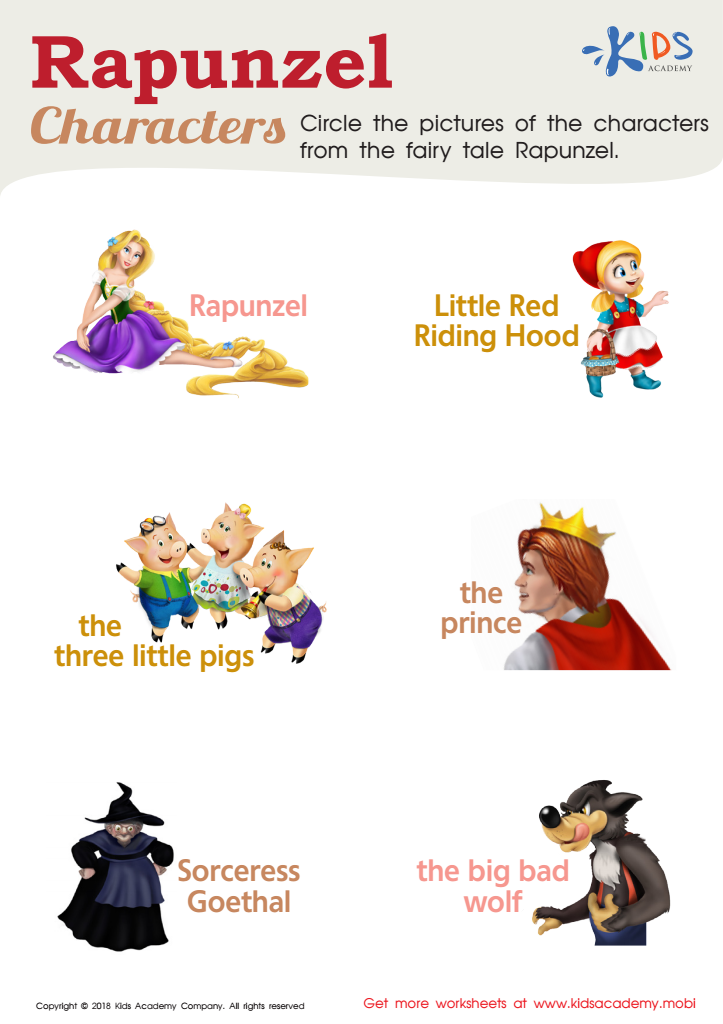
Rapunzel Characters Worksheet




.jpg)



Parents and teachers should prioritize the development of analytical skills and reading comprehension for children aged 4-5 because these capabilities form the foundation of lifelong learning. At this stage, children begin to make sense of the world around them, and strong analytical skills empower them to question, compare, and evaluate information. Engaging children in activities that promote critical thinking—such as reading together, asking open-ended questions, and encouraging discussions—helps them develop the ability to interpret and derive meaning from texts.
Normal reading comprehension is vital because it directly influences a child’s academic success. The ability to understand stories, follow narratives, and make inferences prepares children for more complex learning. As they progress through school, these skills will enhance their ability to grasp subject matter across various disciplines, from literature to science.
Moreover, fostering these skills encourages curiosity and a love for learning, motivating children to explore and discover more about their environment. In an era dominated by technology and information, being equipped with robust analytical and comprehension skills is essential for children to navigate and contribute positively to their communities. Ultimately, supporting their cognitive development in these areas helps ensure a brighter and more knowledgeable future for young learners.








