Story comprehension Normal Reading Comprehension Worksheets for Ages 4-5
3 filtered results
-
From - To
Discover our engaging Story Comprehension Worksheets designed specifically for children aged 4-5. These normal reading comprehension activities focus on enhancing early literacy skills through fun and relatable stories. Each worksheet promotes critical thinking, allowing young learners to explore character motivations, plot sequences, and basic story elements. With colorful illustrations and age-appropriate text, these worksheets make learning enjoyable while fostering a love for reading. Perfect for use at home or in a classroom setting, our resources aim to develop confidence and comprehension abilities, setting the foundation for a lifelong learning journey. Start your child's reading adventure today with our thoughtfully crafted materials!
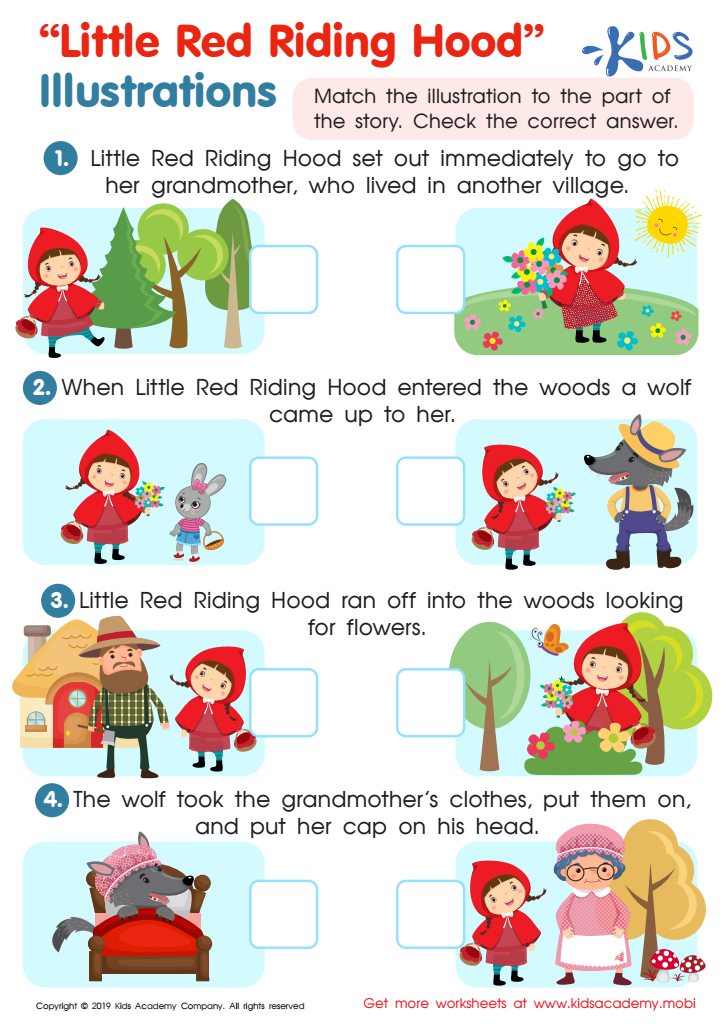
Little Red Riding Hood: Illustrations Worksheet
Red Riding Hood Coloring Page
 Assign to My Students
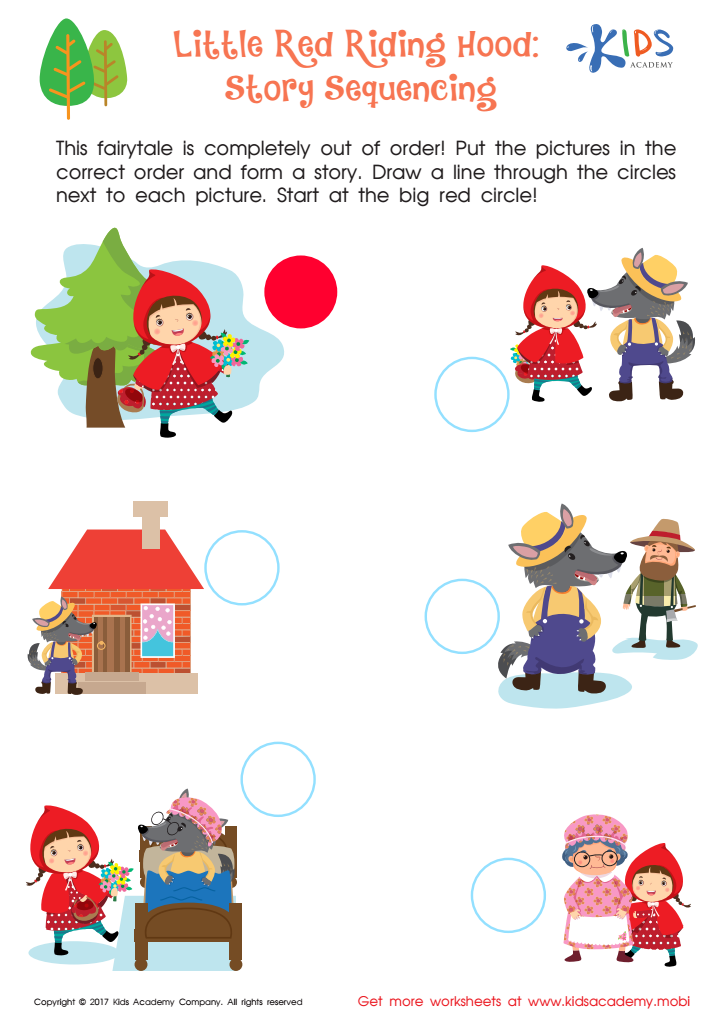
Story Sequencing Printable






.jpg)

Story comprehension is a crucial aspect of early childhood education, particularly for children aged 4-5, as it lays the foundation for future literacy skills. At this age, children are not only learning to read but also learning to understand and interpret stories. This skill nurtures their imagination, critical thinking, and social-emotional development. Being able to follow the plot, recognize characters, and grasp main ideas helps children make connections to the world around them.
Parents and teachers play a vital role in fostering story comprehension. Engaging children in storytelling—whether through reading books, discussing storylines, or asking questions about characters' feelings—promotes active listening and encourages verbal expression. When adults show enthusiasm for the stories, it sparks children’s interest, making them more eager to learn and explore literature further.
Moreover, strong comprehension skills contribute to academic success in later years. Kids who develop these skills early are more likely to excel in reading and writing tasks, ultimately setting the stage for lifelong learning. By prioritizing story comprehension, parents and teachers can empower young learners with the tools they need to navigate their educational journeys and understand diverse perspectives through literature. Investing in these foundational skills today can have lasting benefits for children’s futures.








