Visual interpretation Normal Reading Fiction Worksheets for Ages 4-5
3 filtered results
-
From - To
Enhance your child's reading skills with our Visual Interpretation Normal Reading Fiction Worksheets, designed specifically for ages 4-5. These engaging worksheets promote comprehension through fun images and stories, encouraging young learners to analyze visuals and enhance their understanding of narrative elements. Each activity fosters critical thinking as children connect pictures to text, develop storytelling abilities, and improve vocabulary. Ideal for at-home learning or classroom use, our worksheets are intuitive and align with early literacy standards, making reading an enjoyable adventure. Help your child build a strong foundation in reading through interactive and meaningful visual experiences today!
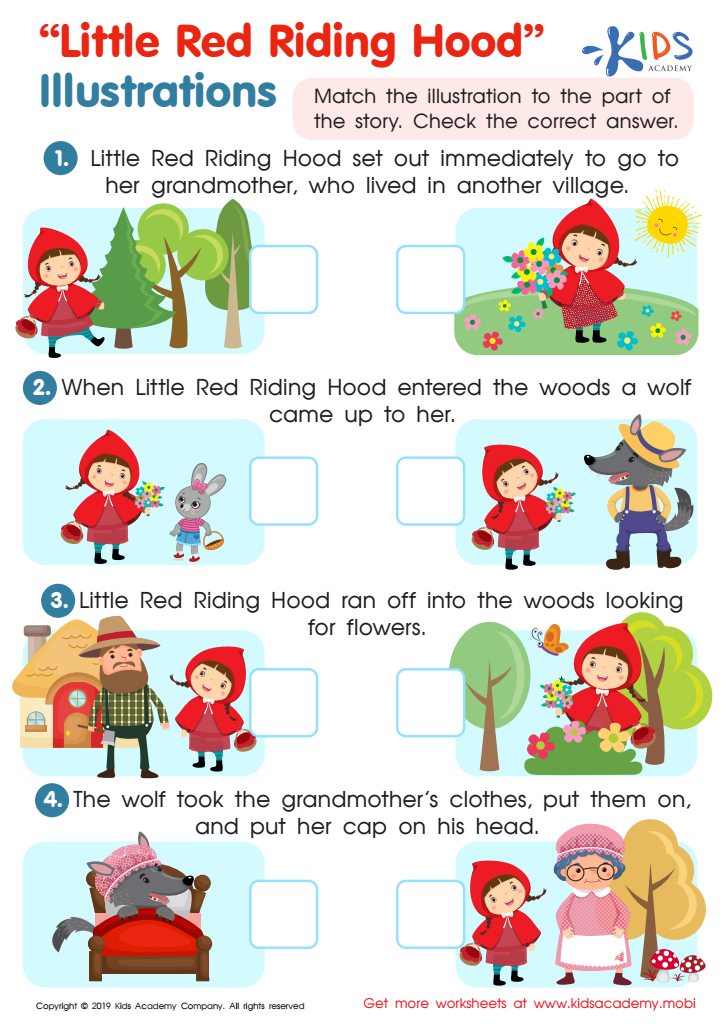
Little Red Riding Hood: Illustrations Worksheet
 Assign to My Students
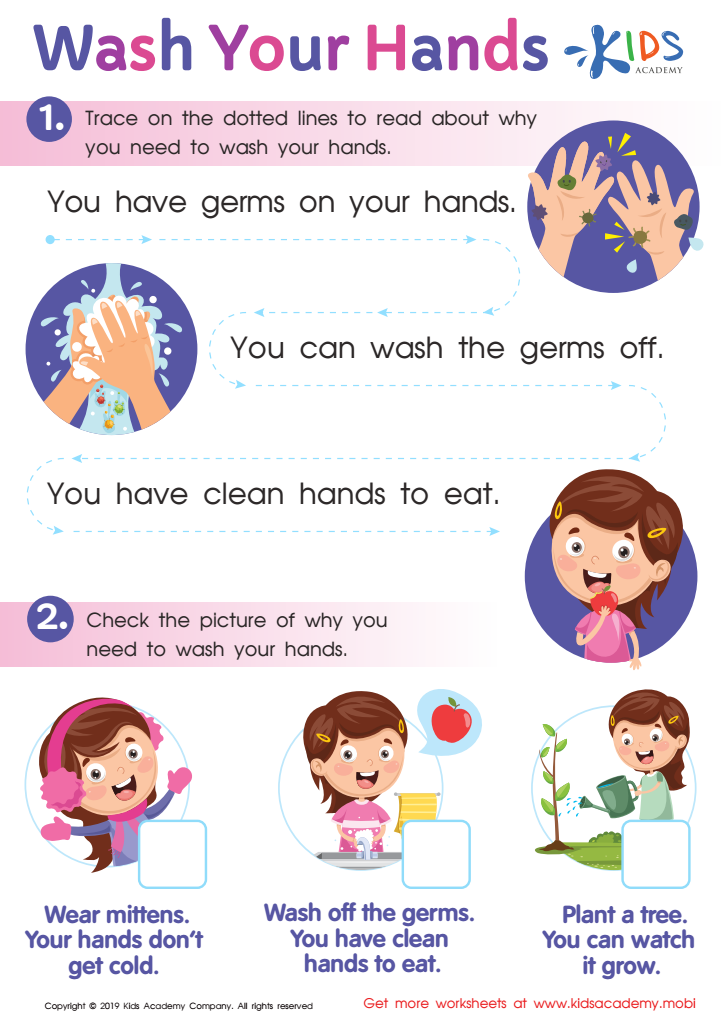
Wash Your Hands Worksheet
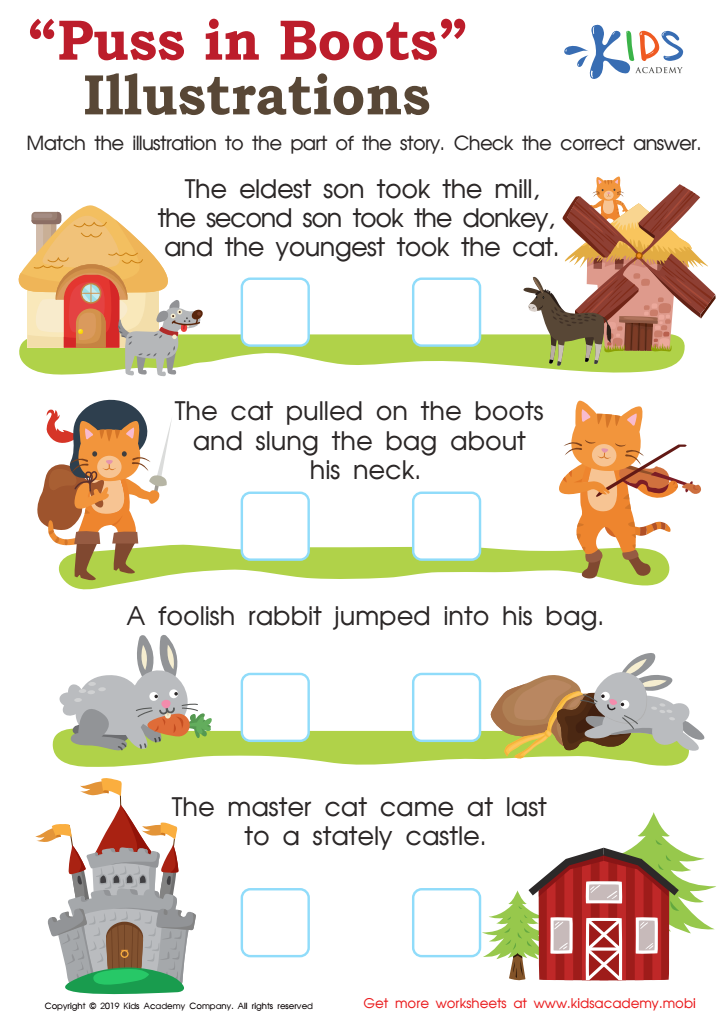
Puss in Boots Illustrations Worksheet





.jpg)

Parents and teachers should prioritize visual interpretation in normal reading fiction for ages 4-5 because it lays a crucial foundation for a child's literacy and cognitive development. Engaging with illustrations enhances comprehension, helping young readers make connections between text and imagery. It fosters their ability to interpret and infer meaning, building critical thinking skills necessary for future learning.
At this developmental stage, children are naturally curious and keen observers. Utilizing visual elements in stories stimulates their imagination, making reading an enjoyable and enriching experience. As they navigate pictures, children develop vocabulary and language skills, learning to express themselves more effectively. Furthermore, visual interpretation encourages discussion and interaction between parents, teachers, and children, promoting a collaborative learning environment.
Moreover, enhancing visual literacy supports emotional development as children learn to identify and understand characters' emotions through their expressions and actions. This fosters empathy and social awareness, essential aspects of their growth. By incorporating visual interpretation in reading practices, we help young learners become confident, enthusiastic readers, setting the stage for lifelong learning and literacy. Ultimately, prioritizing visuals in reading not only enriches the text but also nurtures a holistic approach to education, benefiting children's overall development.







