Reading comprehension Normal Rhyming Words Worksheets for Ages 4-5
5 filtered results
-
From - To
Introduce your young learner to the world of reading with our "Reading Comprehension Normal Rhyming Words Worksheets for Ages 4-5." These engaging worksheets are designed to enhance early reading skills by focusing on rhyming words, a fundamental aspect of reading development. Through fun exercises and colorful illustrations, children will improve their vocabulary, phonics, and reading comprehension. Perfectly tailored for pre-K and kindergarten students, our worksheets make learning enjoyable and effective. Help your child recognize word patterns and build a strong reading foundation with our expertly crafted resources, available now at Kids Academy.
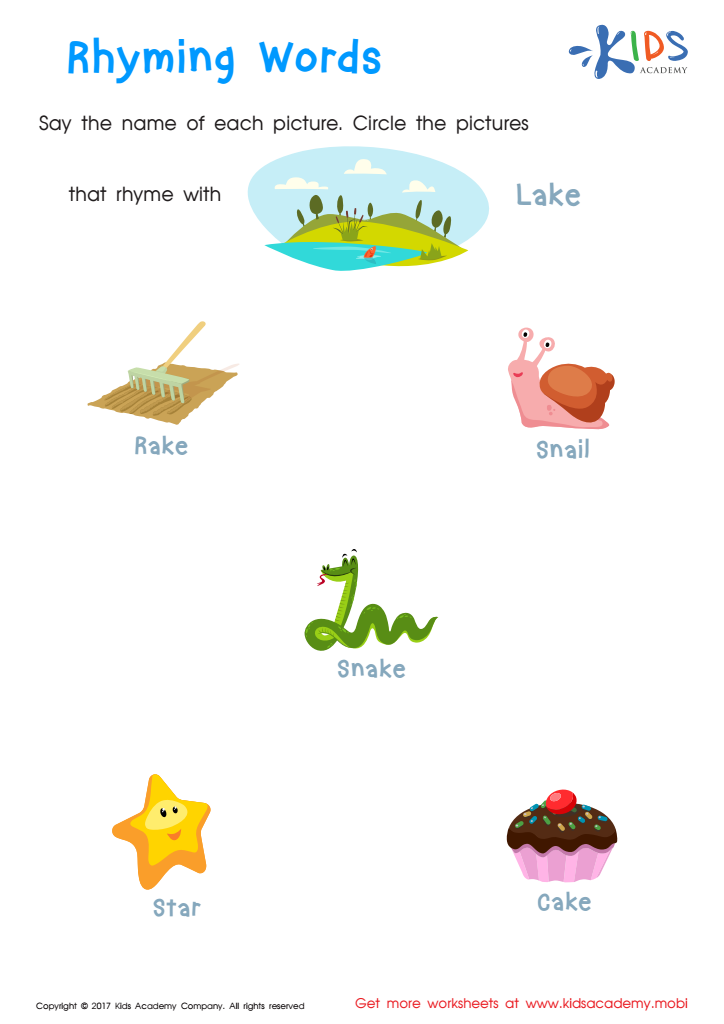
Rhyming Words Rhyming Worksheet
 Assign to My Students
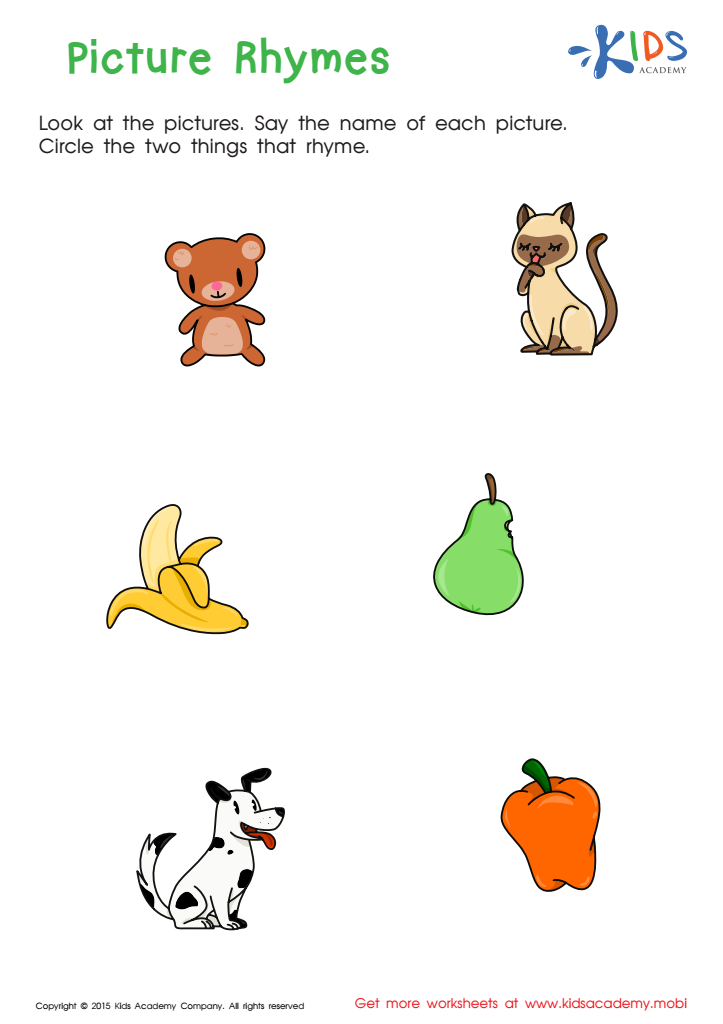
First Words: Picture Rhymes Worksheet
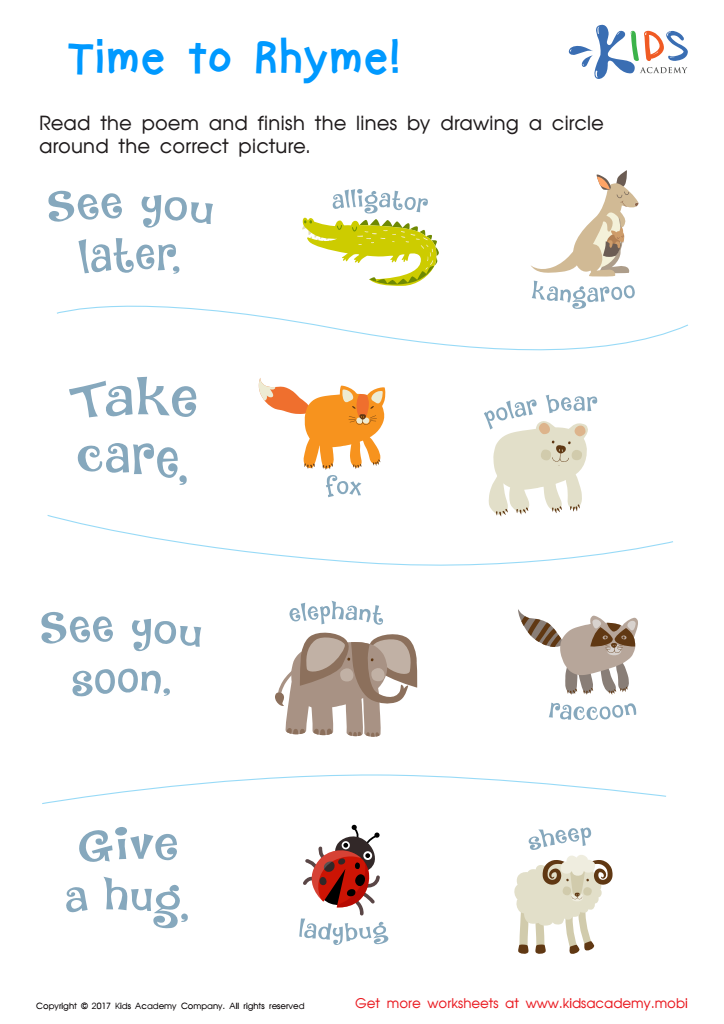
Time to Rhyme Rhyming Worksheet
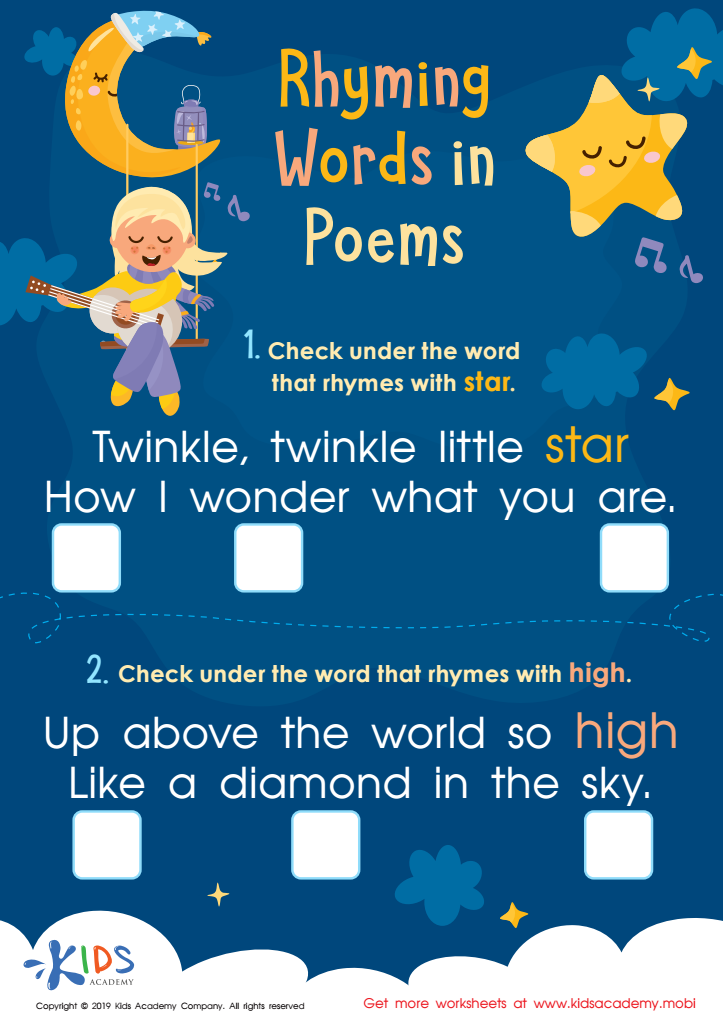
Rhyming Words in Poems Worksheet
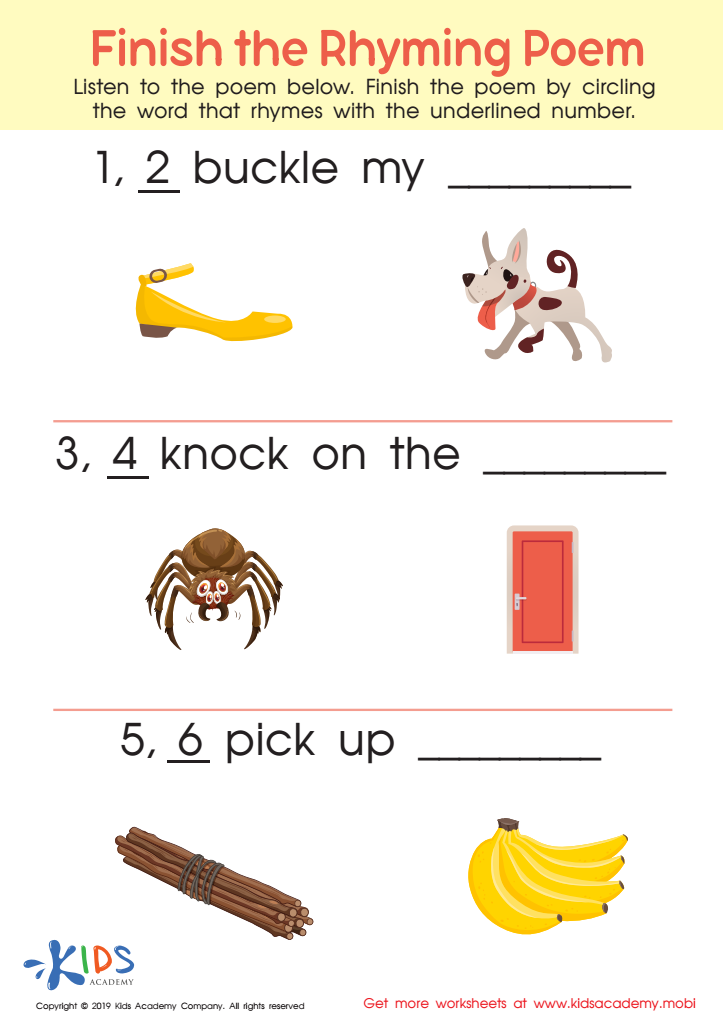
Finish Rhyming Poem Worksheet






.jpg)

Reading comprehension and exposure to rhyming words at ages 4-5 serve as a critical foundation in a child’s educational journey. First, young children are in their prime developmental stage, where language acquisition is rapid. Introducing rhyming words captivates their interest and makes learning to read an enjoyable and engaging activity.
Rhyming helps children recognize patterns in words, which is an essential skill in understanding phonetic principles. By spotting similarities in sounds, children learn how words are constructed, aiding both reading and spelling proficiency. This skill also enhances their ability to decode new words, promoting a smoother transition into independent reading.
Moreover, reading comprehension is developed when children make connections between the words they hear and the stories they begin to understand. Engaging with rhyming books or poems typically includes repetitive and predictable language structures that bolster memory and predictive reading abilities.
Additionally, fostering early reading habits that emphasize rhyming words enriches vocabulary and strengthens cognitive skills, such as critical thinking and problem-solving. Children gain confidence as they grasp meaning, context, and storyline in what they read or hear.
Therefore, parents and teachers play a pivotal role in nurturing reading comprehension through rhyming words, setting the stage for a lifelong love of reading and learning.








