Rhyming skills development Normal Rhyming Words Worksheets for Ages 4-5
3 filtered results
-
From - To
Enhance your child's rhyming skills with our engaging Normal Rhyming Words Worksheets for ages 4-5! Designed to make learning fun, these worksheets encourage early literacy by introducing young learners to rhyming words through visually appealing activities. Children will explore sound patterns and word associations in an entertaining way, fostering their linguistic development and creativity. Our thoughtfully crafted materials support classroom learning and at-home practice, providing parents and teachers with a valuable resource to boost phonological awareness. Perfect for pre-schoolers looking to master the art of rhyming, these worksheets lay the foundation for successful reading skills and language comprehension. Start their journey today!
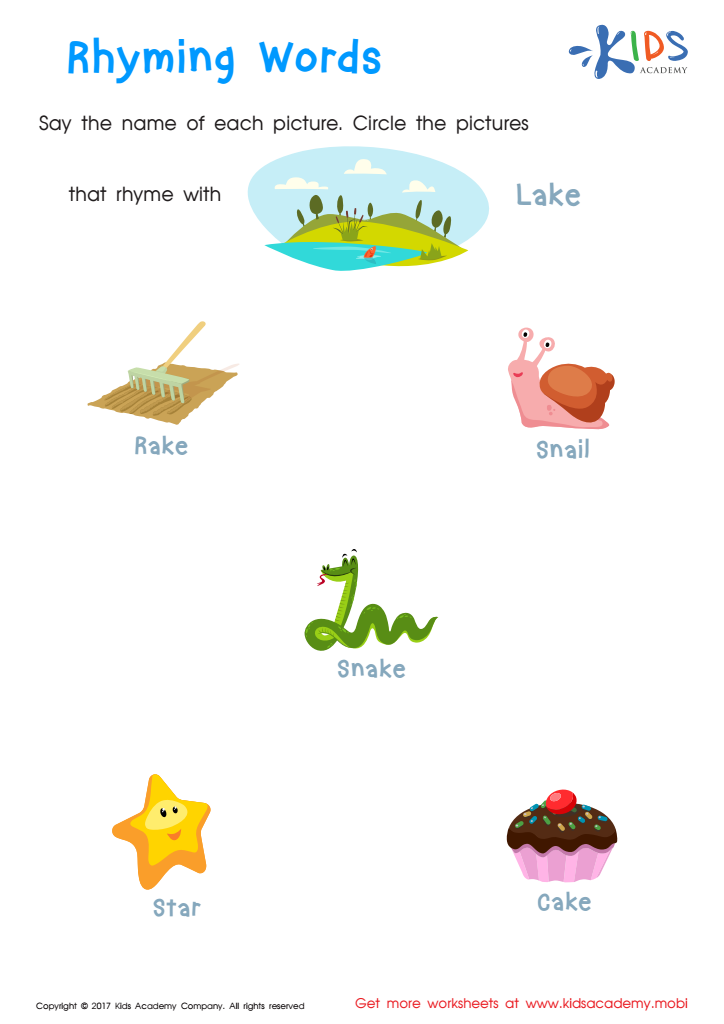
Rhyming Words Rhyming Worksheet
 Assign to My Students
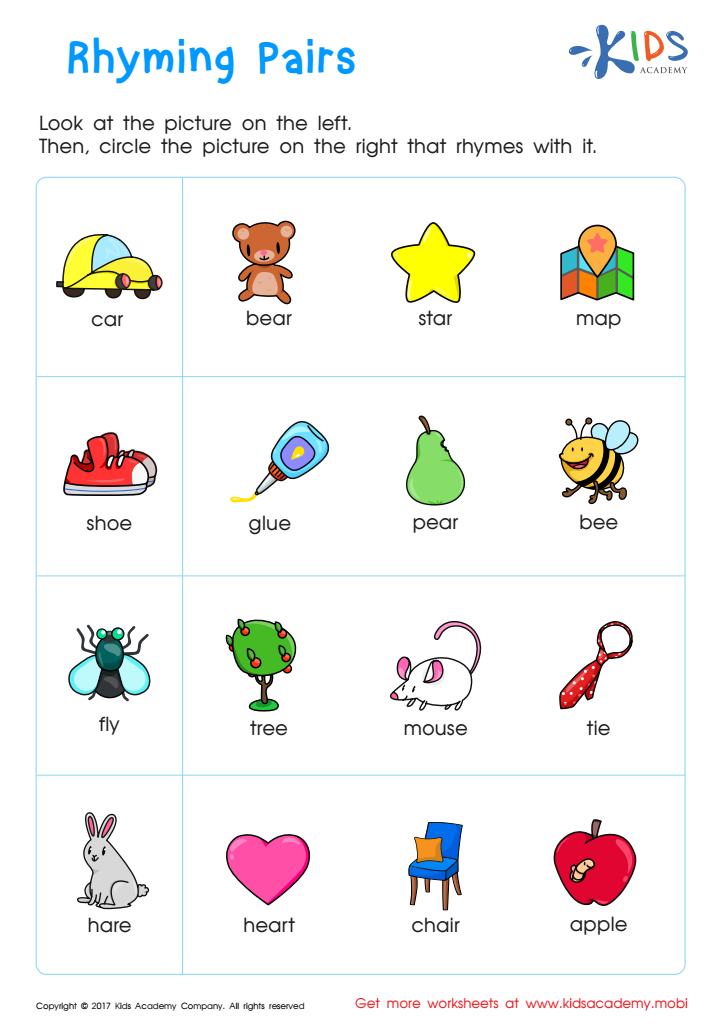
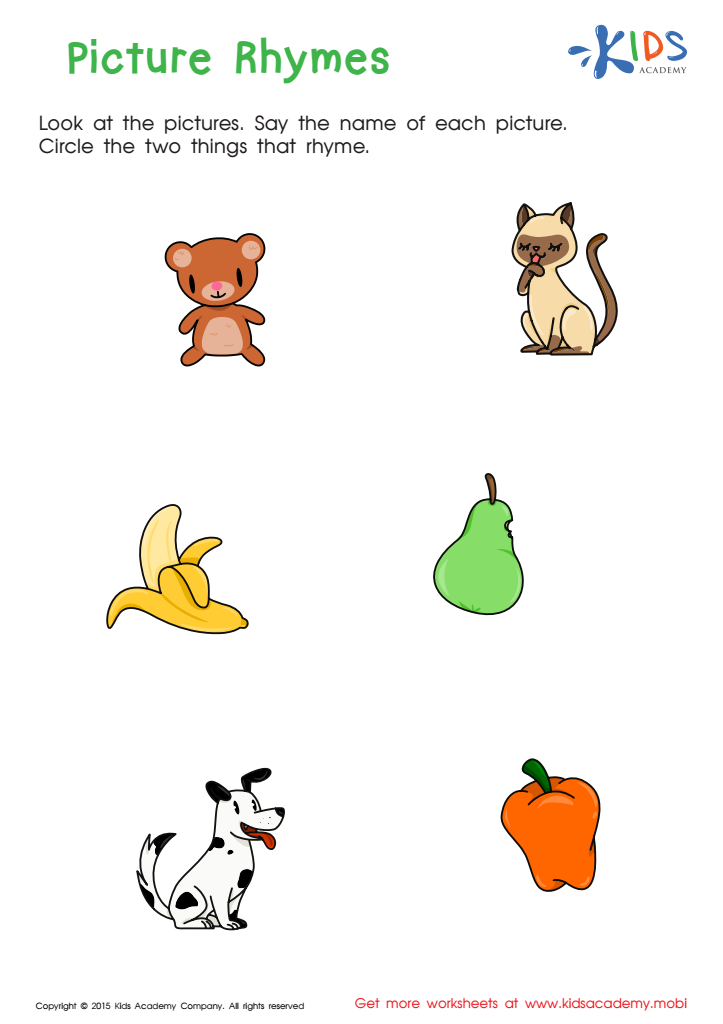
First Words: Picture Rhymes Worksheet








Rhyming skills development is essential for children aged 4-5, and here's why parents and teachers should prioritize it. First and foremost, rhyming enhances phonemic awareness, which is the foundational skill for reading. By recognizing and producing rhymes, children learn to identify sounds within words, aiding their ability to segment and blend words—a vital step in literacy development.
Furthermore, engaging with rhyming words boosts vocabulary and language skills. Children exposed to poetry or songs that include rhymes often giggle and repeat phrases, fostering their language development through playful learning. This exposure helps them grasp the structure and patterns of language, making reading and writing easier down the line.
Moreover, rhyming activities tap into the creativity and imaginative capacities of young learners. When children create and listen to rhymes, they develop critical thinking and storytelling abilities. Lastly, rhyming can build a sense of community and social interaction during group activities, contributing to emotional and social growth. By prioritizing rhyming skills, parents and teachers provide children with essential tools for their literacy journey while making learning enjoyable and engaging. Thus, investing time in rhyming is a joyful and impactful step toward a child's academic success.








