Enhancing observation skills Normal Science Worksheets for Ages 4-5
5 filtered results
-
From - To
Enhance your child's observation skills with our engaging Normal Science Worksheets designed specifically for ages 4-5. These printable activities encourage young learners to explore the world around them, fostering curiosity and critical thinking. Each worksheet is crafted to develop attention to detail as children identify patterns, compare objects, and draw what they observe. Perfect for preschool classrooms or homeschooling, these worksheets facilitate active learning through hands-on exploration. Encourage your child's scientific thinking and observational abilities while making learning fun and interactive. Download our worksheets today and watch your little ones discover new wonders with every page!
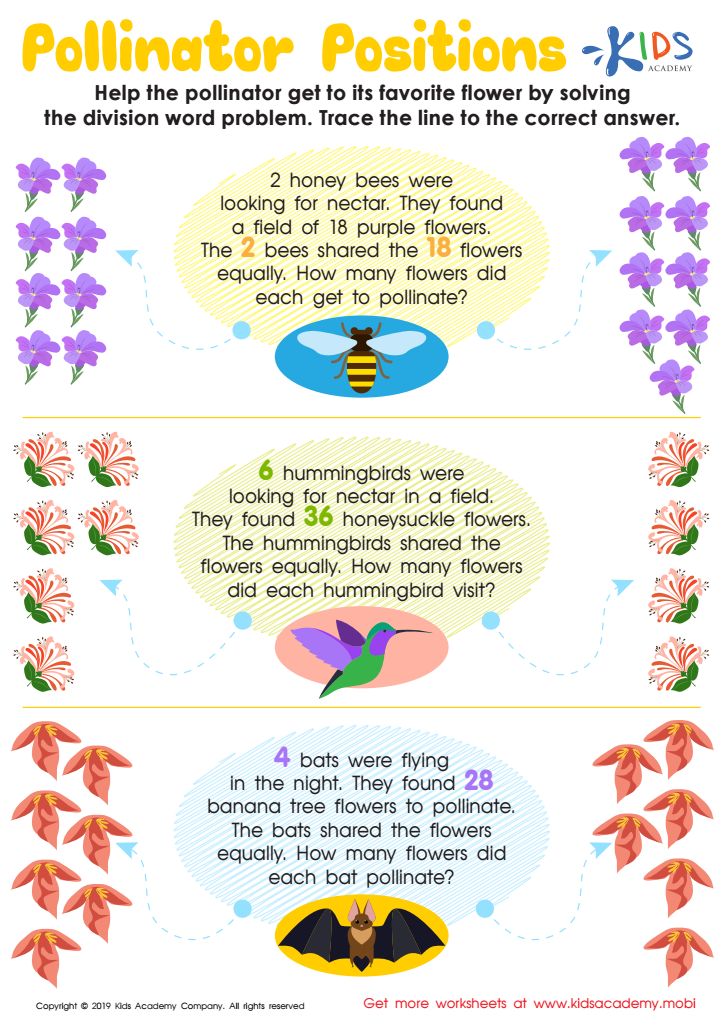
Pollinator Positions Worksheet
 Assign to My Students
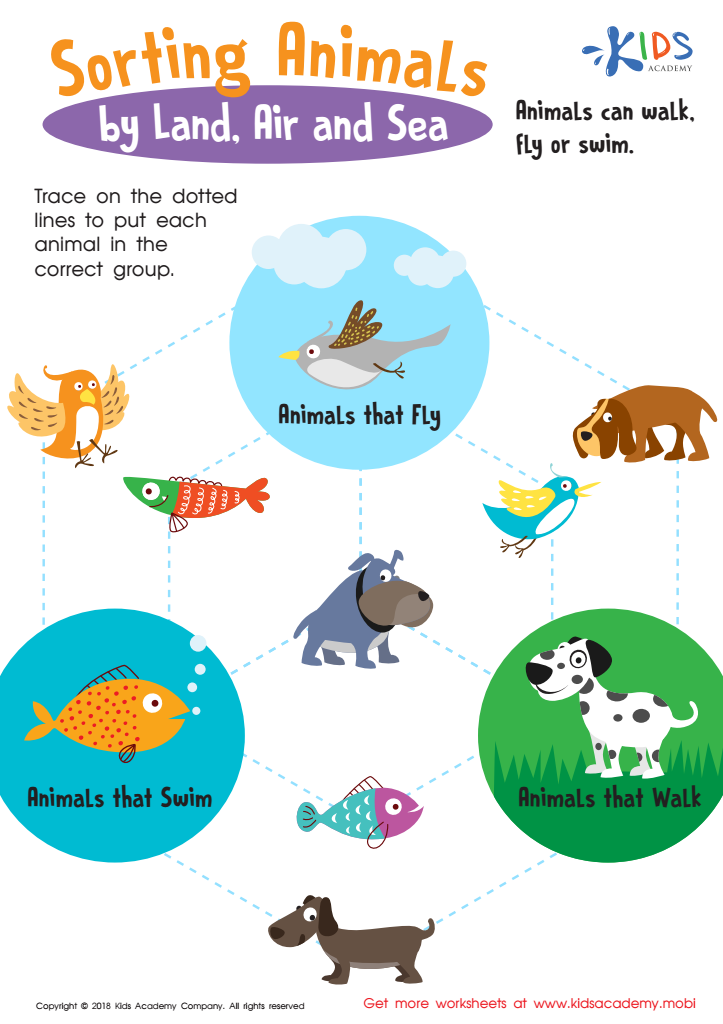
Sorting Animals by Land, Air and Sea Worksheet
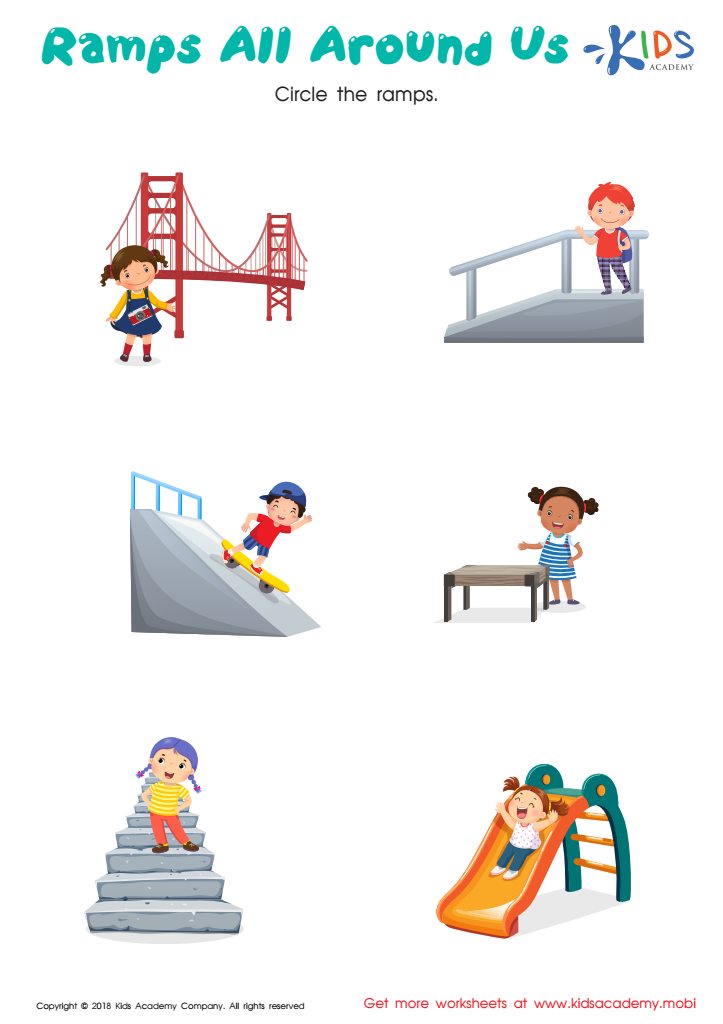
Ramps All Around us Worksheet
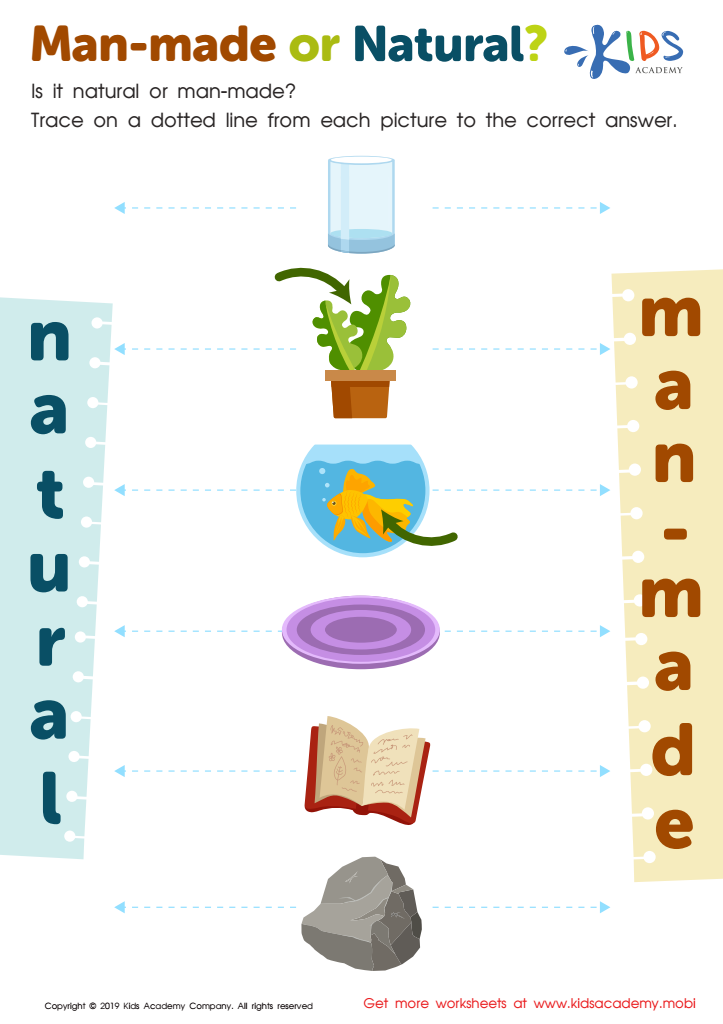
Man-Made or Natural? Worksheet
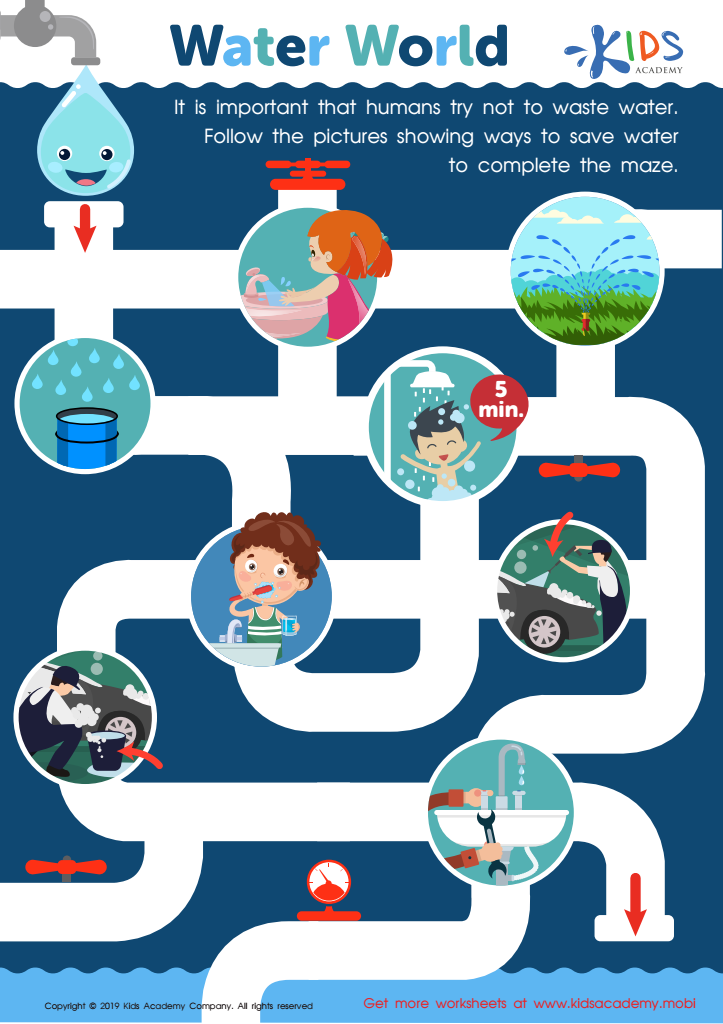
Water World Worksheet





.jpg)

Enhancing observation skills in young children, specifically during the ages of 4-5, is critical for their holistic development and foundational understanding of science. At this stage, children's natural curiosity fosters their learning environment, making it an ideal time for parents and teachers to cultivate their observation skills. Observational skills support critical thinking and problem-solving abilities, as they encourage children to notice details, ask questions, and make connections between different concepts and their surroundings.
Developing these skills lays the groundwork for scientific inquiry. When children learn to observe closely, they begin to investigate phenomena, conducting simple experiments that lead to greater comprehension of scientific principles. This hands-on engagement with their environment fosters a love for learning and a deep curiosity about the world around them.
Moreover, honing observation skills nurtures language development as children learn to articulate their thoughts and findings. This same skill proves valuable across subjects, enabling learners to become attentive listeners and effective communicators. Ultimately, by prioritizing the enhancement of observation skills, parents and teachers empower children with life-long ways of learning, inquiry, and understanding in an increasingly complex world, building not just future scientists, but informed citizens as well.







