Weather identification Normal World Around Us Worksheets for Ages 4-5
3 filtered results
-
From - To
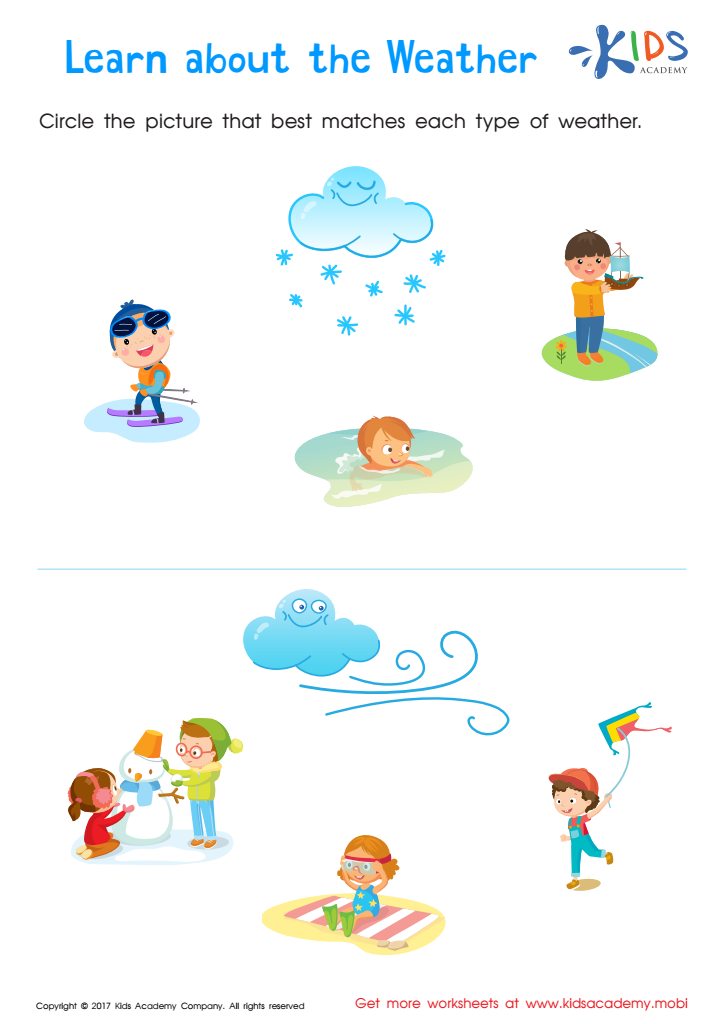
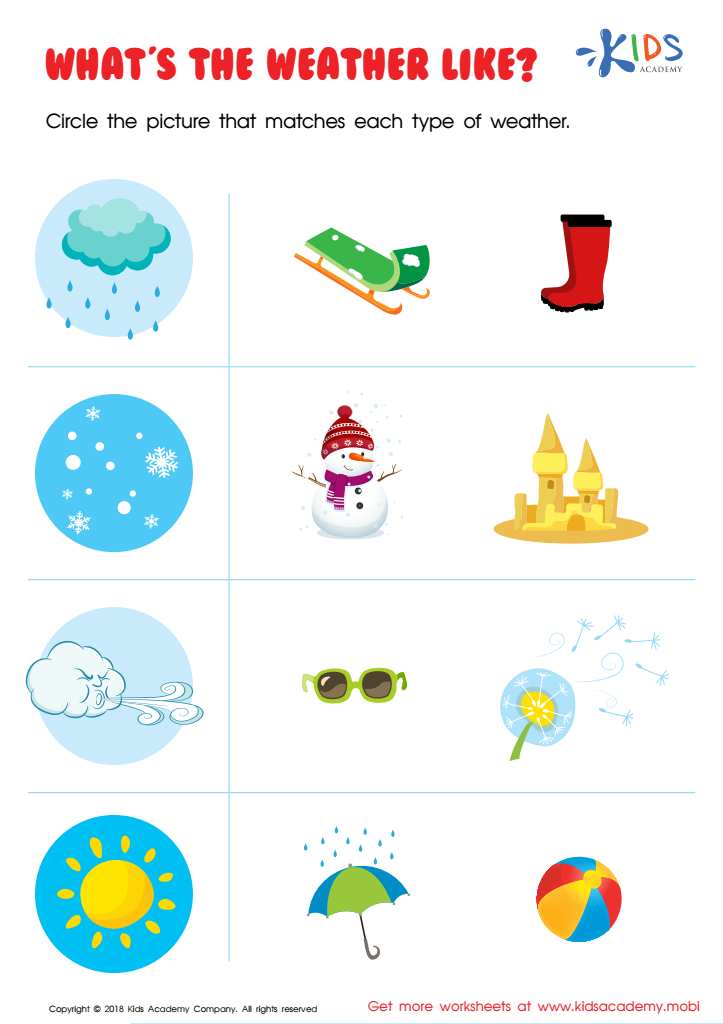
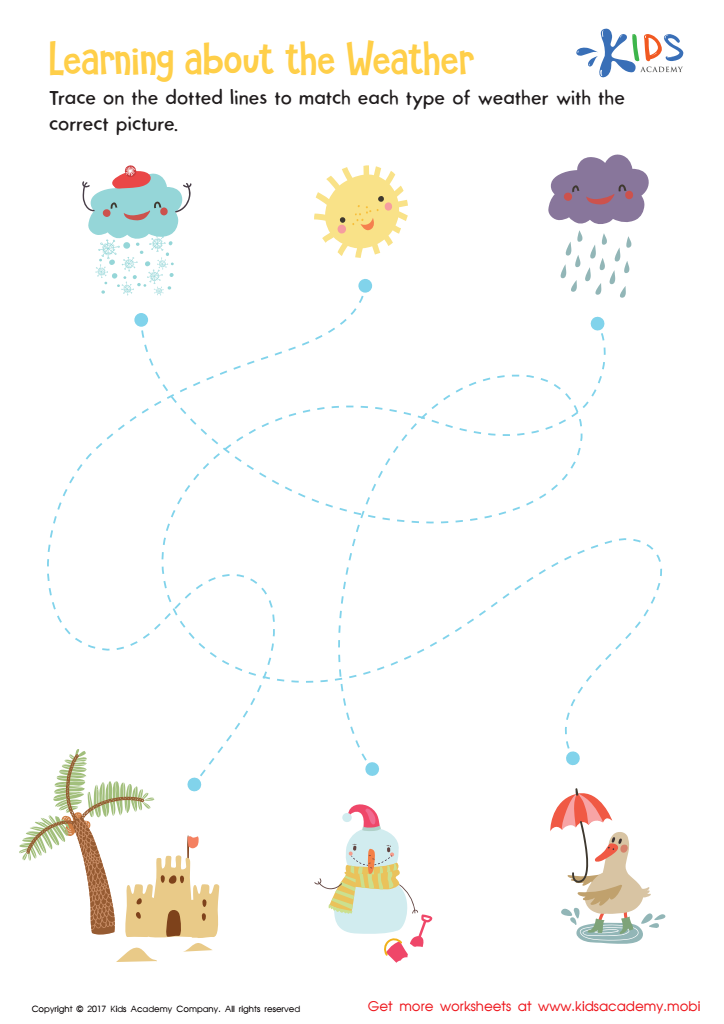
Discover our engaging "Weather Identification" worksheets designed for children aged 4-5! These fun and interactive activities help young learners identify different weather conditions while enhancing their observational skills. Perfect for preschoolers, the worksheets introduce essential vocabulary words related to sunny, rainy, cloudy, and snowy days. Kids will enjoy colorful illustrations and simple prompts that encourage hands-on learning and creativity. Our "Weather Identification" resources are ideal for home or classroom use, fostering a love for nature and boosting cognitive development. Download these worksheets today to help your child explore and understand the fascinating world of weather!
About the Weather Printable
 Assign to My Students
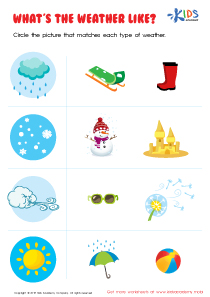
What's the Weather Like? Worksheet




.jpg)



Teaching weather identification to young children aged 4-5 is foundational for their understanding of the world around them. At this age, children are naturally curious and eager to engage with their environment. Learning about weather not only helps them recognize the different conditions such as sunny, rainy, windy, or snowy but also fosters cognitive and language development. By introducing weather concepts, parents and teachers can enhance vocabulary and encourage observation skills.
Understanding weather patterns also promotes safety awareness. Children learn when to dress appropriately, such as wearing a jacket on chilly days or using sunscreen on sunny ones. Additionally, engaging in weather discussions aids in developing critical thinking skills; for example, they can make predictions based on changing weather conditions.
Incorporating weather identification into daily routines encourages children to connect with nature and fosters a sense of wonder. Activities like watching the sky, feeling the wind, or discussing daily forecasts can be both educational and fun. This early exposure helps cultivate a lifelong appreciation for science and nature, paving the way for future learning. In summary, weather identification is essential for holistic development, promoting safety, vocabulary growth, and scientific inquiry in young children.