Verb identification Normal Grammar Worksheets for Ages 4-5
3 filtered results
-
From - To
Introduce your young learners to the world of verbs with our Verb Identification Normal Grammar Worksheets tailored for ages 4-5. Developed by educational experts, these engaging worksheets help preschoolers and kindergartners recognize and understand action words in a fun and interactive way. Each worksheet is designed to build foundational grammar skills through colorful illustrations and simple activities that keep little ones motivated. Ideal for early education, these printable resources support children's language development while fostering a love for learning. Make grammar exciting and accessible for your budding linguists with our specially crafted verb identification worksheets.
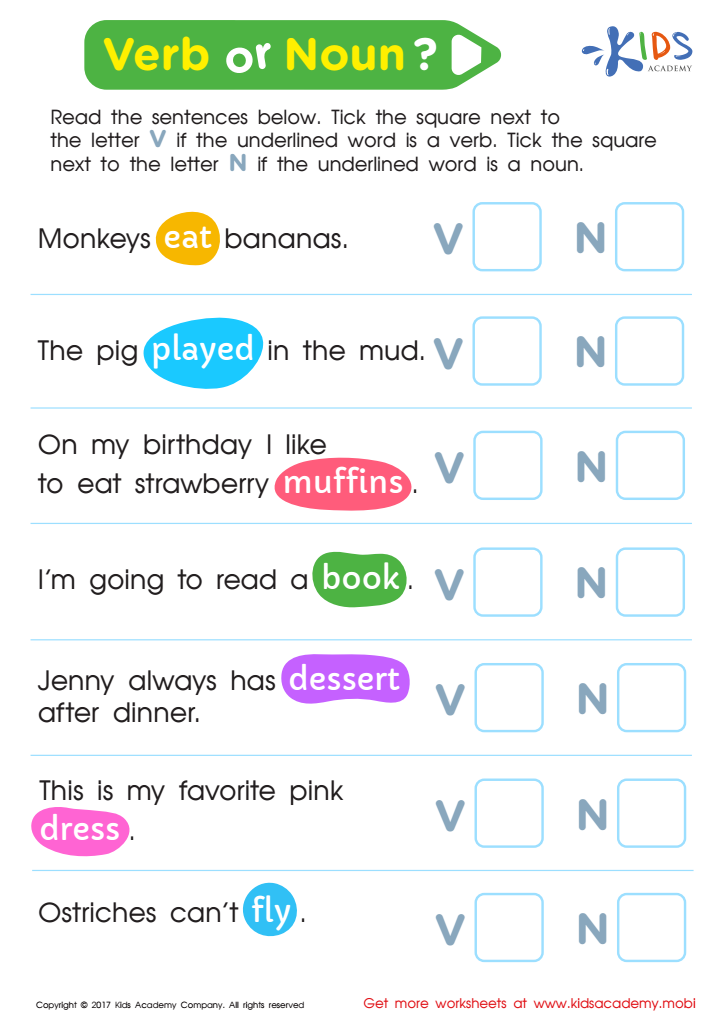
Verb or Noun Worksheet
 Assign to My Students
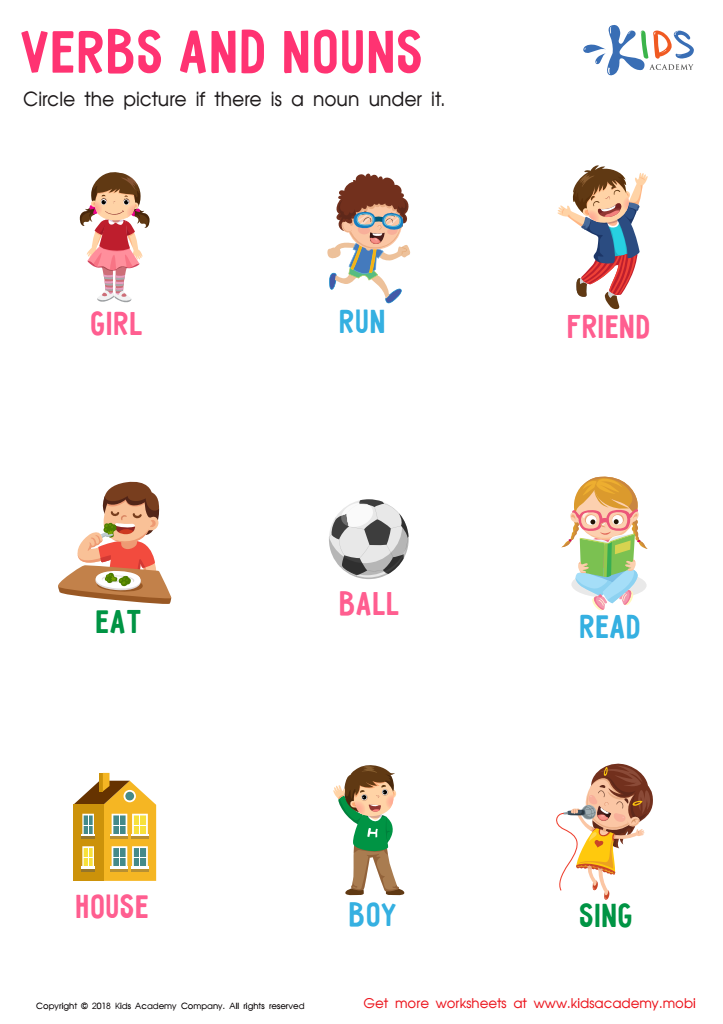
Verbs and Nouns Worksheet
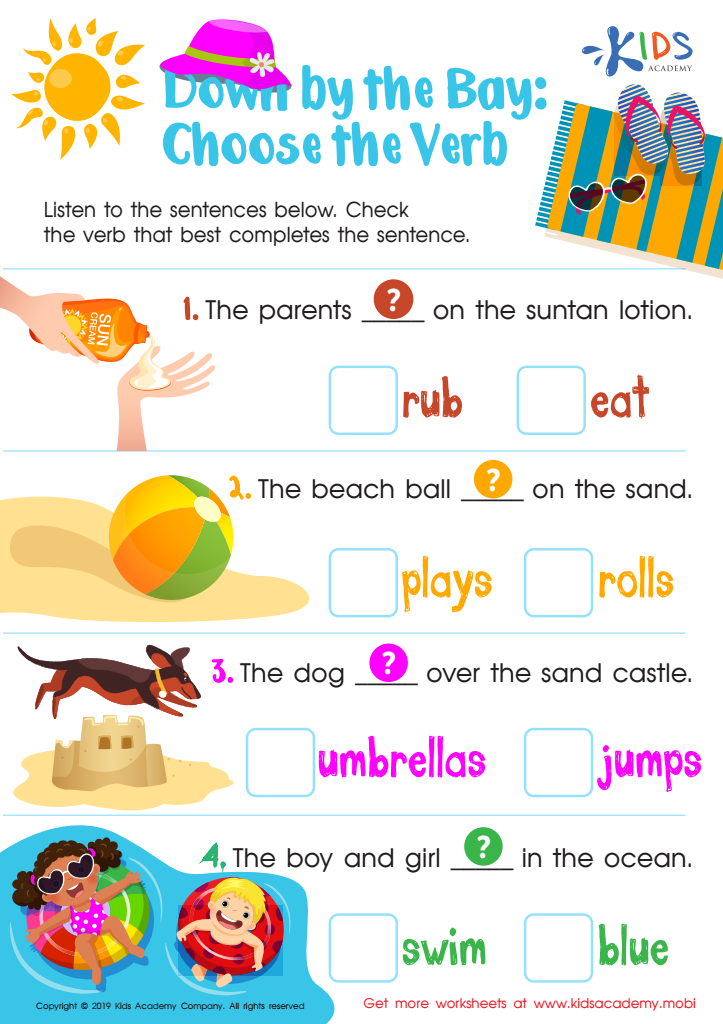
Down by the Bay: Choose the Verb Worksheet


.jpg)





Understanding verbs is foundational to young children's language development and overall communication skills. For ages 4-5, identifying verbs—words that express actions or states—is particularly critical because it enables children to effectively convey what they are doing or feeling.
Parents' and teachers' attention to verb identification helps children articulate their thoughts clearly, facilitating better interaction both in and out of the classroom. When children understand verbs, they can construct simple, meaningful sentences and narrate experiences accurately, enhancing their conversational skills. This strengthens their confidence and participation in peer activities, which is essential for their social development.
Incorporating verb identification into early education also nurtures their cognitive growth. As children play or engage in stories, they learn to recognize patterns in language, differentiating between various parts of speech. This recognition advances their reading comprehension and writing abilities as they progress in school.
Moreover, a strong grasp of verbs and basic grammar lays a foundation for learning additional languages, making future language acquisition easier. Essentially, helping kids recognize and use verbs correctly equips them with essential tools for effective communication and academic success, fostering a lifelong journey in thriving linguistically and socially.