Motor skills development Normal ABC Letters Worksheets for Ages 4-6
3 filtered results
-
From - To
Enhance your child's motor skills with our "Normal ABC Letters Worksheets" designed for ages 4-6. Our engaging worksheets are tailored to help young learners master the alphabet while developing essential fine motor skills. By tracing, coloring, and writing letters, children build hand-eye coordination and strengthen their ability to control writing instruments. Perfect for preschool and kindergarten students, these worksheets offer a fun, interactive way to learn. Build the foundation for successful writing and reading skills with our expertly crafted exercises that combine learning with play. Visit our site for quality resources that support early childhood education.

Letter H Tracing Page










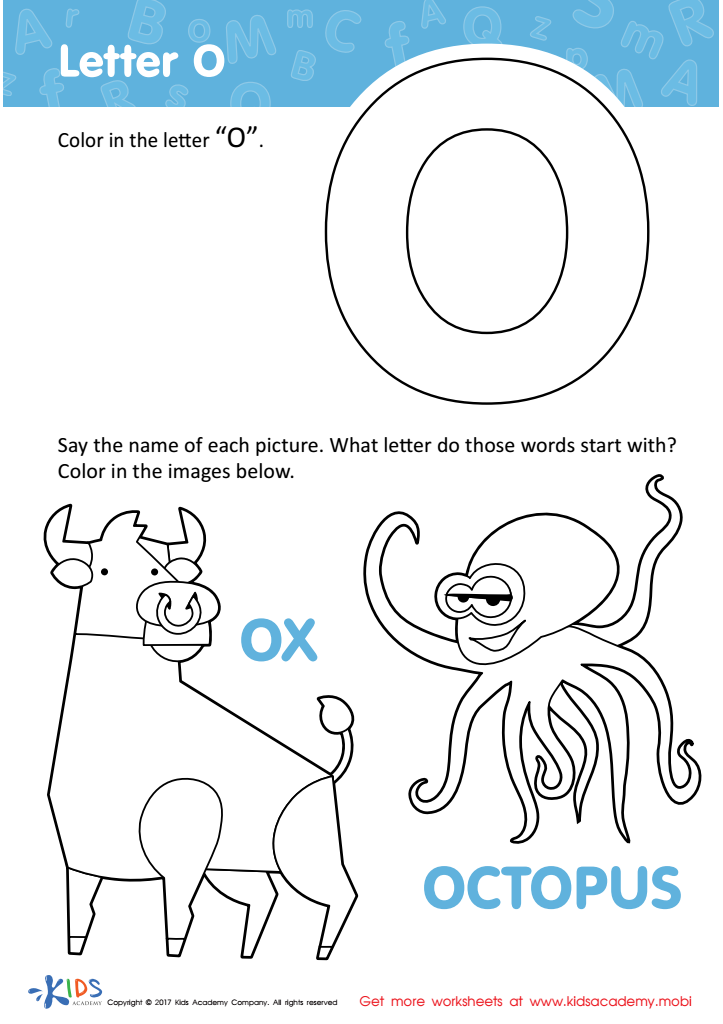
Letter O Coloring Sheet
 Assign to My Students
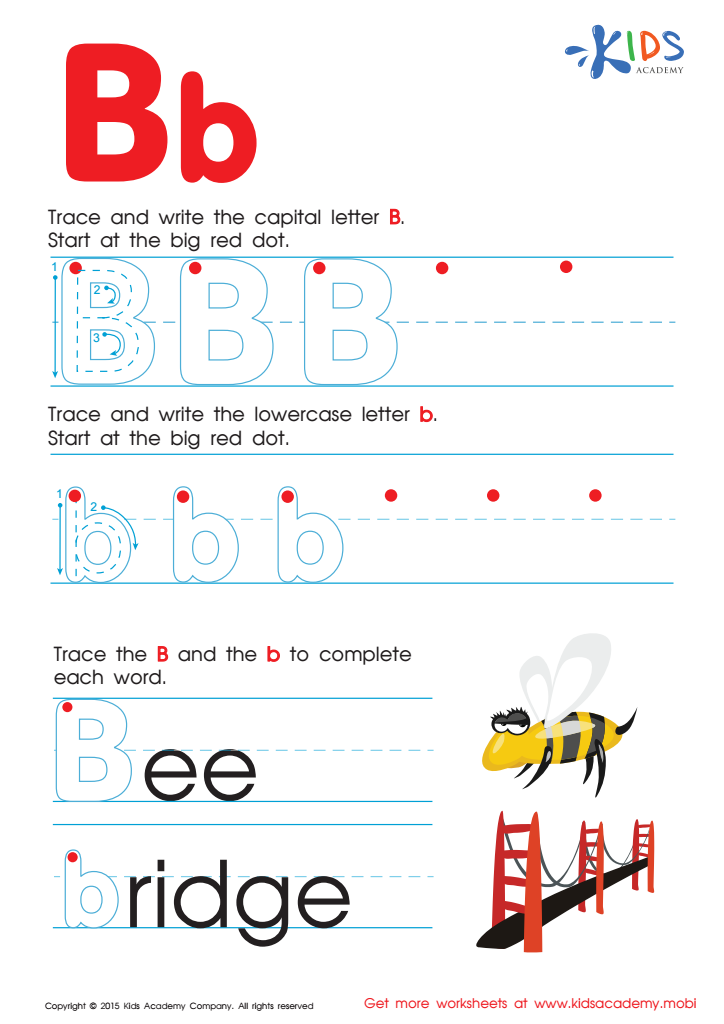
Letter B Tracing Page







Parents and teachers should prioritize motor skills development in children aged 4-6 because these skills are foundational for a child's overall growth and future academic success. Fine motor skills, which involve the coordination of small muscles in movements like writing, turning pages, or buttoning a coat, are crucial for daily activities and early learning. During the ages of 4-6, children learn to hold pencils correctly, write letters of the alphabet, and perform tasks that require precision and control. Developing these skills enhances their ability to engage in classroom activities and supports the acquisition of important literacy skills, such as reading and writing.
Gross motor skills, which involve larger muscle groups used in activities like running, jumping, and climbing, contribute to physical health and social development. These skills allow children to participate actively in play, building confidence and fostering positive interactions with peers. Good motor skills also improve hand-eye coordination and spatial awareness, which are critical for tasks encountered in everyday life and future sports or recreational activities.
In summary, fostering motor skills development in young children equips them with the physical capabilities and confidence necessary to thrive in academic and social environments, laying a strong foundation for lifelong learning and well-being.







