Phonics development Normal Alphabet Worksheets for Ages 4-6
3 filtered results
-
From - To
Unlock your child's reading potential with our Phonics Development Normal Alphabet Worksheets, designed for ages 4-6. These engaging, educational worksheets from Kids Academy focus on teaching fundamental phonics skills and letter recognition, pivotal for early literacy. Through fun activities, children associate sounds with corresponding letters, fostering a solid foundation for reading and writing. Perfect for preschoolers and kindergarteners, the worksheets incorporate vibrant visuals and interactive elements that make learning enjoyable and effective. Empower your child's phonics journey with resources tailor-made to boost their confidence and academic growth. Jumpstart their reading adventure today!
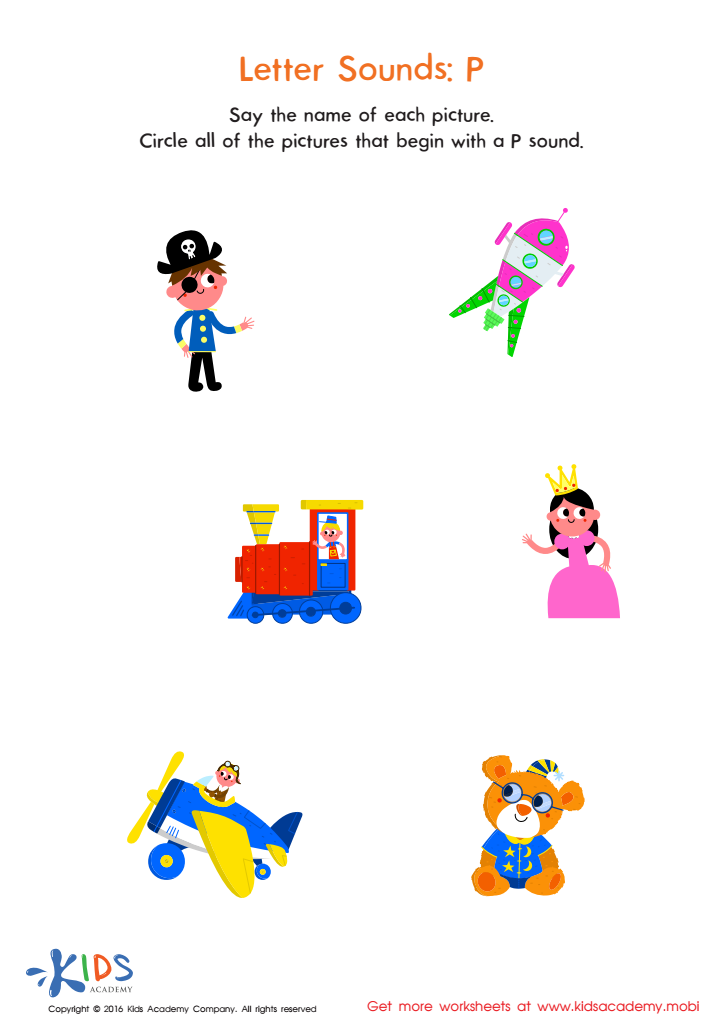
Letter P Sound Worksheet
 Assign to My Students
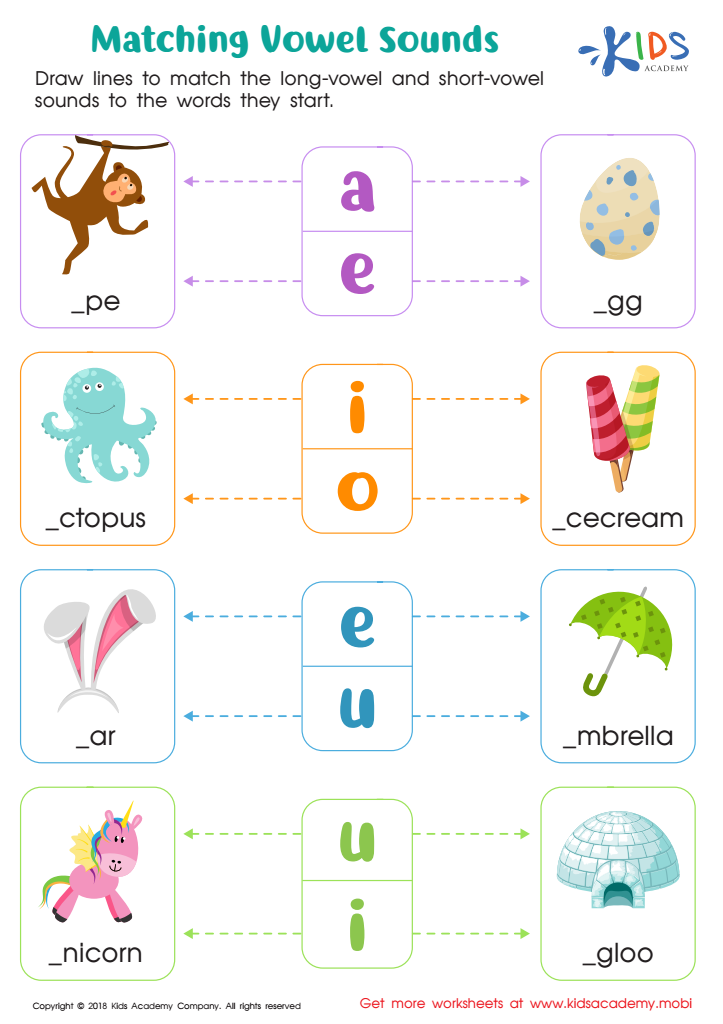
Matching Vowel Sounds Worksheet
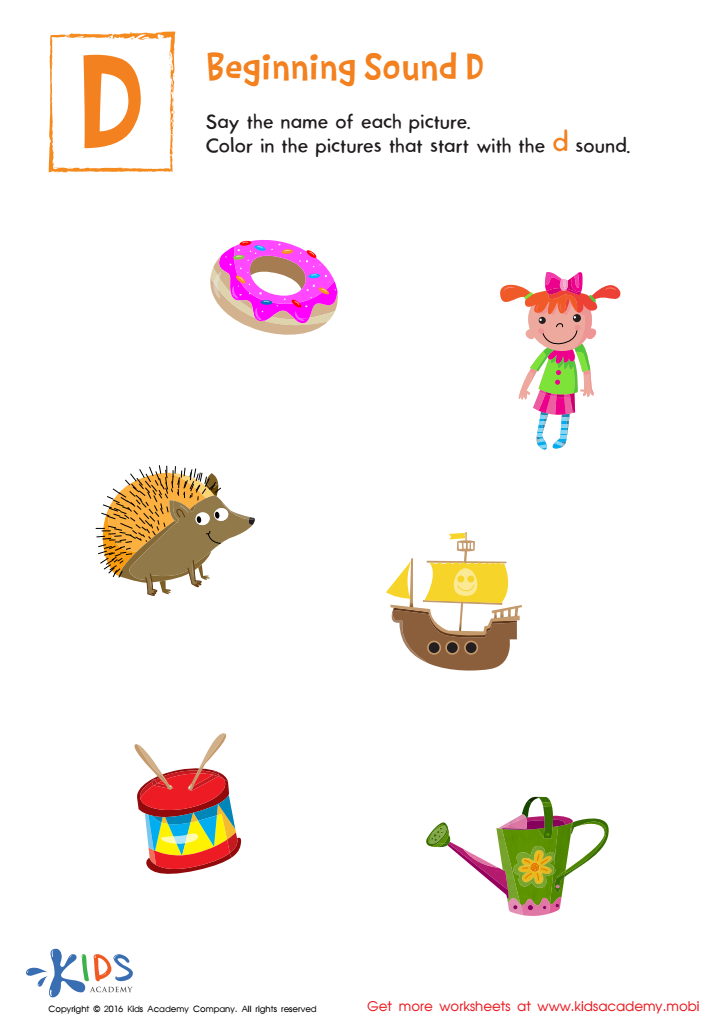
Beginning Sound D Worksheet








Phonics development is fundamental for children aged 4-6 as it lays the groundwork for reading and writing skills. Phonics helps children understand the relationship between letters and sounds, enabling them to decode new words with confidence. By learning the sounds associated with each letter, children can blend these sounds to form words, which is critical for reading fluency and comprehension.
Parents and teachers should prioritize phonics development because it is a proven method to help young learners become independent readers. Children who develop strong phonics skills early on are less likely to struggle with reading difficulties later. This foundational literacy skill enhances their self-esteem and encourages a lifelong love of reading and learning.
Furthermore, phonics instruction tailored to the normal alphabet (A-Z) equips children with the basics needed for learning more complex literacy skills. It promotes phonemic awareness, which is the ability to recognize and manipulate sounds in words. This ability is essential not just for reading but also for spelling, vocabulary development, and language mastery.
Additionally, engaging children in phonics-rich activities at the right age encourages a smoother transition into school academics. It also fosters critical cognitive skills, including memory, attention to detail, and auditory processing, which are beneficial across all areas of learning. Therefore, phonics development is indispensable for giving children a strong start in their educational journey.







