Discover our engaging Phonics Recognition Normal Alphabet Worksheets, designed specifically for children aged 4-6. These worksheets provide a fun and interactive way for young learners to develop essential phonics skills, aiding in reading and language development. Each activity focuses on distinguishing letter sounds, recognizing alphabet shapes, and building early literacy foundations through playful exercises. Perfect for homeschooling or classroom use, our worksheets feature vibrant illustrations that capture children's attention and enhance learning experiences. Help your little ones master their phonics with these expertly crafted resources, ensuring they start their reading journey confidently. Explore our collection today and boost your child's learning!

Check out this FREE Trial Lesson on Alphabet for age 4-6!

Letter Sound Relationship J-K

Favorites
With answer key
Interactive
  • 4-6
  • Phonics recognition
  • Alphabet
  • Normal
Letter K Sounds Worksheet

Letter K Sounds Worksheet

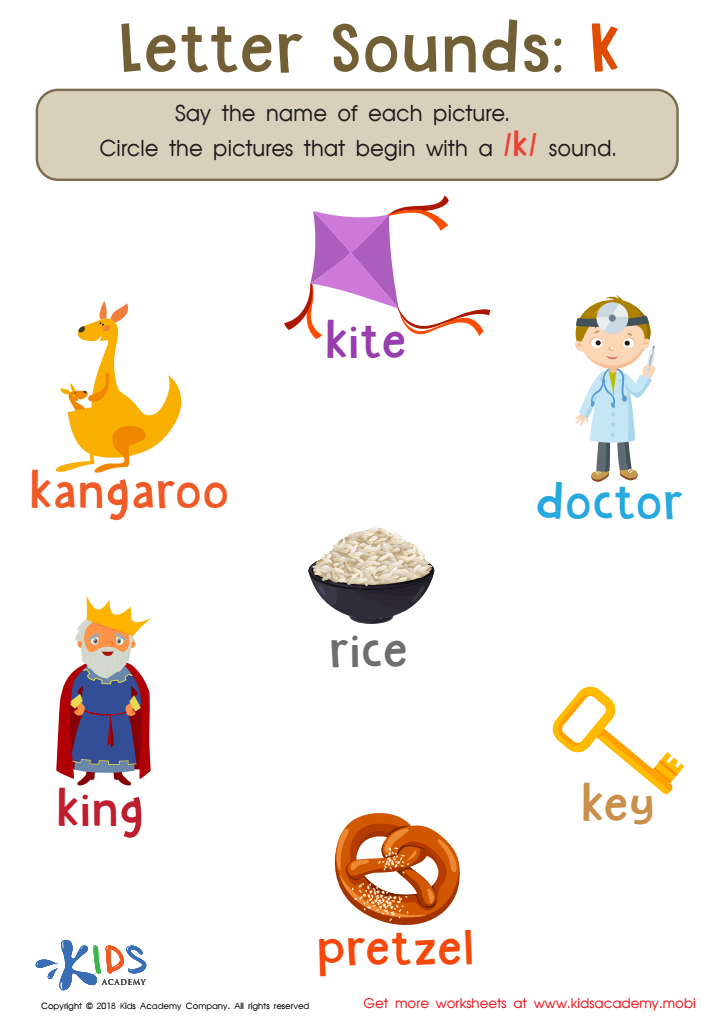
Help your child practice phonics with Kids Academy's illustrated worksheet! Have them look at the pictures, read the words and say them aloud. Only circle those that start with a hard 'K' sound. Perfect for preschoolers and kindergarteners! Plus, they'll learn the silent K used in a few words.
Letter K Sounds Worksheet
Worksheet
Letter Sounds: J Printable Worksheet

Letter Sounds: J Printable Worksheet

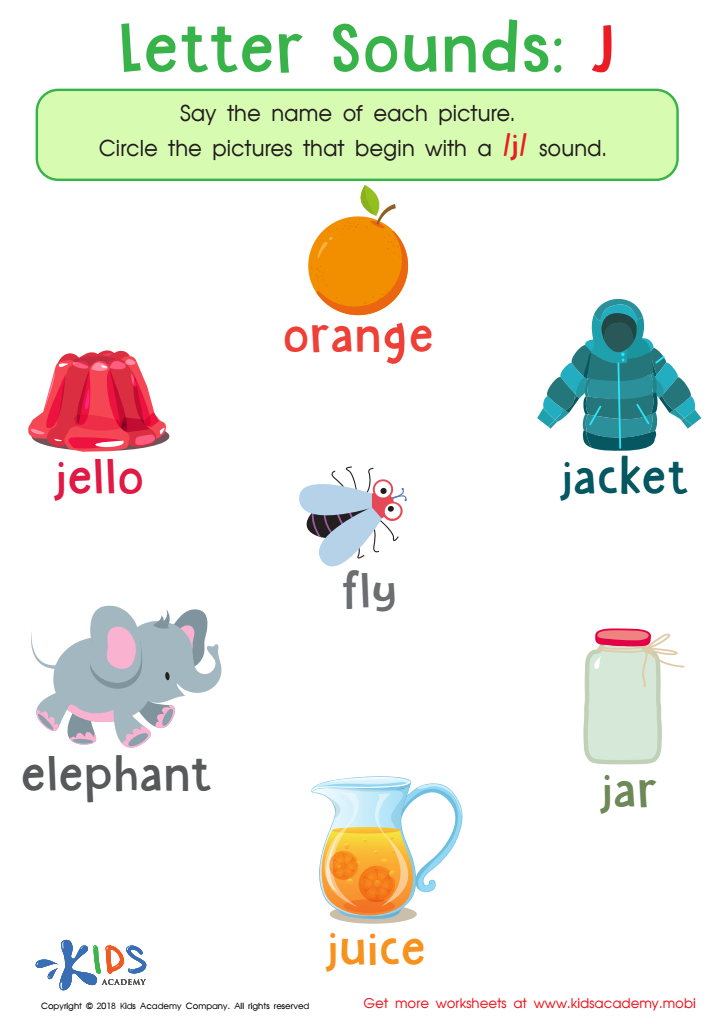
Preschoolers can learn to identify letter sounds by focusing on beginning sounds. This cute and colorful worksheet reviews the hard “j” sound. Kids can point it out by naming the words and circling only those starting with the “j” sound. Read the text out loud and listen closely!
Letter Sounds: J Printable Worksheet
Worksheet
Sight Words with Blends Worksheet

Sight Words with Blends Worksheet

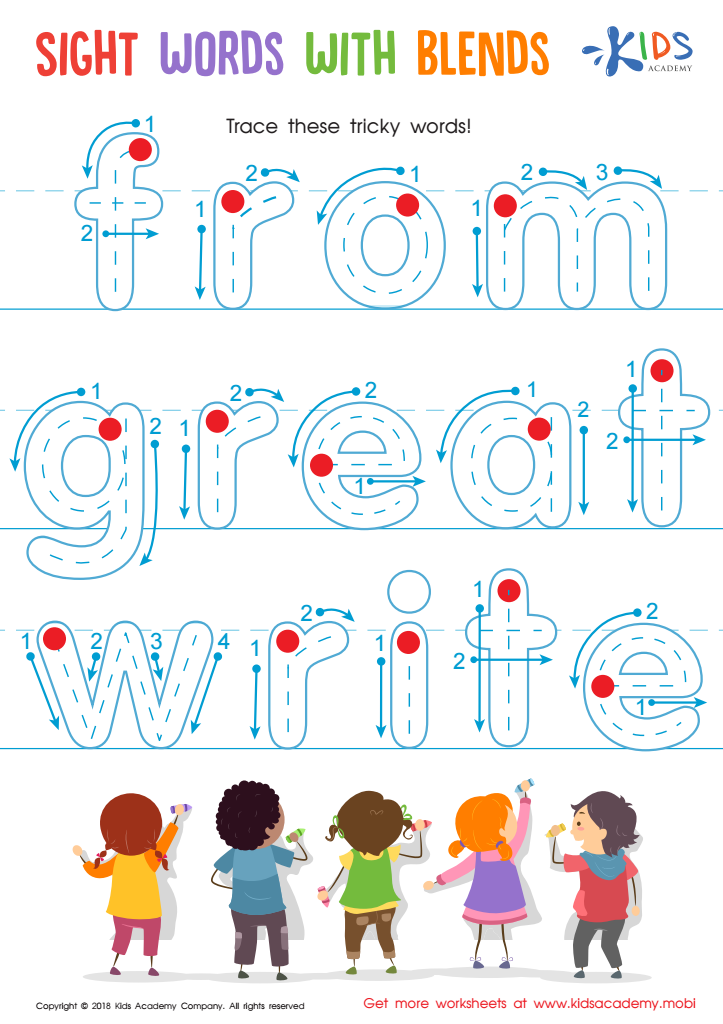
This free PDF lets your children trace and write sight words with tricky blends. The guide numbers help them start from the top, building fine motor skills and enhancing sight word vocab. It's a great way to give your kids a solid foundation for reading!
Sight Words with Blends Worksheet
Worksheet
Where Is the Digraph? Worksheet

Where Is the Digraph? Worksheet

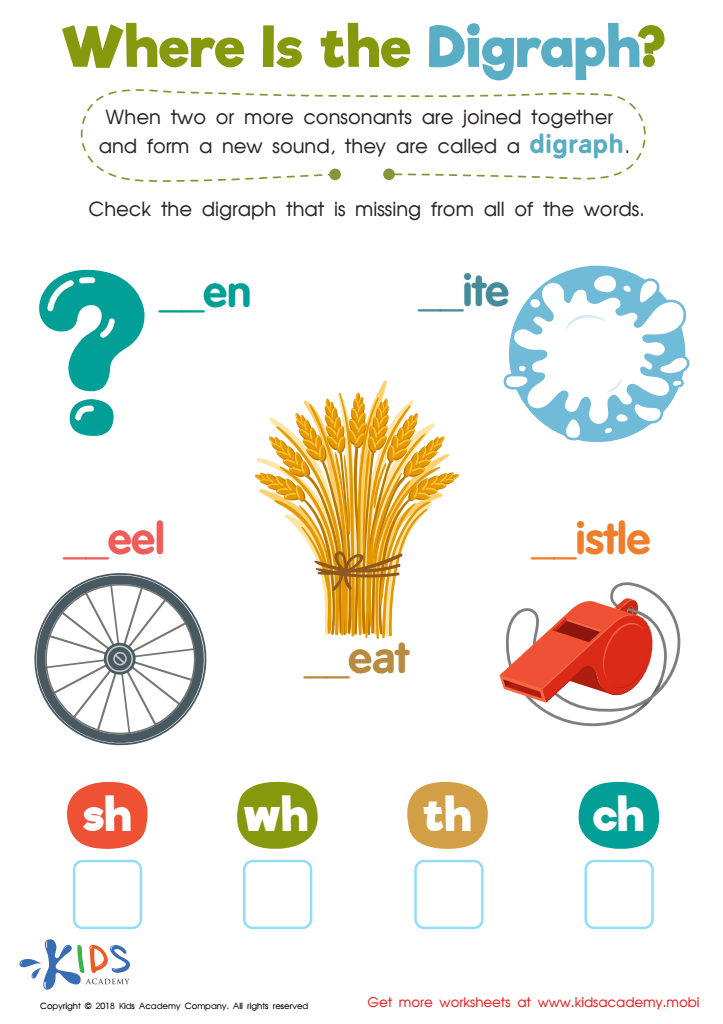
Teach your child about digraphs - two or more consonants that form one sound, like /wh/, /sh/, and /ch/. Show them words with these sounds and use this worksheet to help. Ask them which digraph is missing from the words and point out the pictures. 80 words.
Where Is the Digraph? Worksheet
Worksheet
Listen to the Sounds Worksheet

Listen to the Sounds Worksheet

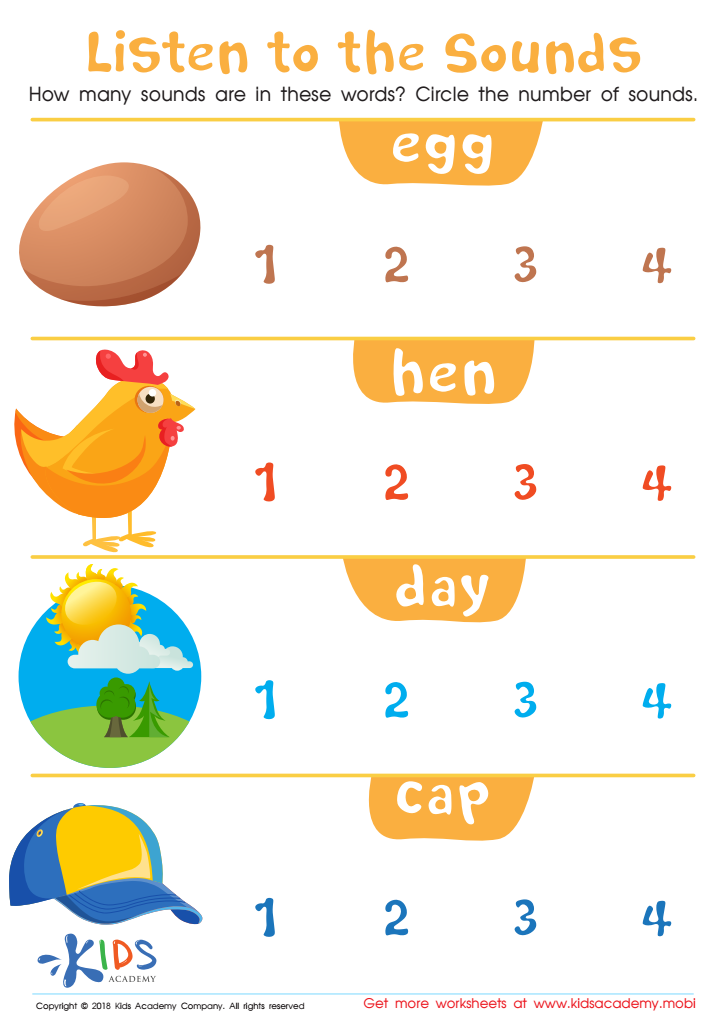
This worksheet builds emerging readers' skills in using sounds for reading and spelling. It helps strengthen auditory processing by having them count the sounds in each word, then trace the corresponding number. Fun and cheerful!
Listen to the Sounds Worksheet
Worksheet
Matching Consonant Sounds - Part 3 Worksheet Preview

Matching Consonant Sounds: Part 3 Worksheet
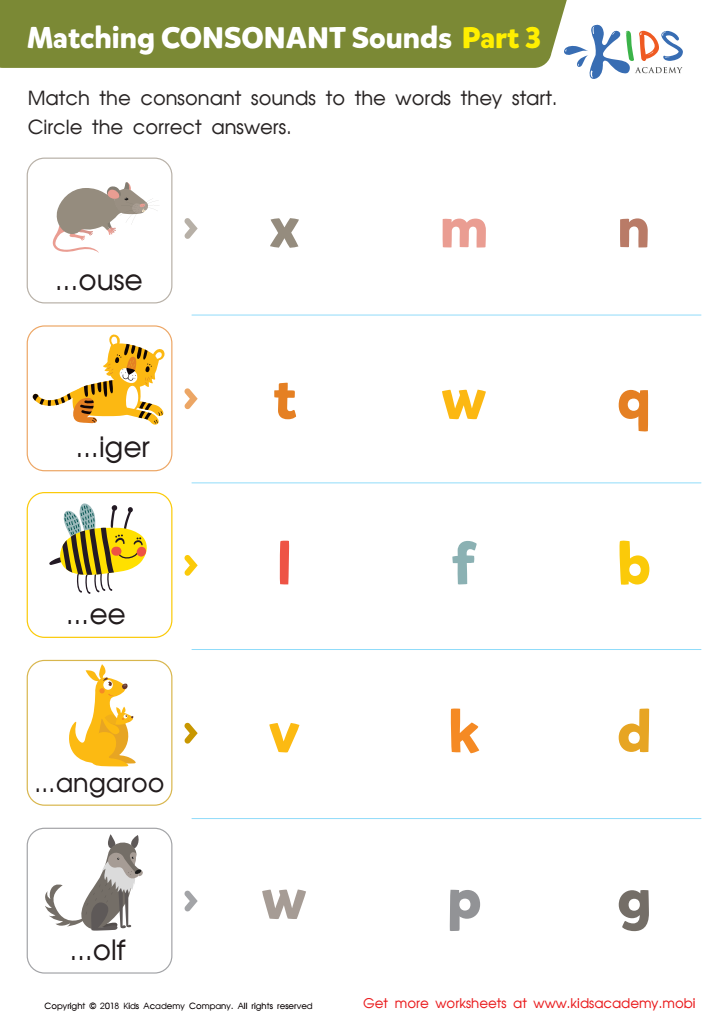
Help your early learner match consonant sounds to words with this fun worksheet! Have them name the pictures and try out each letter in the corresponding column. When they hear the sound that matches, circle it. Have them write the letter in the box to complete the word. Work their way down the page until the critters' names all match with consonants!
Matching Consonant Sounds: Part 3 Worksheet
Worksheet
Let's Count the Sounds Worksheet

Let's Count the Sounds Worksheet

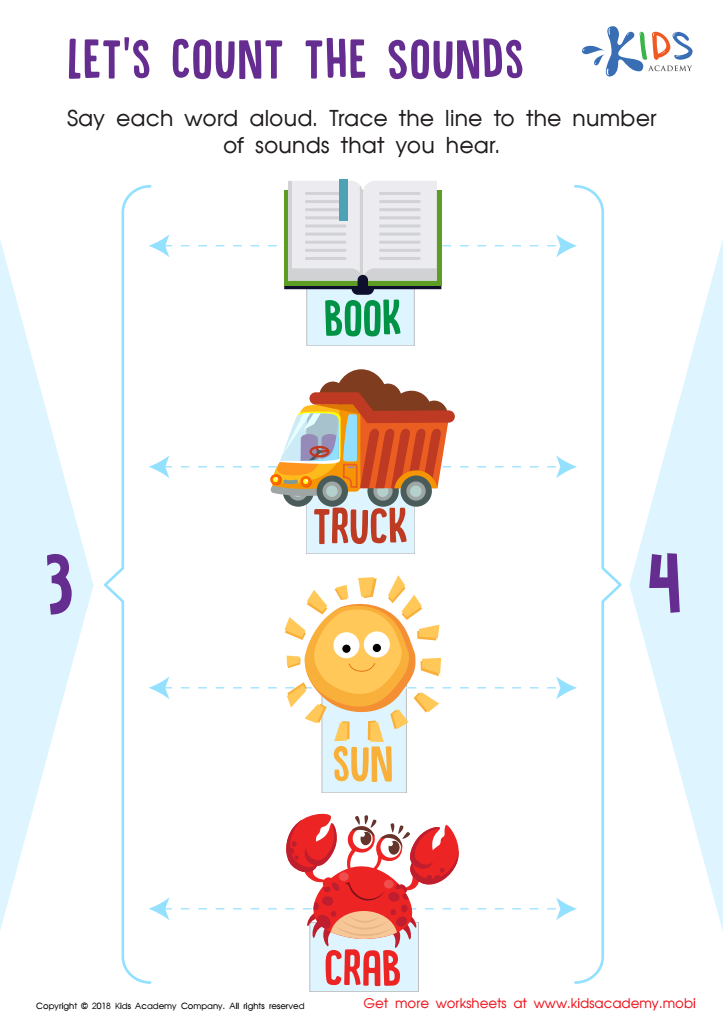
This bright and cheery traceable worksheet encourages children to practice auditory discrimination and phonological awareness. Using picture clues, they read each word and trace the line that represents the number of sounds heard. This builds decoding skills and helps them become successful readers.
Let's Count the Sounds Worksheet
Worksheet
Matching Consonant Sounds - Part 2 Worksheet Preview

Matching Consonant Sounds: Part 2 Worksheet
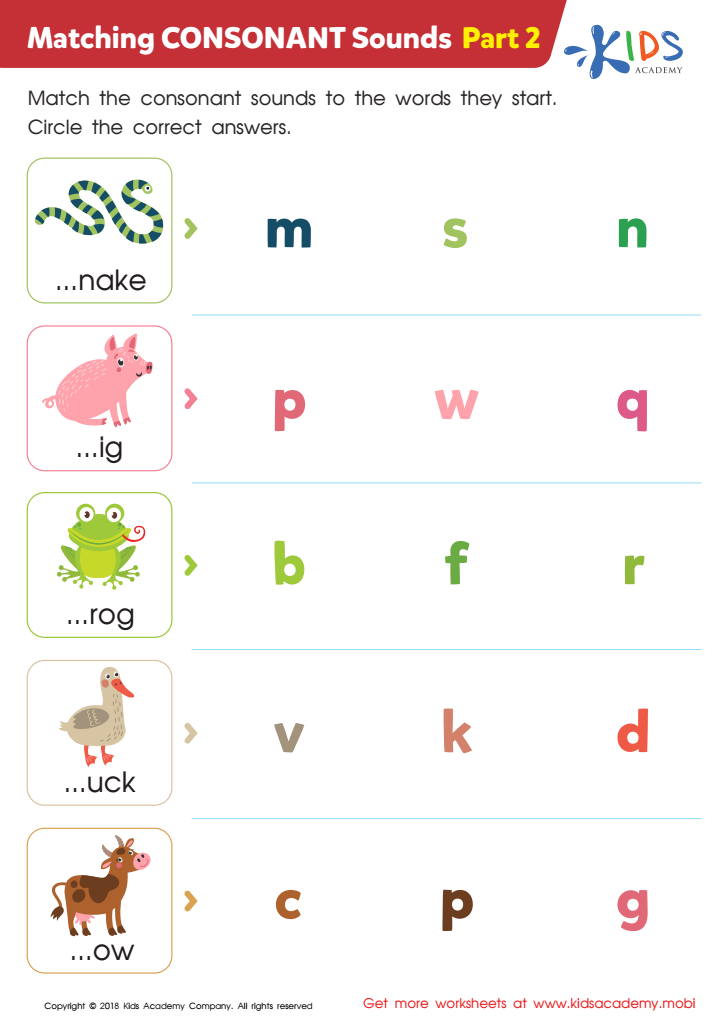
Look at the picture, say the word and match the consonant sound with the letter. Coach your child to name the animal and complete the word. For extra challenge, write the missing letter in the box! This PDF worksheet helps kids learn to read words with familiar animal pictures.
Matching Consonant Sounds: Part 2 Worksheet
Worksheet
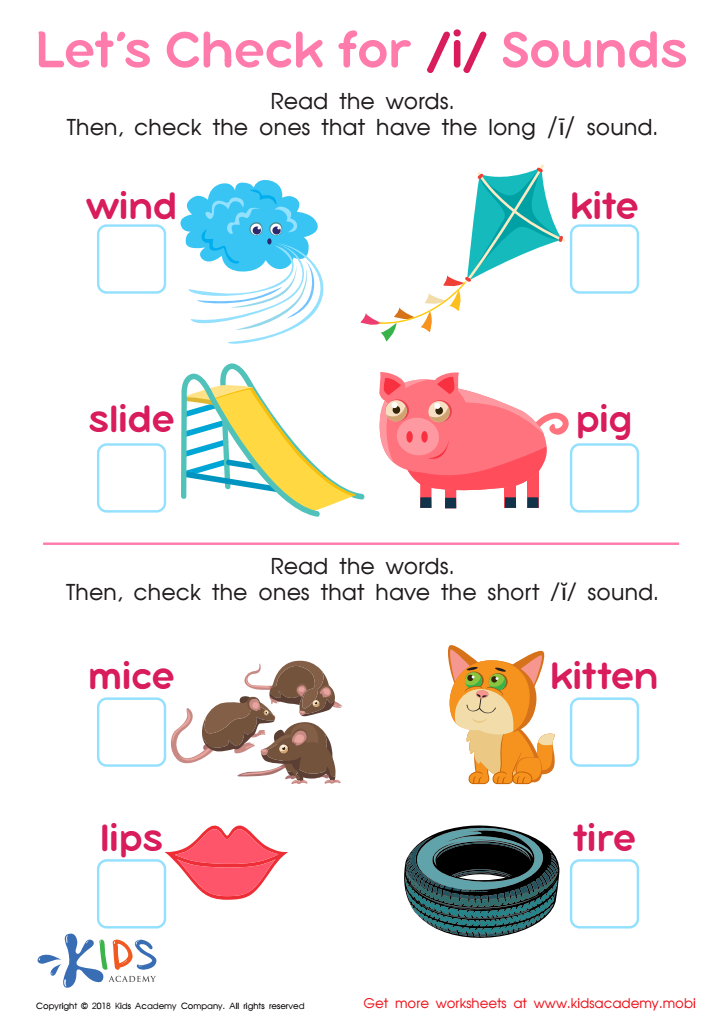
Let's Check for «i» Sounds Worksheet

Let's Check for «i» Sounds Worksheet

This fun worksheet with pictures boosts phonics skills - differentiating between long «ī» and short «i» sounds in 1- and 2-syllable words. Kids use picture clues to read words, then check off the correct ones. It's a great way for new readers to practice early reading skills and find success on their own.
Let's Check for «i» Sounds Worksheet
Worksheet
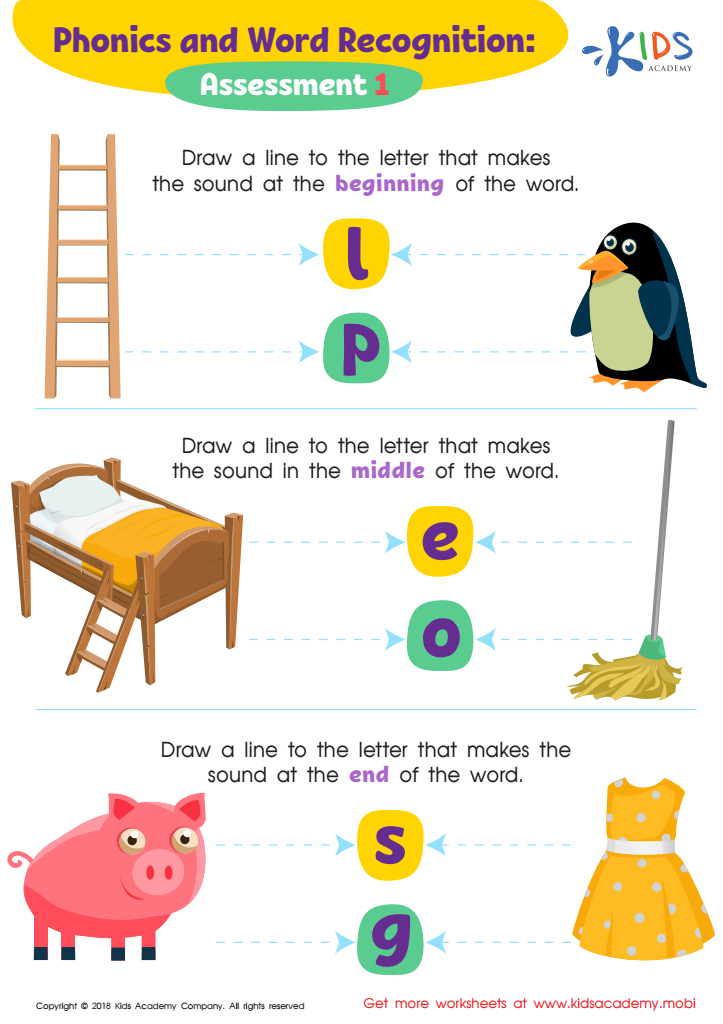
Phonics and Word Recognition: Assessment 1 ELA Worksheet


Phonics and Word Recognition: Assessment 1 ELA Worksheet

This fun worksheet tests your child's sound recognition skills for each part of a word. Ask your child to name each image and trace the line to match it with the corresponding letter. Listen for beginning sounds on 1st, middle sounds on 2nd, and ending sounds on 3rd. Encourage learning with this colorful and interactive activity!
Phonics and Word Recognition: Assessment 1 ELA Worksheet

Worksheet


Phonics recognition and understanding of the normal alphabet are foundational skills for children aged 4 to 6, making them essential for parents and teachers to prioritize. During this developmental stage, children are introduced to the relationship between sounds (phonemes) and letters (graphemes), which is crucial for reading and writing. Mastery of phonics fosters early literacy abilities, allowing children to decode words, recognize common sight words, and build confidence in their reading skills.

When children grasp phonics, they enhance their vocabulary and comprehension skills, laying the groundwork for academic success. This foundational knowledge not only aids in reading fluency but also strengthens oral communication, enabling children to express themselves effectively.

Furthermore, engaging in phonics recognition can be a fun and interactive process through songs, games, and stories, making learning enjoyable. Parents and teachers can create a positive learning environment that encourages exploration of language.

In summary, early phonics instruction equips children with critical literacy skills, ensuring they have the tools necessary to navigate their educational journey. By recognizing the importance of phonics, parents and teachers can work together to support children’s literacy development, ultimately fostering a lifelong love for reading and learning.