Visual discrimination skills Normal Letter Recognition Worksheets for Ages 4-6
5 filtered results
-
From - To
Help your child develop essential visual discrimination skills with our Normal Letter Recognition Worksheets designed for ages 4-6. These engaging worksheets focus on identifying and distinguishing letters, reinforcing foundational learning in a fun, interactive way. Our activities encourage kids to recognize similarities and differences among letters, fostering critical thinking and attention to detail. Perfect for preschoolers and kindergarteners, these worksheets blend education with creativity, ensuring a delightful learning experience. Equip your little ones with the tools they need to succeed in reading and writing by providing them with these valuable resources. Start their journey to literacy today!
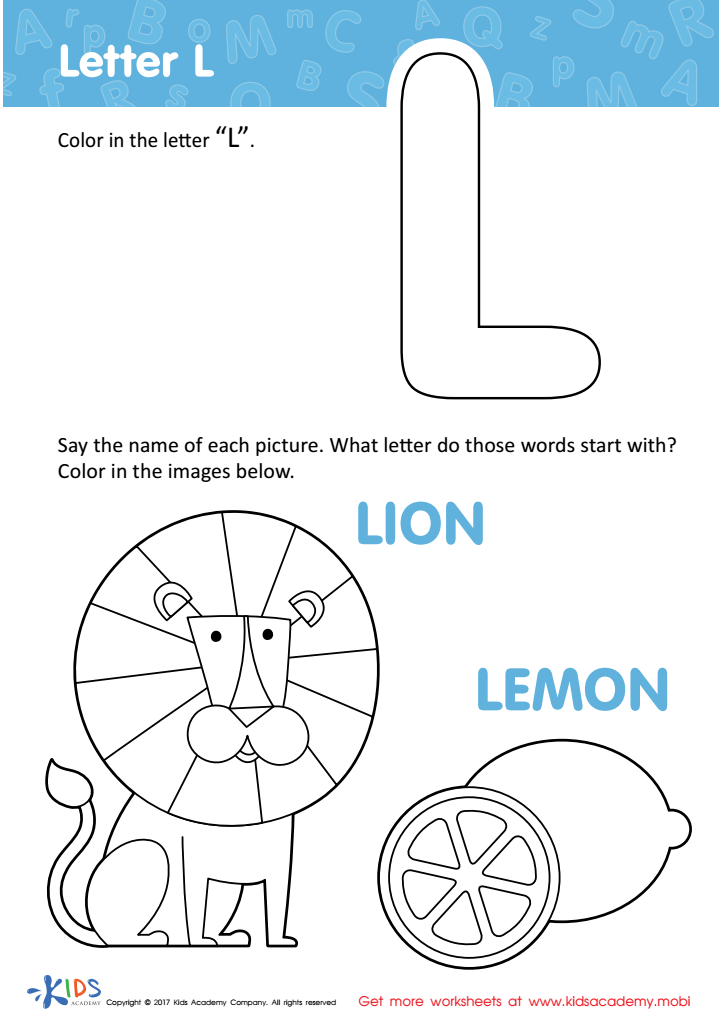
Letter L Coloring Sheet
 Assign to My Students
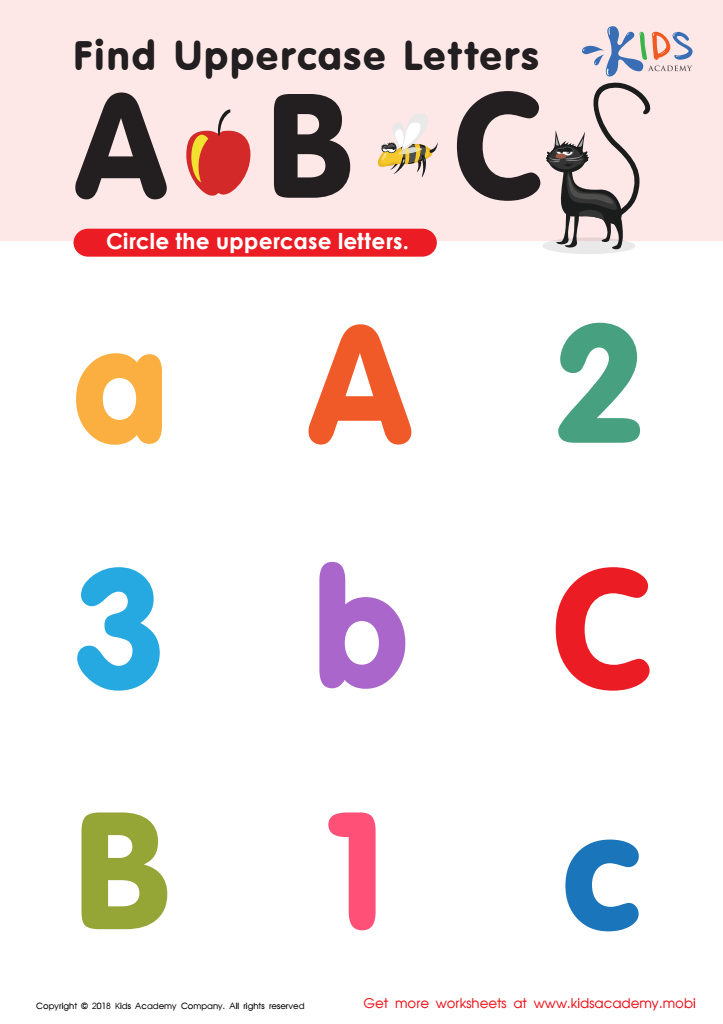
Find Uppercase Letters A, B, and C Worksheet
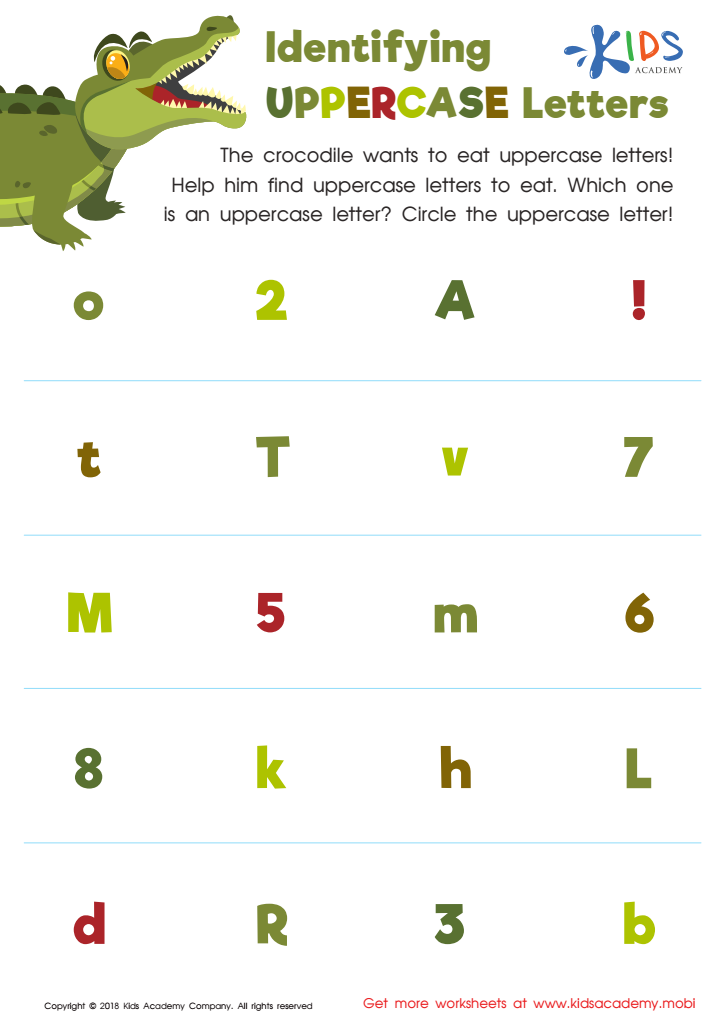
Identifying Uppercase Letters Worksheet
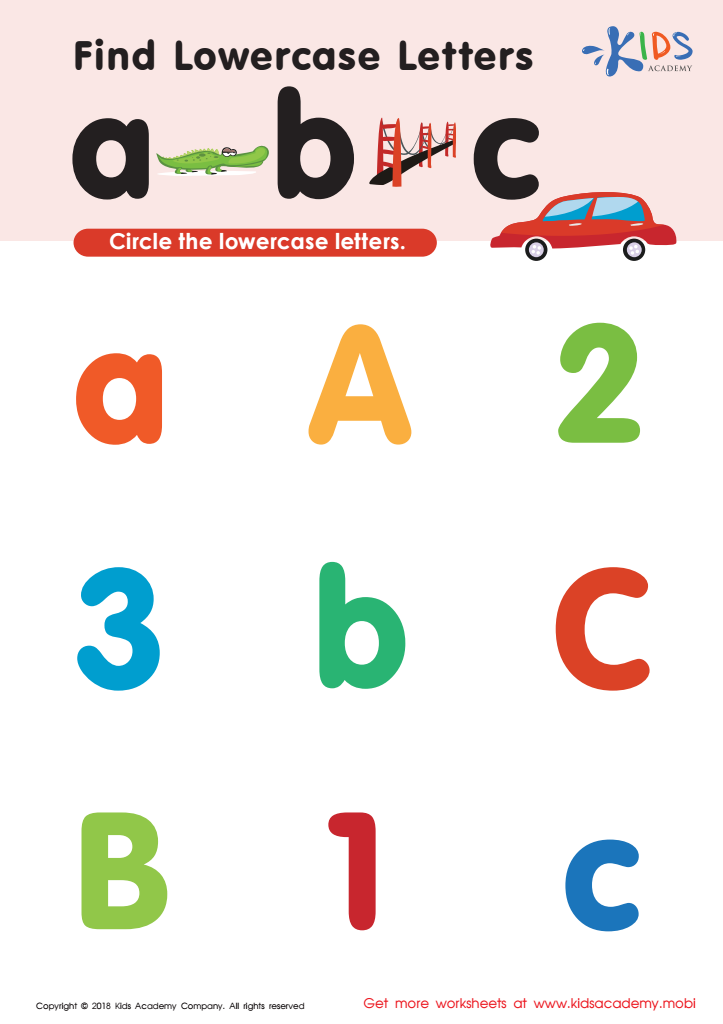
Find lowercase letters a b c Worksheet
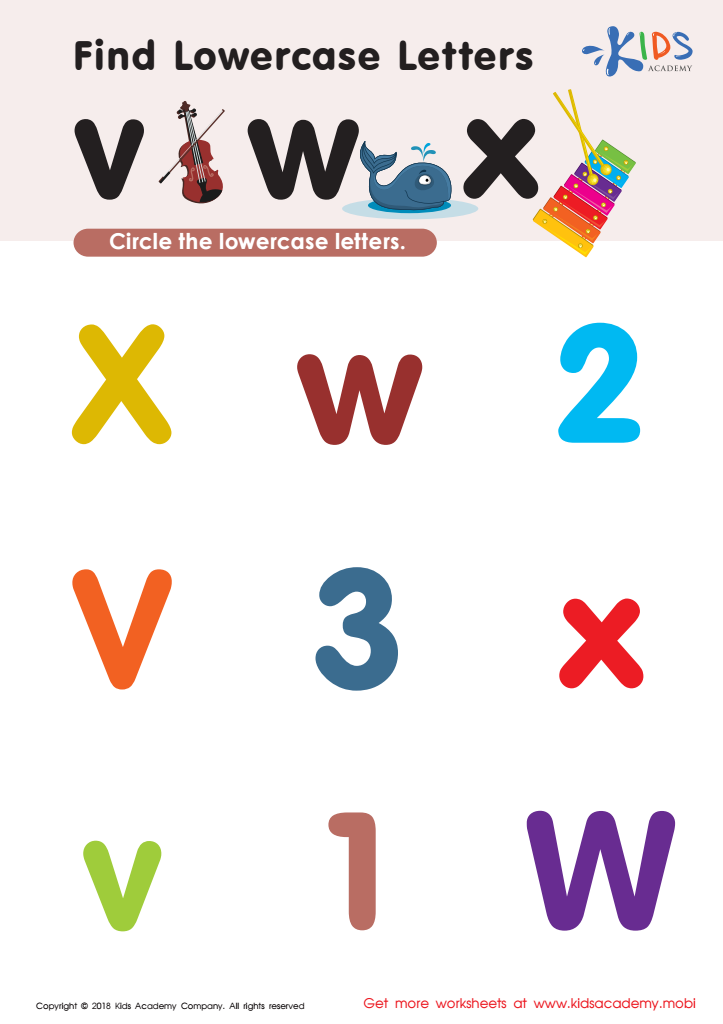
Find Lowercase Letters v w x Worksheet








Visual discrimination skills and normal letter recognition are critical foundational elements in early childhood education, particularly for children aged 4-6. Parents and teachers should care about these skills because they underpin a child’s ability to read and write effectively.
Visual discrimination allows children to notice differences and similarities among letters, shapes, and other visual stimuli. This skill is essential for understanding that letters like ‘b’ and ‘d’ are different, which is crucial for reading and writing accuracy. Without proficient visual discrimination, children may struggle with letter recognition and subsequently face challenges in phonics and decoding, making reading a more complicated task than it needs to be.
Moreover, normal letter recognition involves identifying both uppercase and lowercase letters. Mastering this skill means children can effectively engage with printed material, promoting successful reading experiences and vocabulary development. By ensuring that children develop strong visual discrimination skills and letter recognition abilities at this early stage, parents and teachers set the groundwork for future academic success.
Supporting children in mastering these skills also fosters confidence and a love for learning, as frustrated attempts to read can cause anxiety/misbeliefs about their abilities. Ultimately, promoting these skills benefits overall literacy development and long-term educational achievement.








