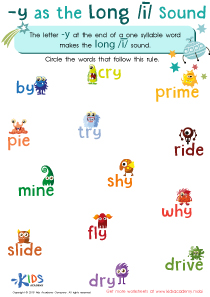
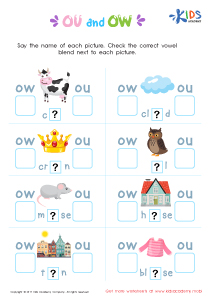
Spelling practice Normal Long Vowels Worksheets for Ages 4-6
5 filtered results
-
From - To
Welcome to our Spelling Practice worksheets for Normal Long Vowels, designed specifically for children aged 4 to 6! These engaging resources help young learners master long vowel sounds through colorful and interactive activities. Each worksheet guides kids in recognizing, spelling, and applying long vowel patterns in words, fostering essential literacy skills. Perfect for home or classroom use, our worksheets promote independent learning while keeping children motivated and eager to explore the world of letters. With a variety of fun exercises, your child will gain confidence in their spelling abilities while building a solid foundation for future reading success. Start practicing today!
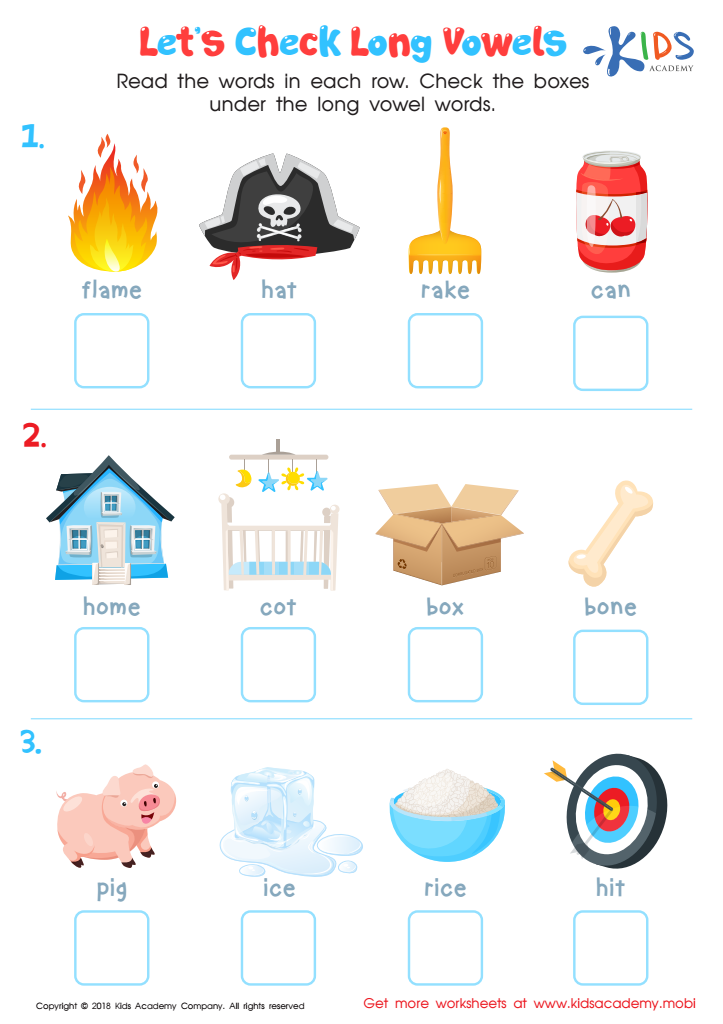
Let's Check Long Vowels: Assessment Worksheet
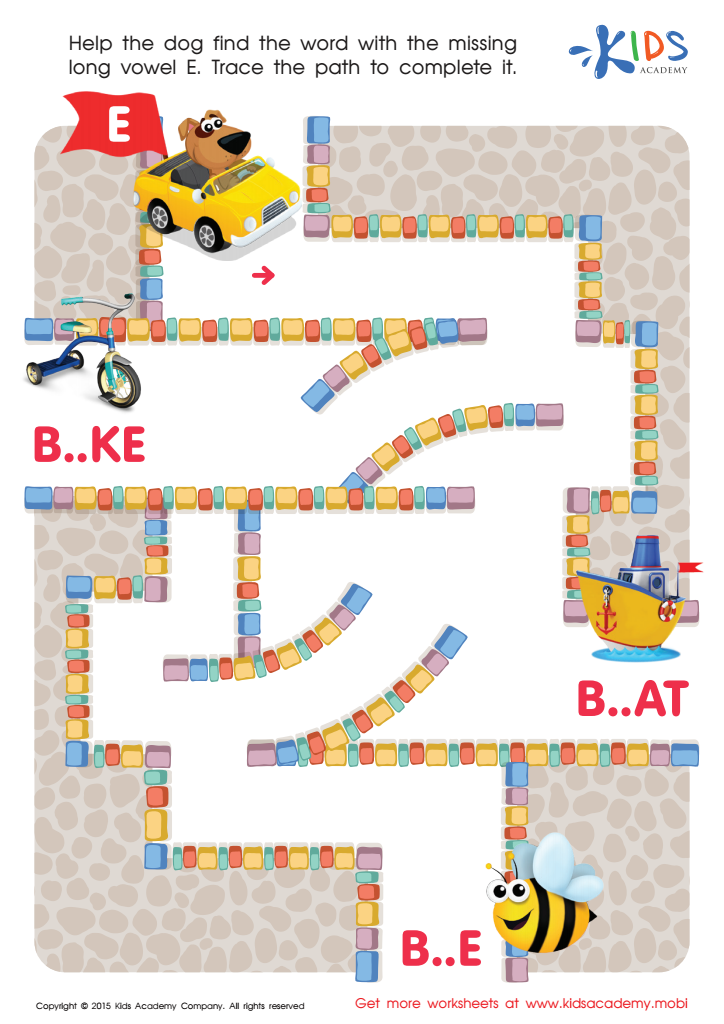
Long Vowel Sound E Worksheet
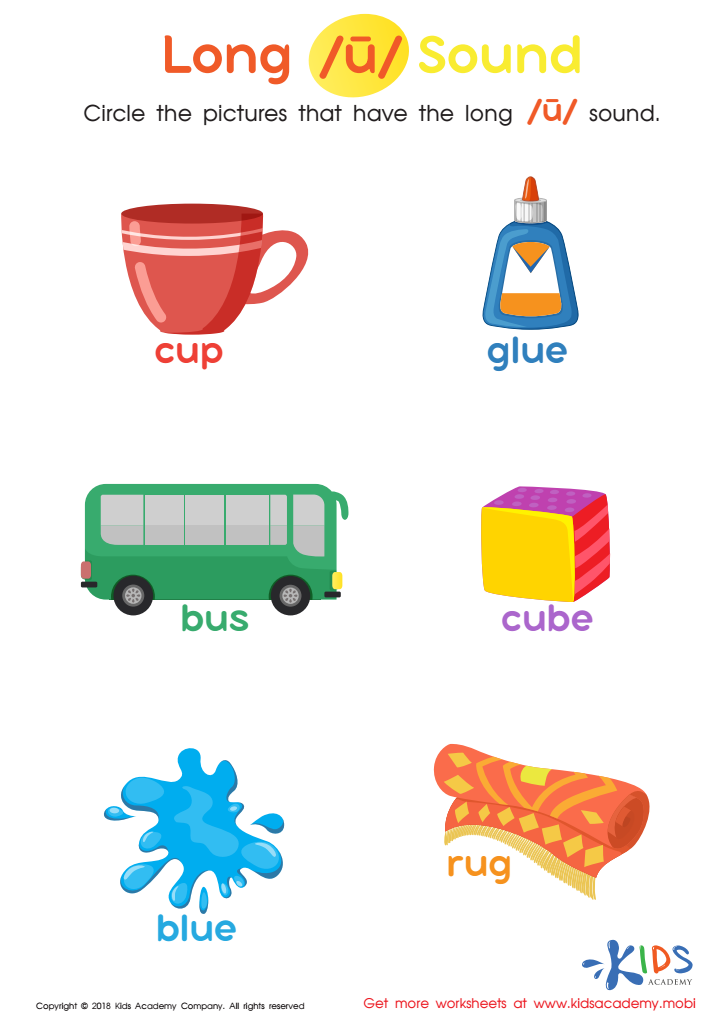
Long «u» Sound Worksheet
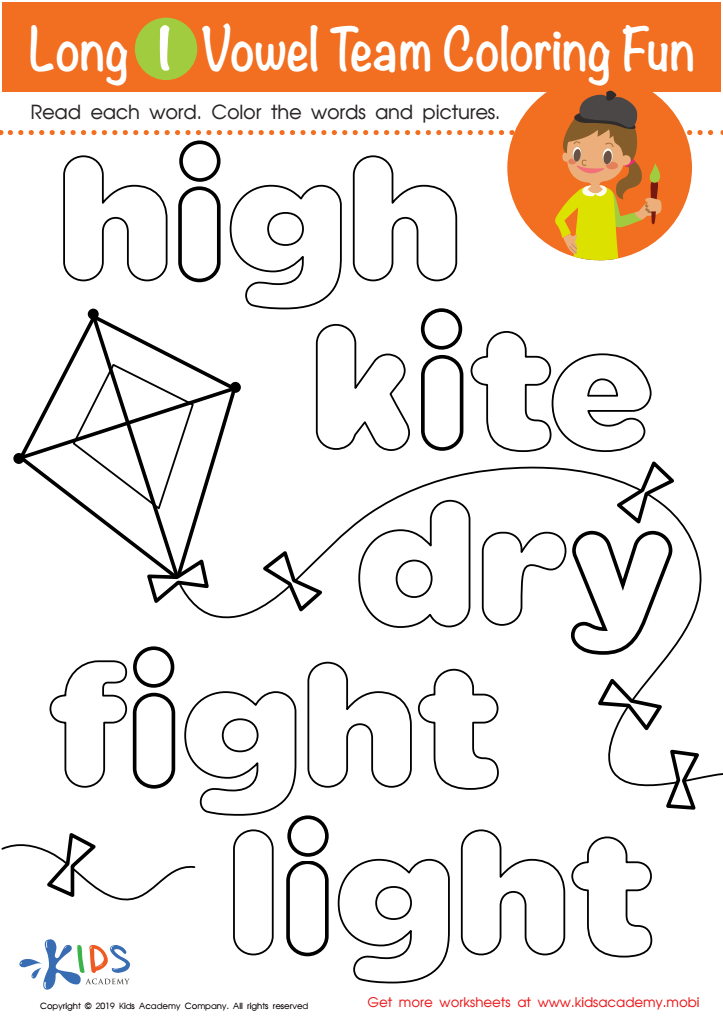
Long I Vowel Team Coloring Worksheet
 Assign to My Students
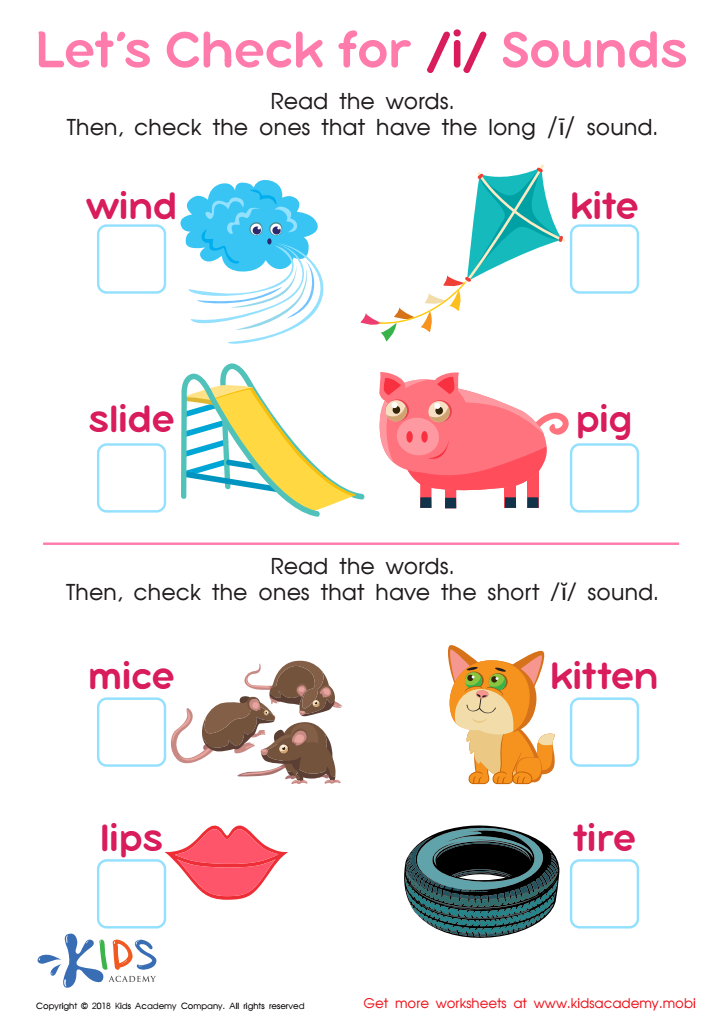
Let's Check for «i» Sounds Worksheet



Spelling practice of normal long vowels is crucial for children aged 4-6, as it lays the foundation for their literacy development. At this age, children are beginning to recognize and manipulate sounds, which is essential for reading and writing. Long vowels—those that say their name such as in "cake," "reed," "kite," and "zone"—are a key component of English phonics.
When children practice spelling long vowels, they strengthen their phonemic awareness, helping them differentiate between similar sounds and understand how letters combine to create words. This skill aids in their reading abilities, allowing them to decode and comprehend text more effectively. Furthermore, early exposure to spelling fosters a sense of accomplishment and boosts confidence in their writing skills.
Lastly, consistent spelling practice encourages children to practice fine motor skills through writing, which enhances their overall coordination. By prioritizing long vowel spelling exercises, parents and teachers can support cognitive development, empower children's literacy skills, and set them on a trajectory for future academic success. Ultimately, regular practice not only enriches children's vocabulary but also prepares them for a lifelong love of reading and learning.