Vocabulary enhancement Normal Long Vowels Worksheets for Ages 4-6
4 filtered results
Difficulty Level
Grade
Age
-
From - To
Subject
Activity
Standards
Boost your child's reading skills with our Vocabulary Enhancement Normal Long Vowels Worksheets for ages 4-6. Designed to introduce young learners to the magic of long vowels, these fun and engaging worksheets make learning enjoyable. Each worksheet offers exciting activities that help kids recognize and pronounce long vowel sounds while building their vocabulary. Perfect for early readers, our materials support phonemic awareness and comprehension through visually appealing and interactive exercises. Set your child on the path to reading success with our expertly crafted vocabulary enhancement resources!
Favorites
With answer key
Interactive
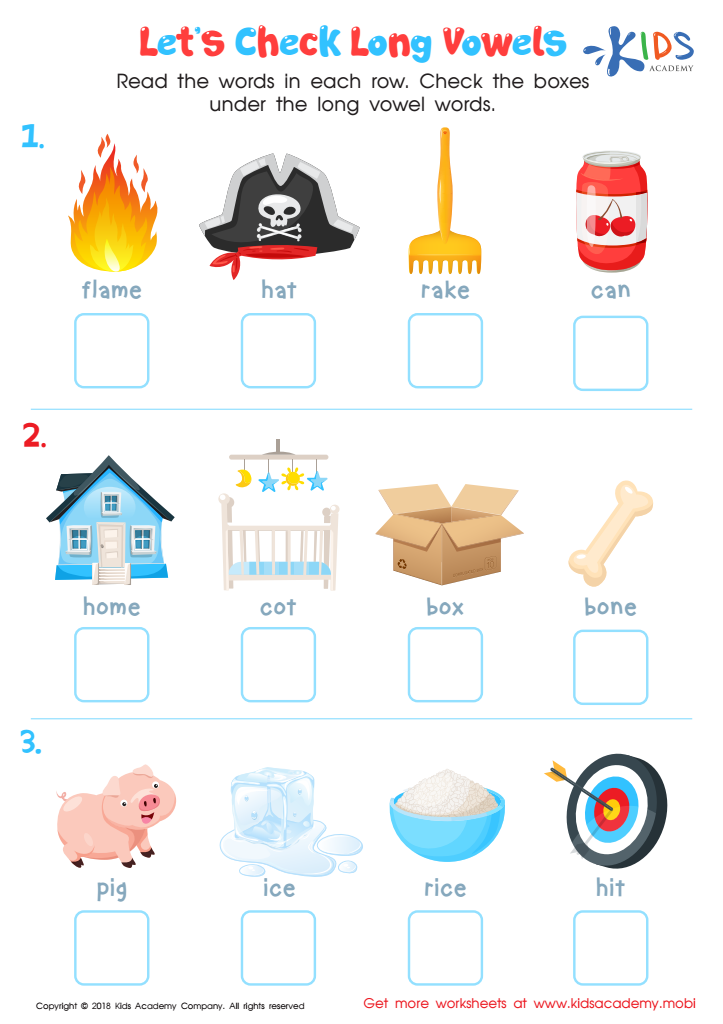
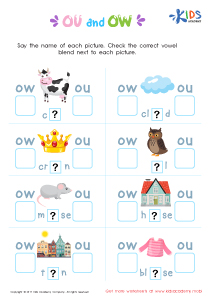
Let's Check Long Vowels: Assessment Worksheet
This worksheet helps your child identify objects and learn long vowel sounds. Ask them to say the names of the four objects in each row. Then, help them check the boxes to confirm they know the long vowel sounds. This will help them develop their reading skills.
 Assign to My Students
Let's Check Long Vowels: Assessment Worksheet
Worksheet
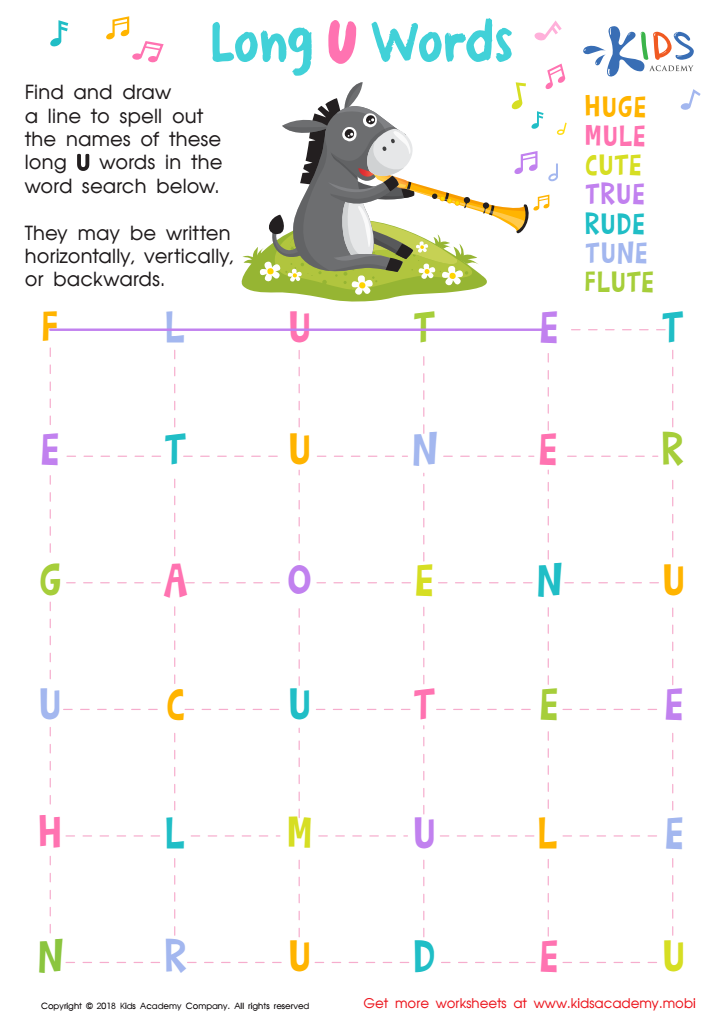
Long /u/ Words Worksheet
Your child needs to learn phonetics to enunciate and differentiate words. This fun worksheet encourages them to find and draw lines connecting the long 'U' words in the word search. Help them read the words on the right side of the picture, then look for them in the word search (horizontally, backwards or vertically).
Long /u/ Words Worksheet
Worksheet
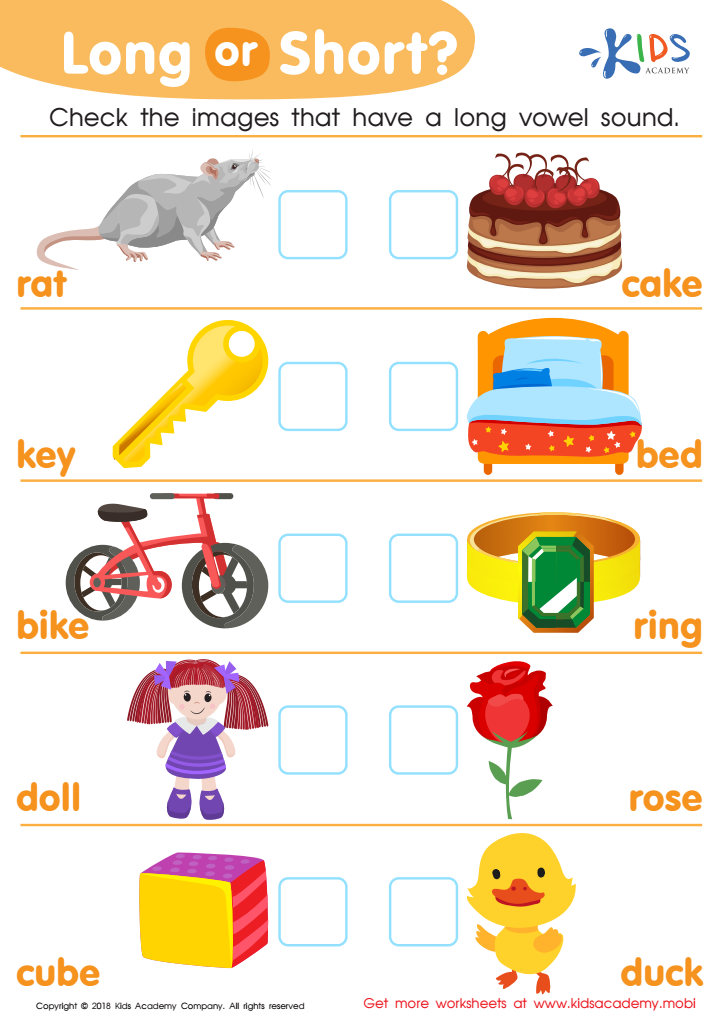
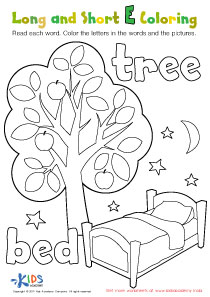
Long or Short Reading Worksheet
Every new reader needs to learn to recognize long and short vowel sounds. This phonics worksheet uses pictures of high-frequency words to help. Kids read the words and then check off images with long vowel sounds. It helps them learn to decode words and improves fine motor skills.
Long or Short Reading Worksheet
Worksheet
Join Kids Academy for Free
Who is primarily going to use this learning content?



Vocabulary enhancement, particularly through understanding normal long vowels, is fundamental for the developmental stages of children aged 4-6. At this age, kids are beginning to navigate the crucial groundwork of their reading and writing skills. Long vowels are indispensable as they are prevalent in the structure of many commonplace words. By mastering these sounds, children can more effectively pronounce and spell words, facilitating a smoother reading experience.
When parents and teachers invest in vocabulary enhancement focused on long vowels, they are essentially enabling children to decode and internalize language more systematically. This understanding boosts phonemic awareness, which is the ability to hear, identify, and manipulate individual sounds in spoken words—a critical precursor to proficient reading and writing.
Moreover, widened vocabulary greatly enriches children's communication skills, boosting their confidence to express ideas clearly and understand instructions accurately. This foundational knowledge eventually facilitates more complex literacy and cognitive skills, supporting academic success across the curriculum. Enhanced vocabulary also accelerates language development, prompting a more effective transition from spoken to written language.
Overall, cultivating vocabulary through long vowel exposure at ages 4-6 lays a solid foundation for lifelong learning, emotional expression, and social interaction, making it a priority for educators and parents alike.