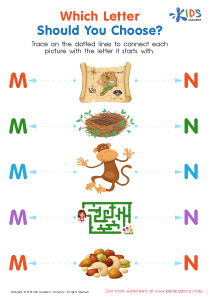
Handwriting practice Normal Lowercase/Small Letters Worksheets for Ages 4-6
8 filtered results
-
From - To
Encouraging early writing skills is crucial for young learners. Our "Handwriting Practice Normal Lowercase/Small Letters Worksheets for Ages 4-6" are designed to help children develop essential hand control and fine motor skills. Each worksheet is carefully crafted for young hands to create smooth and consistent letter formations. These worksheets focus on proper letter sizing, spacing, and alignment, making perfect learning tools for practicing lowercase letters. Fun and engaging, they're ideal for classroom or at-home practice, supporting your child’s literacy journey with confidence. Start your child's path to writing success today with these fun, educational worksheets!
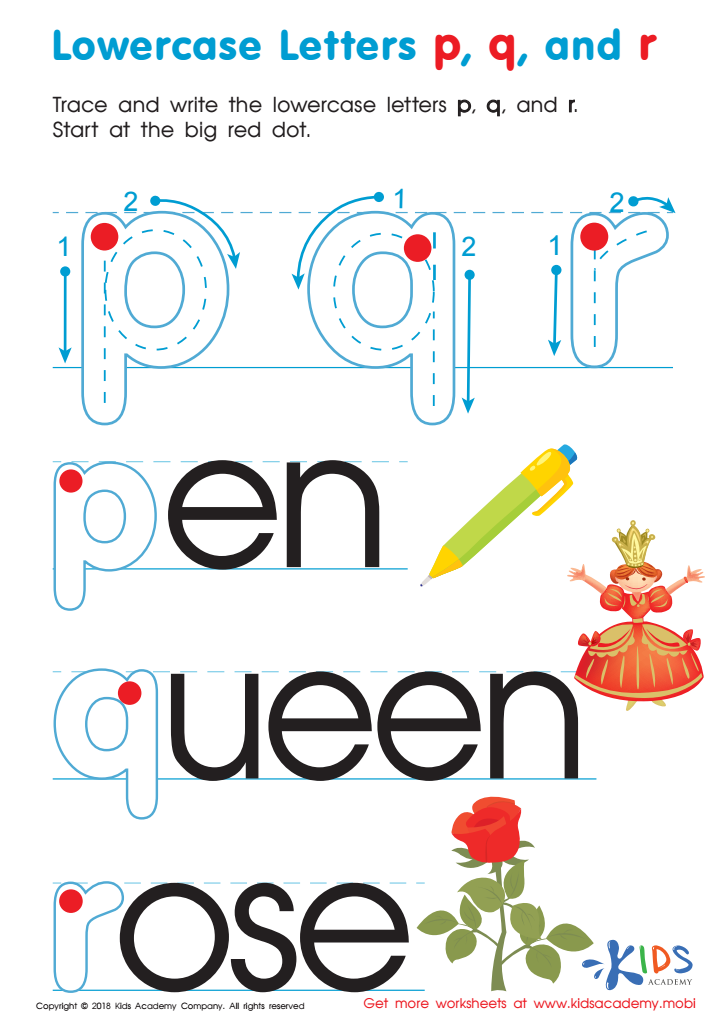
Lowercase Letters p q r Worksheet
 Assign to My Students
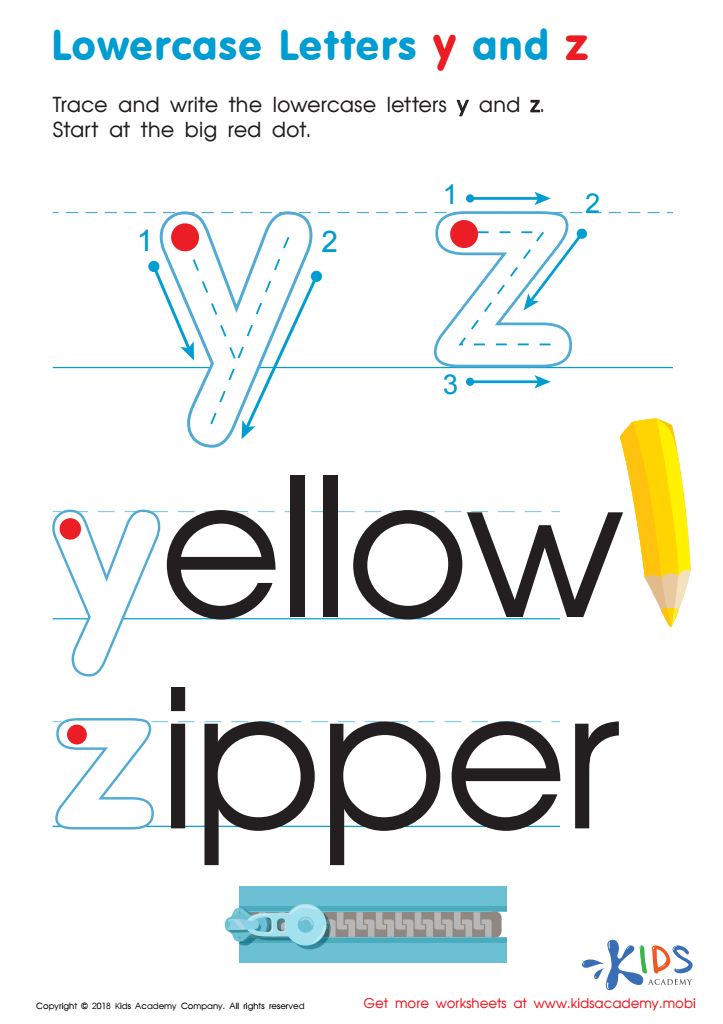
Lowercase Letters y z Worksheet
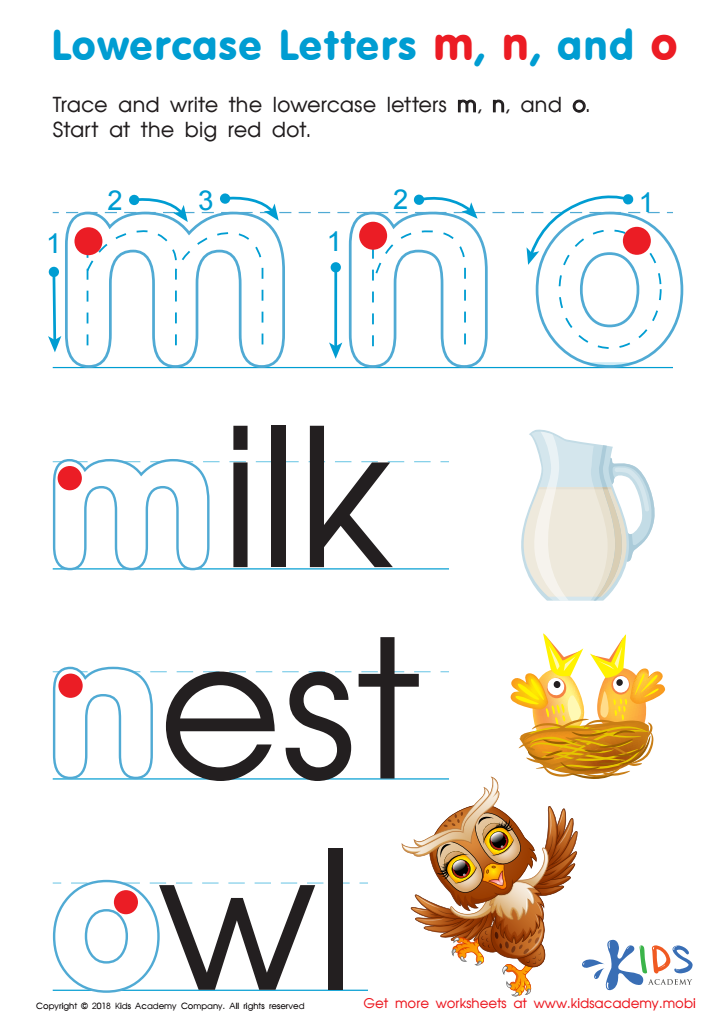
Lowercase Letters m n o Worksheet
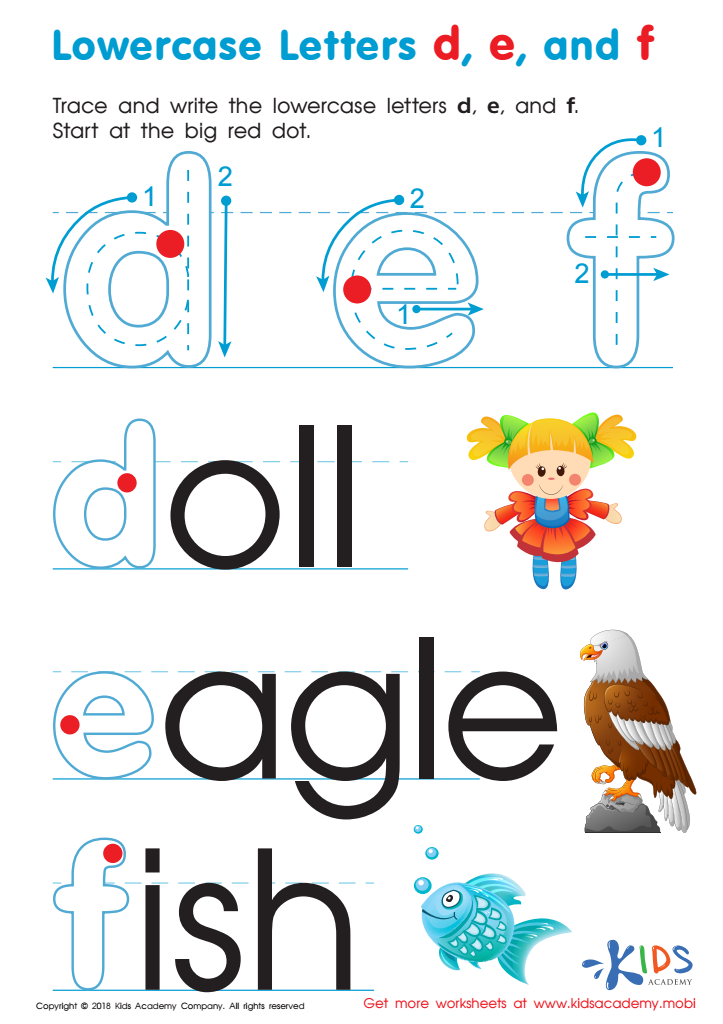
Lowercase Letters d e f Worksheet
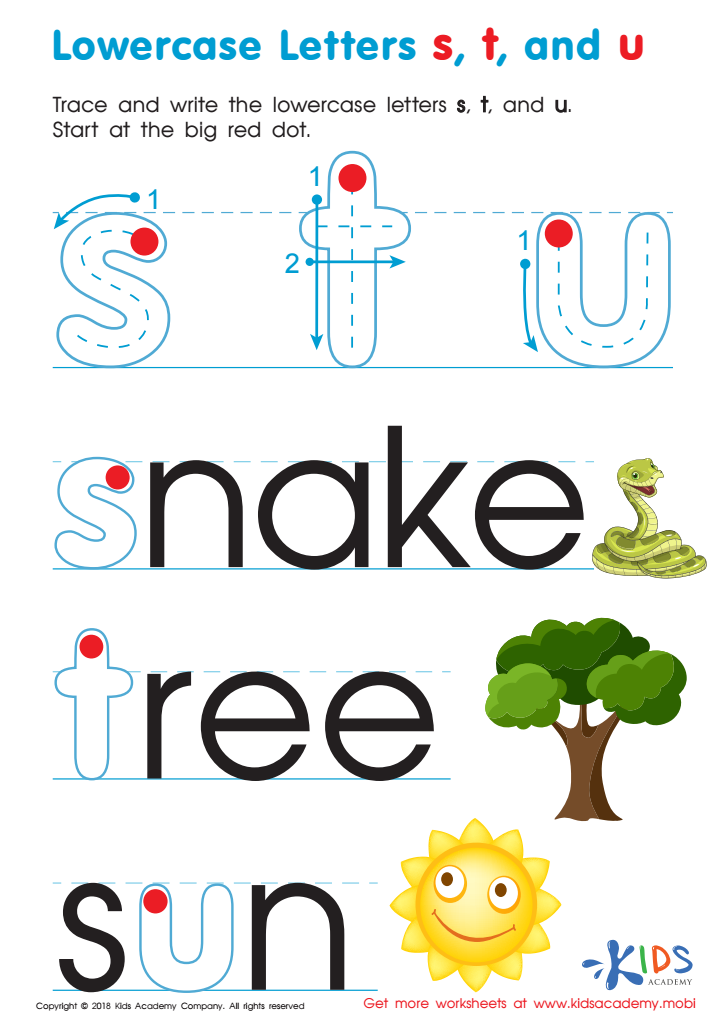
Lowercase Letters s t u Worksheet
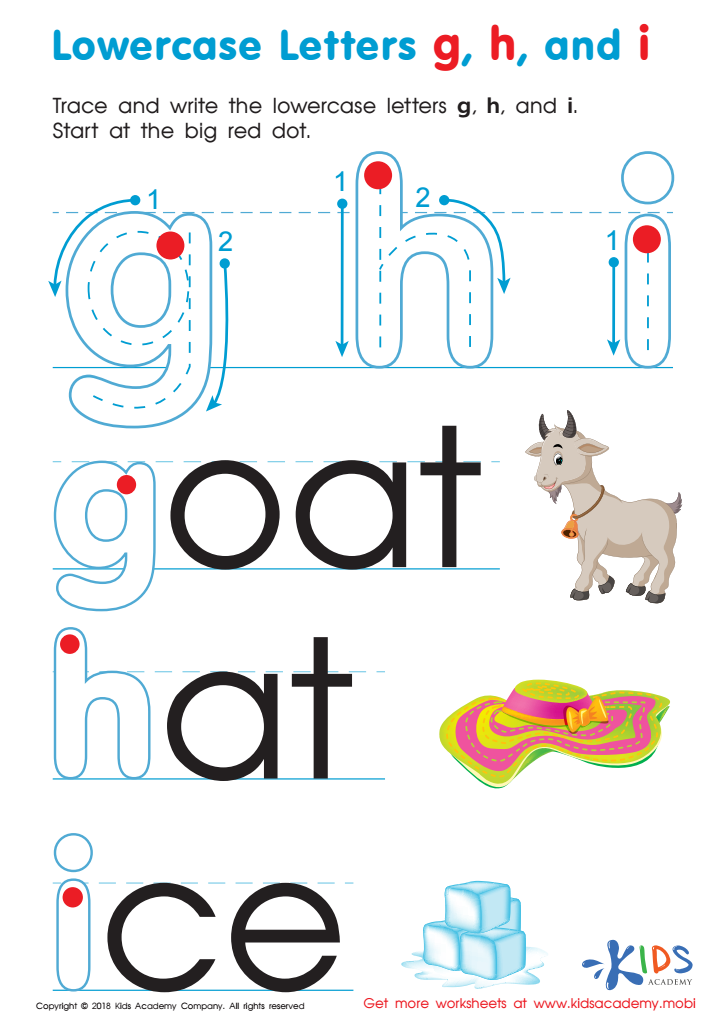
Lowercase Letters g h i Worksheet
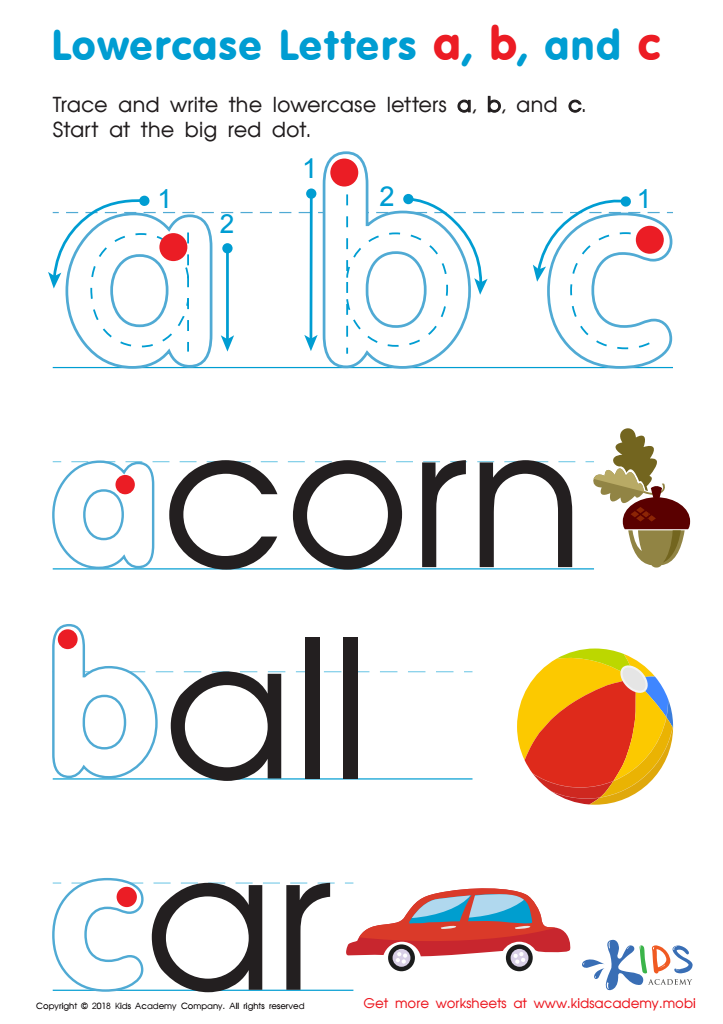
Lowercase Letters a b c Worksheet
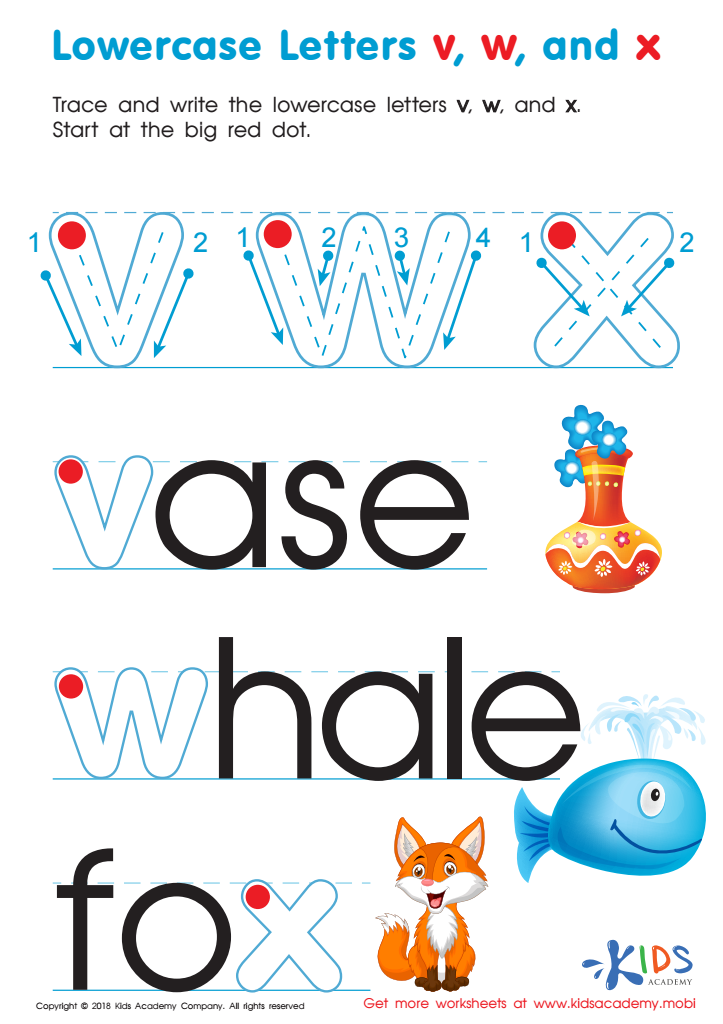
Lowercase Letters v w x Worksheet


Handwriting practice, particularly with normal lowercase or small letters, is crucial for children ages 4-6 as it forms the basis for effective communication and academic success. At this developmental stage, children's fine motor skills are rapidly evolving. Practicing handwriting helps to refine their hand-eye coordination, grip strength, and control over fine motor movements. This foundational skill is not only essential for legible writing but also plays a significant role in early literacy.
Engaging in consistent handwriting practice enhances cognitive development by linking the physical act of writing to the brain's processes of recognizing and recalling letters. This, in turn, facilitates easier word recognition and phonetic learning, essential skills for reading and language development. Well-practiced handwriting aids children in focusing on the content of their writing rather than the mechanics, fostering self-expression and boosting confidence academically and socially.
Moreover, early and regular handwriting practice promotes discipline, attention to detail, and the capacity to follow instructions. Teachers and parents play a pivotal role by providing guidance, support, and encouragement in this skill-building process. The benefits of early handwriting practice lay a strong groundwork for future educational accomplishments and personal development, making it a critical aspect of early childhood education.