Discover engaging Phonics Recognition Worksheets designed for children ages 4-6. These printable resources focus on helping young learners build essential phonics skills, fostering early reading and comprehension. Each worksheet encourages kids to recognize letter sounds, match words with images, and practice pronunciation in a fun, interactive way. Our Normal Phonics Worksheets utilize colorful illustrations and age-appropriate activities that captivate young minds, ensuring that learning is both effective and enjoyable. Perfect for use at home or in the classroom, these resources support early literacy development, preparing children for a successful reading journey. Start exploring our worksheets today for a strong phonics foundation!

Check out this FREE Trial Lesson on Phonics for age 4-6!

Letter Sound Relationship J-K

Favorites
With answer key
Interactive
  • 4-6
  • Phonics recognition
  • Phonics
  • Normal
Letter K Sounds Worksheet

Letter K Sounds Worksheet

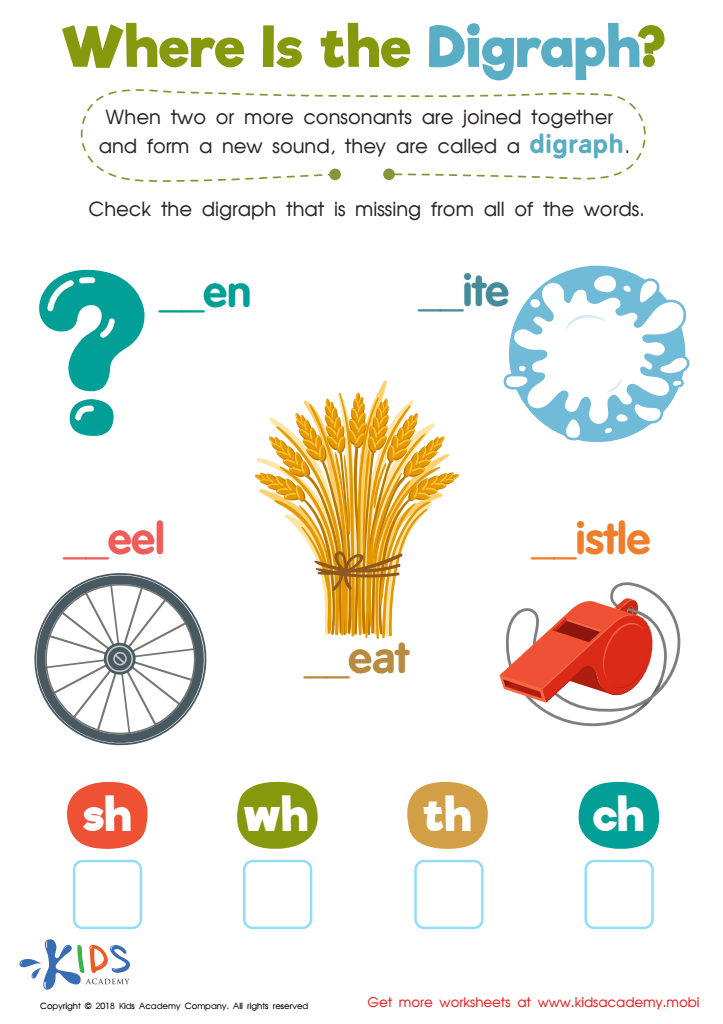
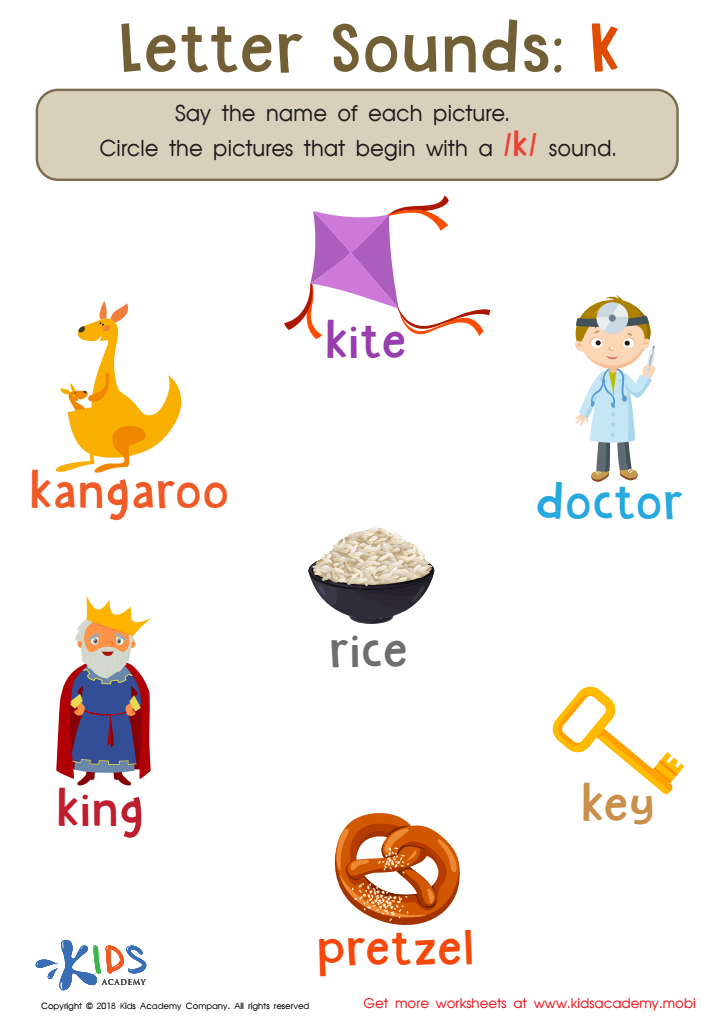
Help your child practice phonics with Kids Academy's illustrated worksheet! Have them look at the pictures, read the words and say them aloud. Only circle those that start with a hard 'K' sound. Perfect for preschoolers and kindergarteners! Plus, they'll learn the silent K used in a few words.
Letter K Sounds Worksheet
Worksheet
Letter Sounds: J Printable Worksheet

Letter Sounds: J Printable Worksheet

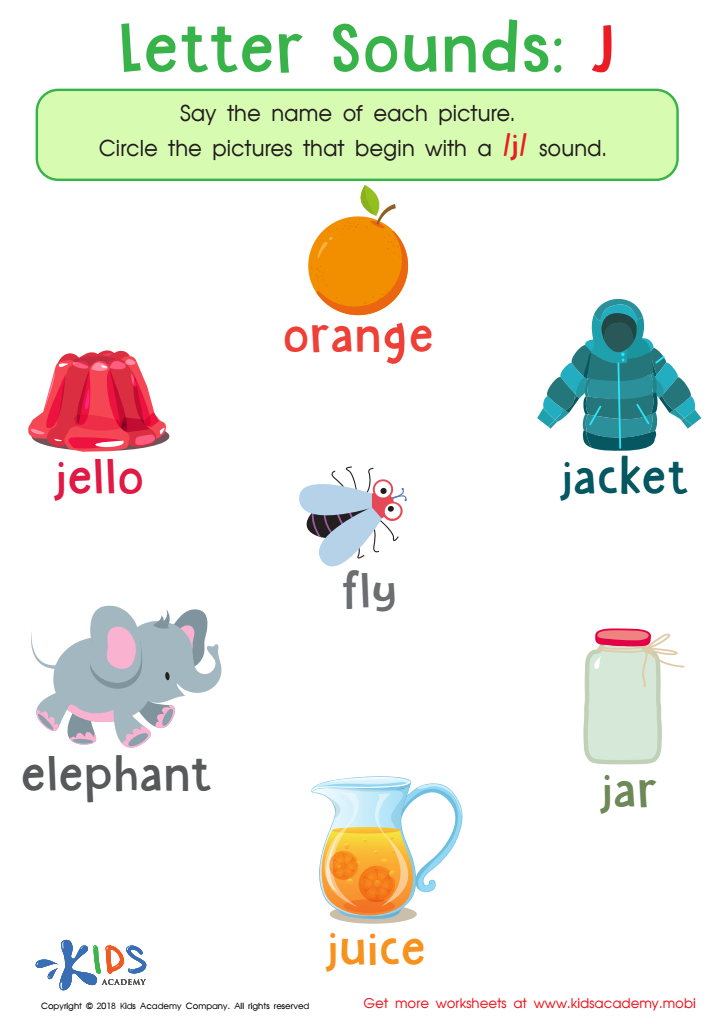
Preschoolers can learn to identify letter sounds by focusing on beginning sounds. This cute and colorful worksheet reviews the hard “j” sound. Kids can point it out by naming the words and circling only those starting with the “j” sound. Read the text out loud and listen closely!
Letter Sounds: J Printable Worksheet
Worksheet
Where Is the Digraph? Worksheet

Where Is the Digraph? Worksheet

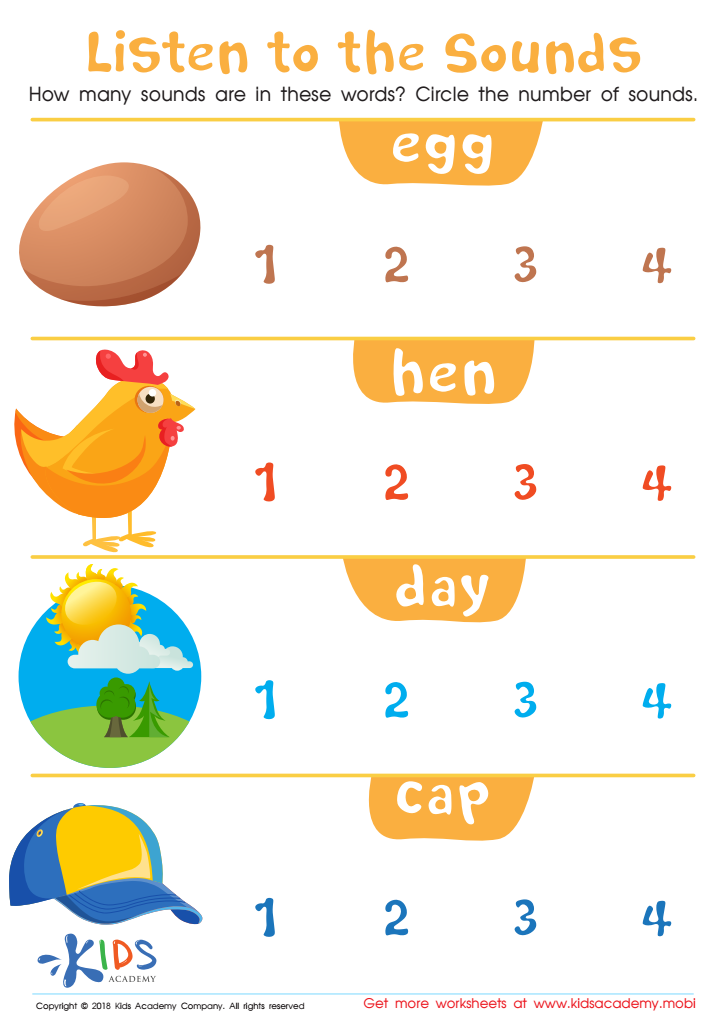
Teach your child about digraphs - two or more consonants that form one sound, like /wh/, /sh/, and /ch/. Show them words with these sounds and use this worksheet to help. Ask them which digraph is missing from the words and point out the pictures. 80 words.
Where Is the Digraph? Worksheet
Worksheet
Listen to the Sounds Worksheet

Listen to the Sounds Worksheet

This worksheet builds emerging readers' skills in using sounds for reading and spelling. It helps strengthen auditory processing by having them count the sounds in each word, then trace the corresponding number. Fun and cheerful!
Listen to the Sounds Worksheet
Worksheet
Matching Consonant Sounds - Part 3 Worksheet Preview

Matching Consonant Sounds: Part 3 Worksheet
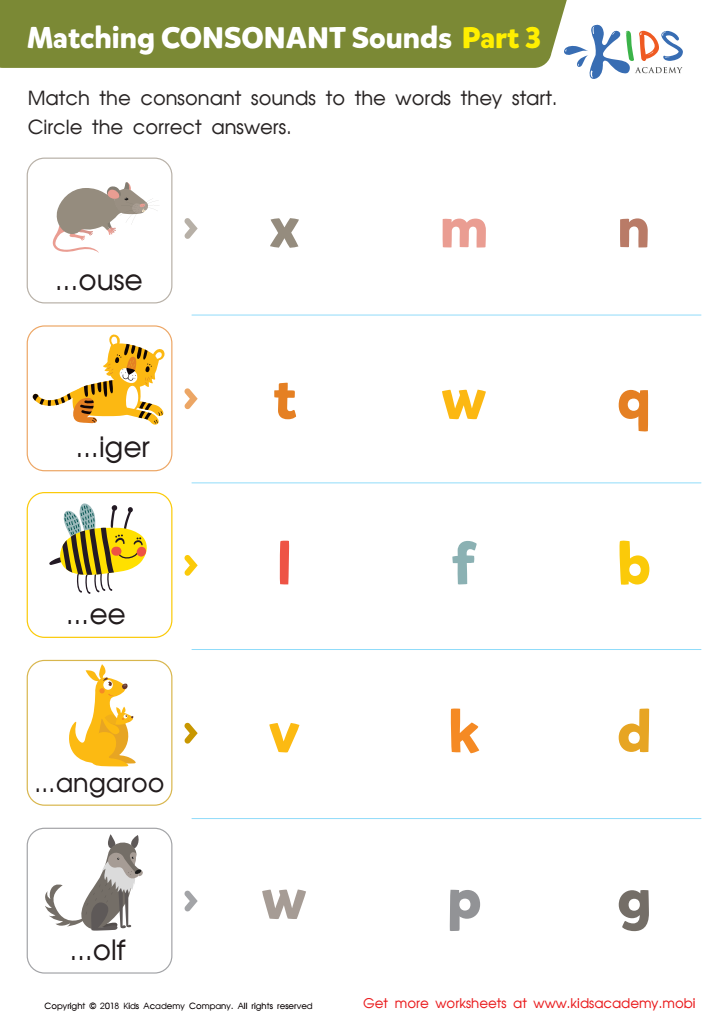
Help your early learner match consonant sounds to words with this fun worksheet! Have them name the pictures and try out each letter in the corresponding column. When they hear the sound that matches, circle it. Have them write the letter in the box to complete the word. Work their way down the page until the critters' names all match with consonants!
Matching Consonant Sounds: Part 3 Worksheet
Worksheet
Let's Count the Sounds Worksheet

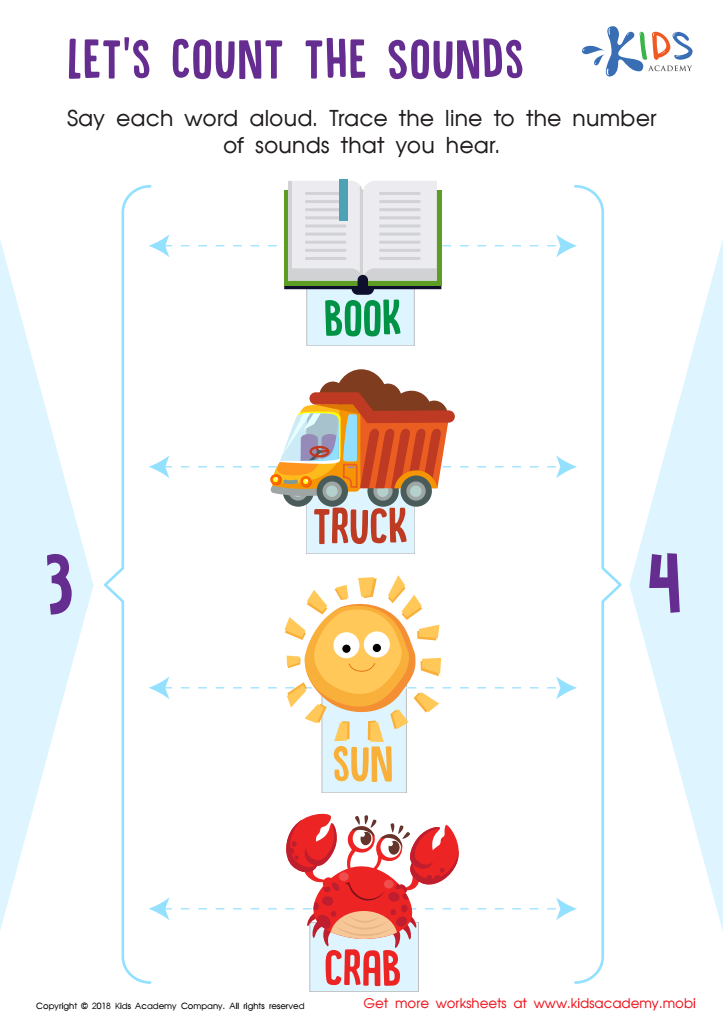
Let's Count the Sounds Worksheet

This bright and cheery traceable worksheet encourages children to practice auditory discrimination and phonological awareness. Using picture clues, they read each word and trace the line that represents the number of sounds heard. This builds decoding skills and helps them become successful readers.
Let's Count the Sounds Worksheet
Worksheet
Matching Consonant Sounds - Part 2 Worksheet Preview

Matching Consonant Sounds: Part 2 Worksheet
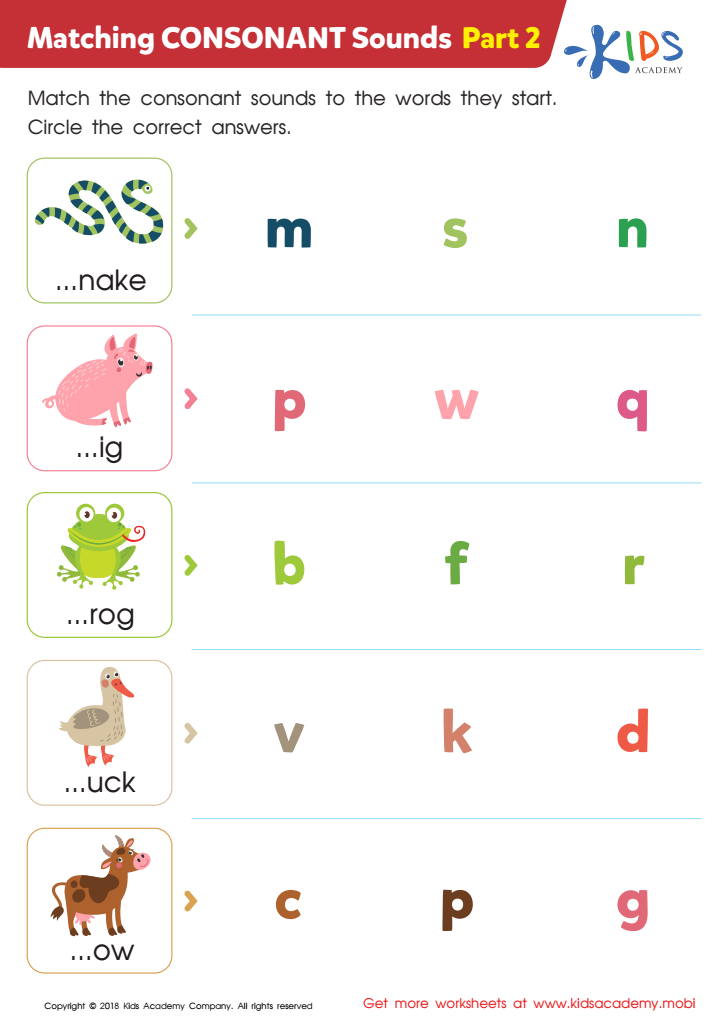
Look at the picture, say the word and match the consonant sound with the letter. Coach your child to name the animal and complete the word. For extra challenge, write the missing letter in the box! This PDF worksheet helps kids learn to read words with familiar animal pictures.
Matching Consonant Sounds: Part 2 Worksheet
Worksheet
Let's Check for «i» Sounds Worksheet

Let's Check for «i» Sounds Worksheet

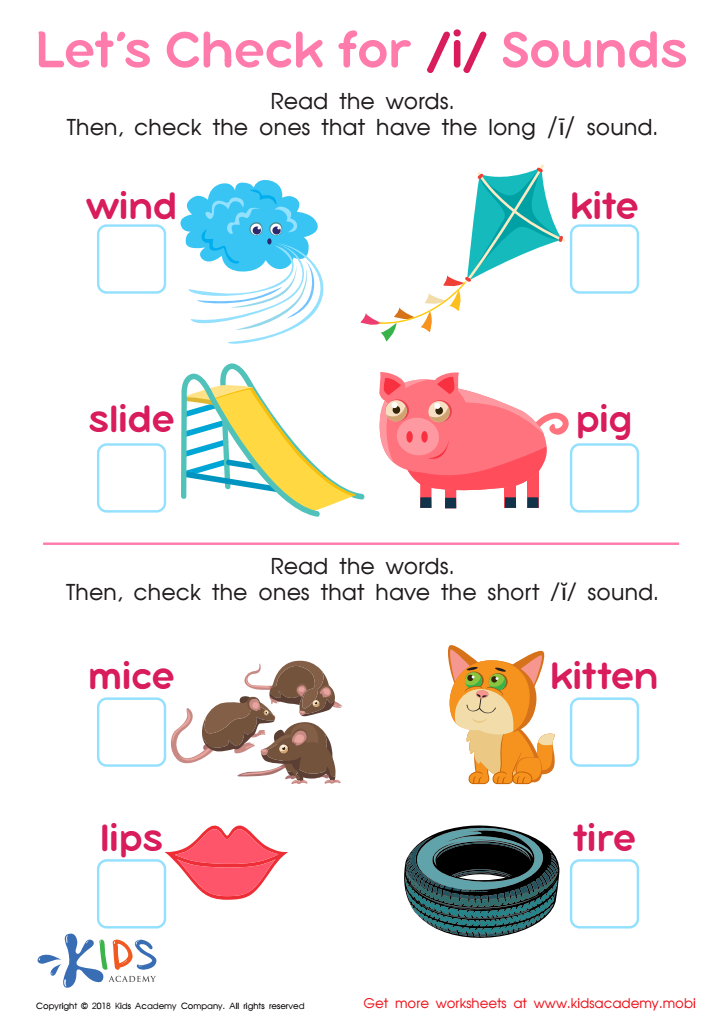
This fun worksheet with pictures boosts phonics skills - differentiating between long «ī» and short «i» sounds in 1- and 2-syllable words. Kids use picture clues to read words, then check off the correct ones. It's a great way for new readers to practice early reading skills and find success on their own.
Let's Check for «i» Sounds Worksheet
Worksheet
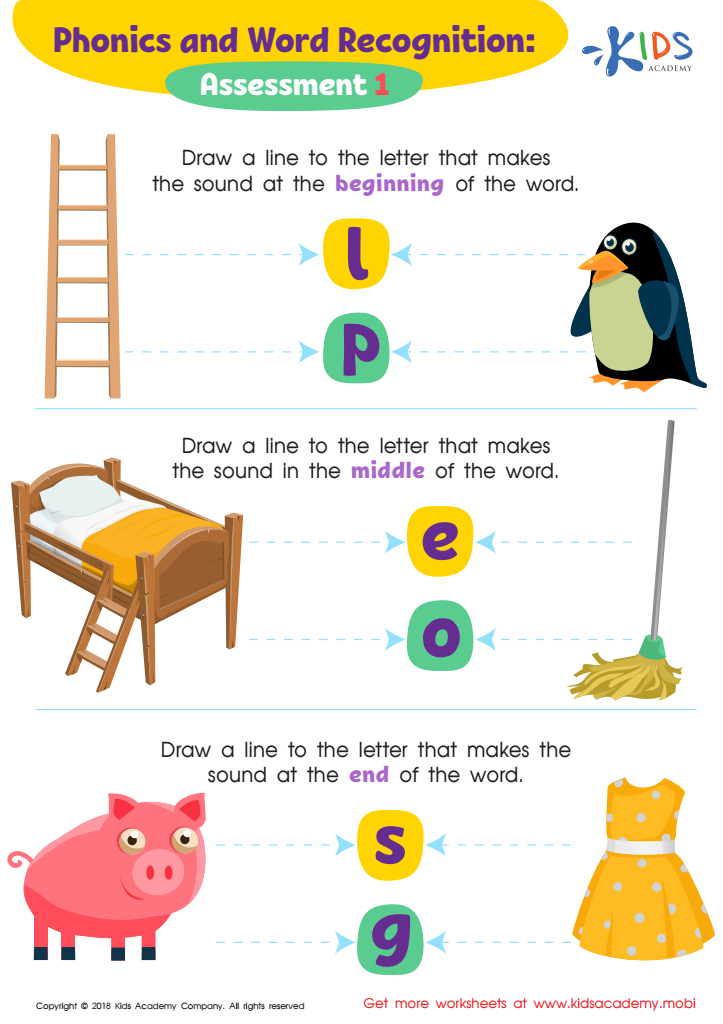
Phonics and Word Recognition: Assessment 1 ELA Worksheet


Phonics and Word Recognition: Assessment 1 ELA Worksheet

This fun worksheet tests your child's sound recognition skills for each part of a word. Ask your child to name each image and trace the line to match it with the corresponding letter. Listen for beginning sounds on 1st, middle sounds on 2nd, and ending sounds on 3rd. Encourage learning with this colorful and interactive activity!
Phonics and Word Recognition: Assessment 1 ELA Worksheet

Worksheet


Phonics recognition is crucial for children aged 4-6 as it forms the foundation for effective reading and writing skills. At this developmental stage, children are beginning to grasp the relationship between letters and sounds, which is essential for decoding words. Understanding phonics helps children efficiently break down unfamiliar words, making them more confident readers.

For parents and teachers, emphasizing phonics means equipping children with the tools they need to succeed in literacy. Children who master phonics in their early years are more likely to experience positive reading experiences, leading to a lifelong love of books and learning. This also contributes to greater academic success in other subjects as literacy is intertwined with comprehension and communication.

Moreover, supporting phonics recognition helps children with diverse learning styles and needs. By focusing on phonics, teachers can implement targeted strategies to reach all learners, creating an inclusive learning environment. As children develop these foundational skills, they gain the ability to engage with texts, express their thoughts clearly, and build a solid groundwork for more advanced reading strategies in the future.

In essence, prioritizing phonics recognition is vital for fostering literacy skills that will benefit children throughout their educational journey and beyond.