Spelling practice Normal Phonics Worksheets for Ages 4-6 - Page 2
27 filtered results
-
From - To
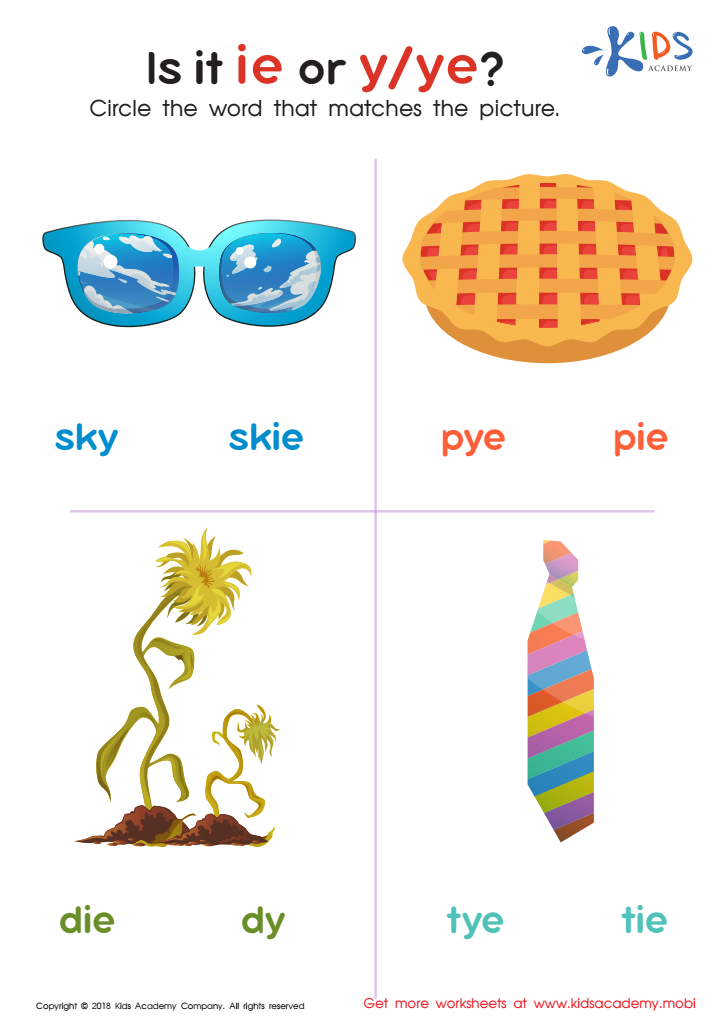
Is It IE or Y/Ye? Worksheet
 Assign to My Students
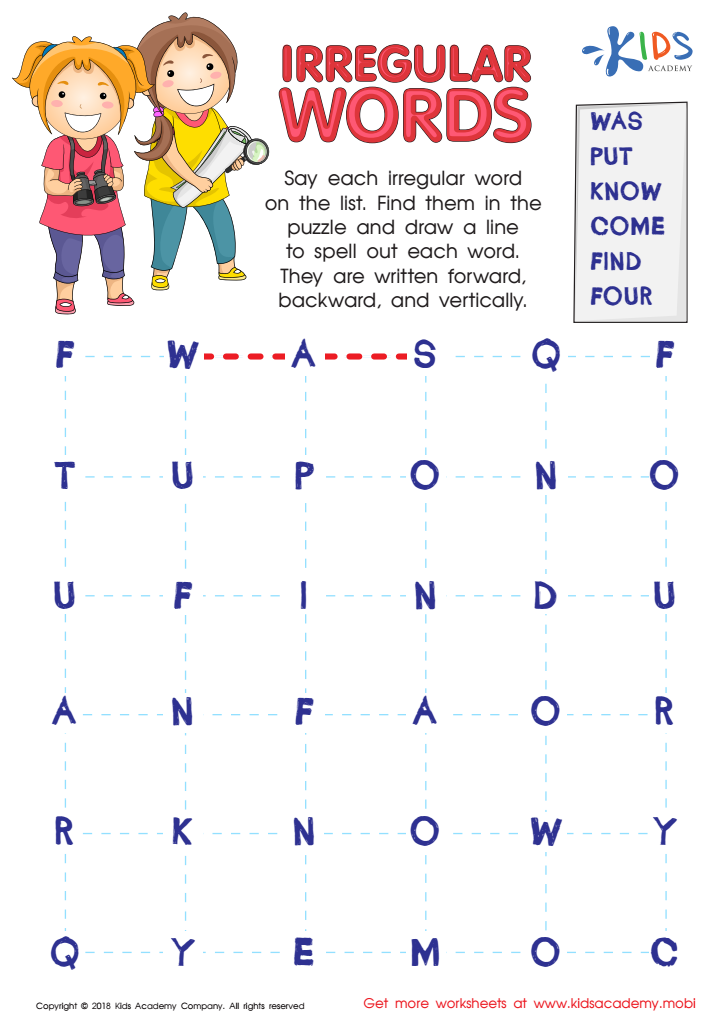
Irregular Words Worksheet
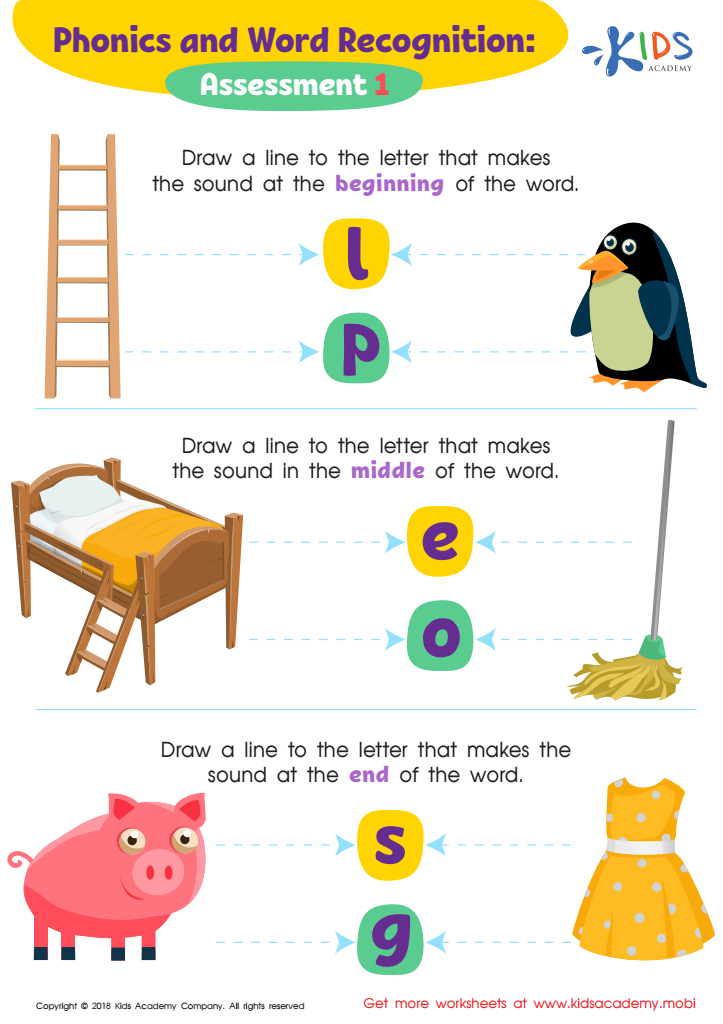
Phonics and Word Recognition: Assessment 1 ELA Worksheet








Parents and teachers should prioritize spelling practice using Normal Phonics for children aged 4-6 because it forms the foundation of reading and writing skills vital for literacy development. At this young age, children are developing phonemic awareness—the ability to hear, identify, and manipulate sounds in words. Normal Phonics engages them by breaking down sounds and syllables, making the connection between letters and their corresponding sounds clearer.
When children participate in phonics-based spelling practice, they learn to decode words, enabling them to read independently. This skill is crucial for academic success as it supports comprehension and fosters a love for reading. Additionally, consistent practice enhances vocabulary, allowing children to communicate their thoughts more effectively.
Moreover, mastering spelling at an early age contributes to increased confidence. As children become more proficient, they find joy in writing, helping to cultivate creativity. Spelling practice also encourages attention to detail and promotes discipline, as kids learn the importance of persistence and focus.
Ultimately, investing in Normal Phonics and spelling practice is essential not just for immediate educational growth, but also for lifelong learning and communication skills, ensuring children are well-equipped for their future academic journeys.







