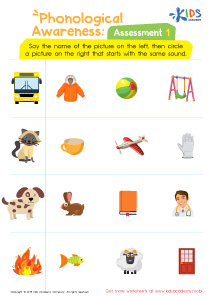
Rhyming skills development Normal Rhyming Worksheets for Ages 4-6
4 filtered results
-
From - To
Enhance your child's language skills with our engaging Rhyming Worksheets designed for ages 4-6! These normal worksheets focus on developing essential rhyming abilities, a vital stepping stone in early literacy. By exploring a variety of fun and interactive activities, children will strengthen their phonemic awareness and vocabulary while having a blast. Our worksheets introduce exciting word pairs and entertaining visuals, ensuring that learning to rhyme becomes an enjoyable experience. Perfect for both classroom and home use, these resources empower young learners to recognize sounds, foster creativity, and build confidence in their reading skills. Start their rhyming journey today!
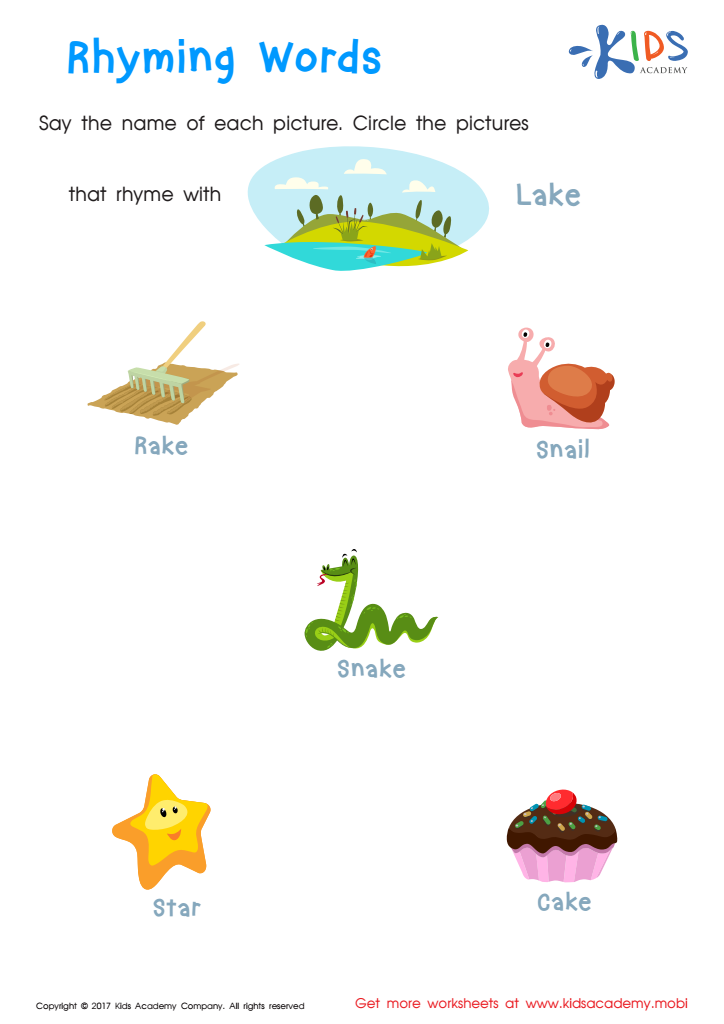
Rhyming Words Rhyming Worksheet
 Assign to My Students
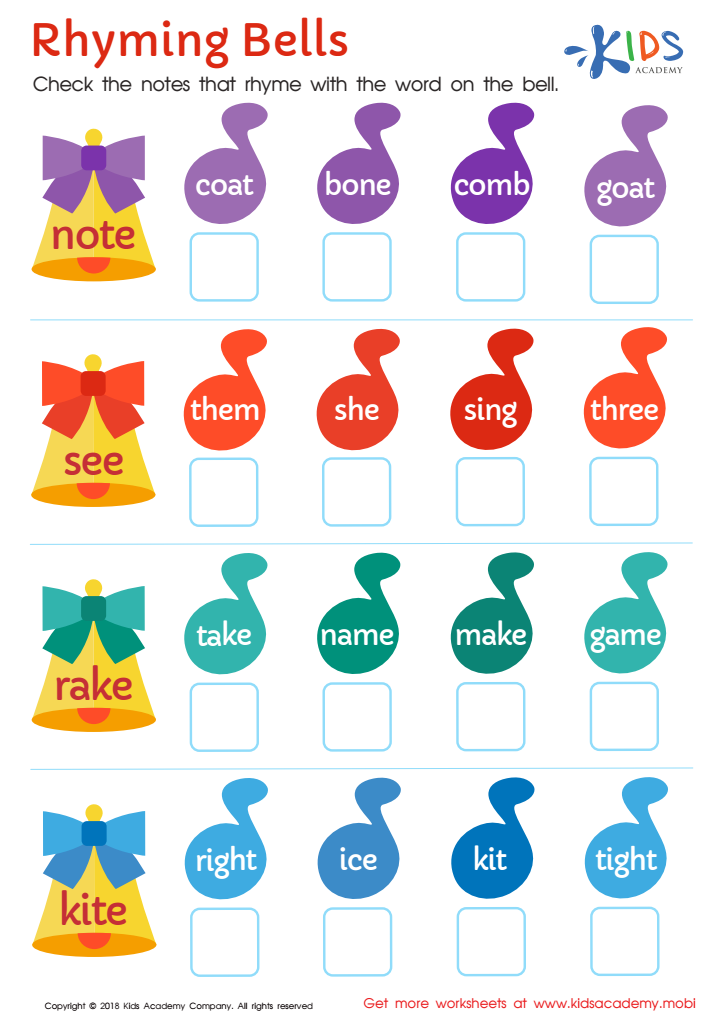
Rhyming Bells Worksheet
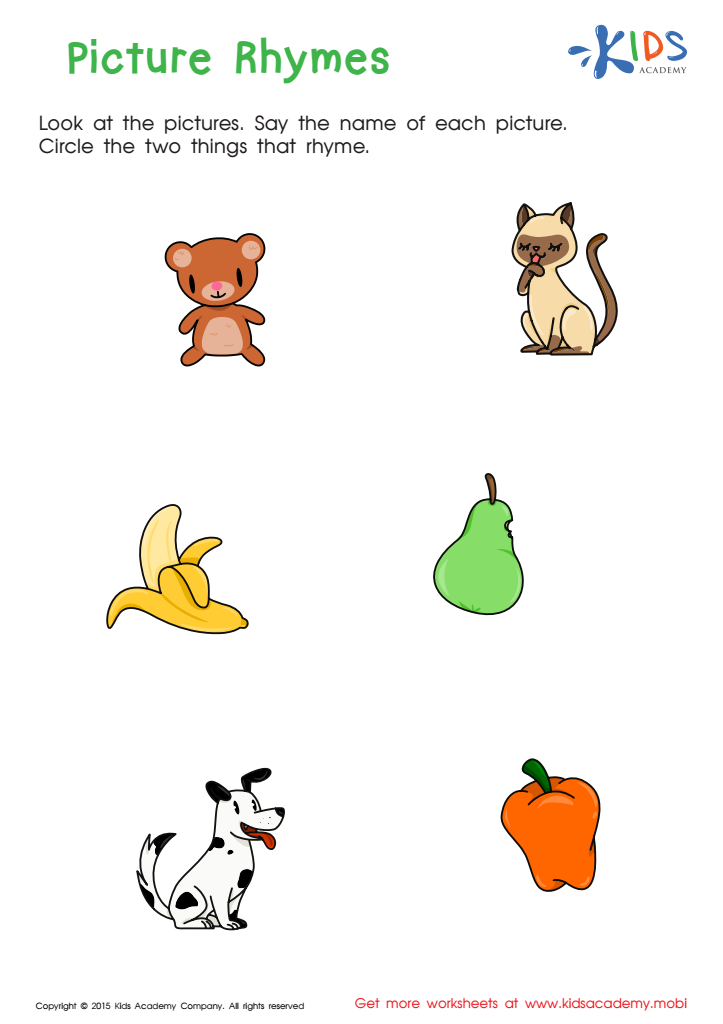
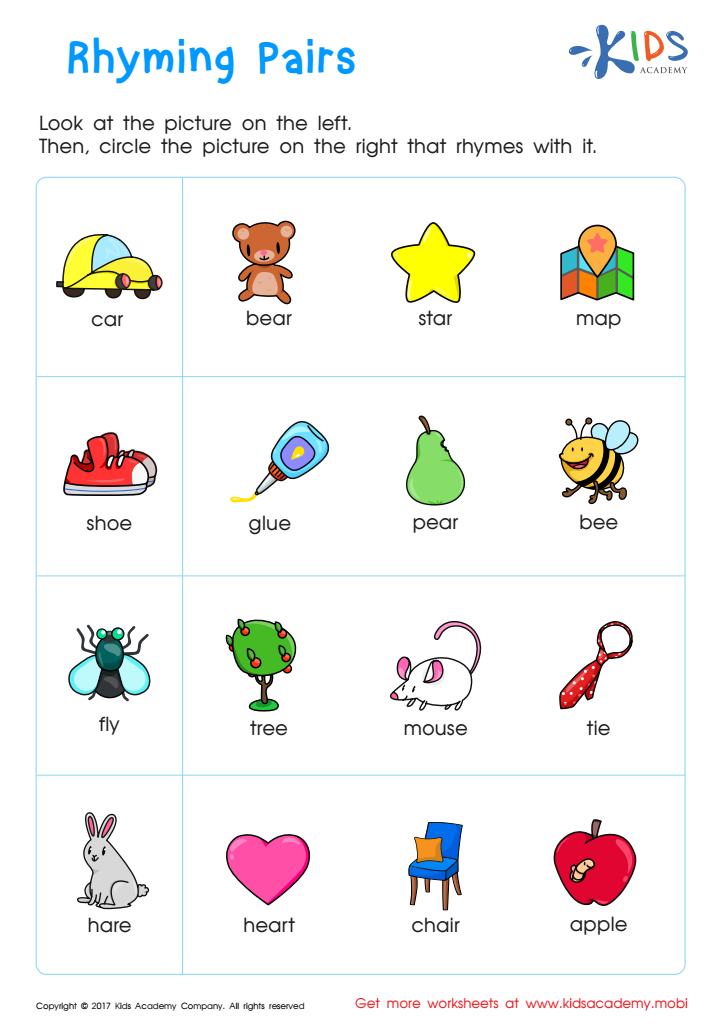
First Words: Picture Rhymes Worksheet








Rhyming skills development in children aged 4-6 is a crucial aspect of early literacy and language acquisition that should be prioritized by parents and teachers. First, engaging with rhymes enhances phonemic awareness, which is the ability to hear and manipulate sounds in words. This awareness forms the foundation for reading and spelling. When children recognize and produce rhyming words, they develop their decoding skills, making transitions to reading smoother.
Moreover, rhyming fosters vocabulary expansion. Children often encounter new words in rhyming texts and songs which broadens their linguistic repertoire. This enriched vocabulary not only benefits oral communication but also reading comprehension as they progress.
Rhyming activities also promote cognitive development and memory retention. Singing songs, reading nursery rhymes, and playing rhyming games help strengthen neural connections in the brain, improving cognitive processing and problem-solving skills.
Social-emotionally, rhyming can enhance a child’s confidence and enjoyment of language. Engaging in these fun, rhythmic activities encourages collaboration, listening skills, and even social interaction.
Ultimately, parents and teachers should care about rhyming as it provides a joyful, effective, and essential pathway toward literacy success and overall cognitive growth in young children.