Phonics practice Normal Short Vowels Worksheets for Ages 4-6
3 filtered results
-
From - To
Enhance your child’s reading skills with our Phonics Practice Normal Short Vowels Worksheets for ages 4-6. These engaging and educational worksheets focus on mastering the sounds of short vowels, a fundamental step in early literacy. Perfect for preschool, pre-K, and kindergarten, each worksheet contains fun activities designed to reinforce letter recognition and sound association. Through engaging exercises such as matching, tracing, and coloring, young learners will build a strong phonics foundation that will boost their confidence and prepare them for reading success. Help your child excel in their early literacy journey with our expertly designed phonics practice worksheets.
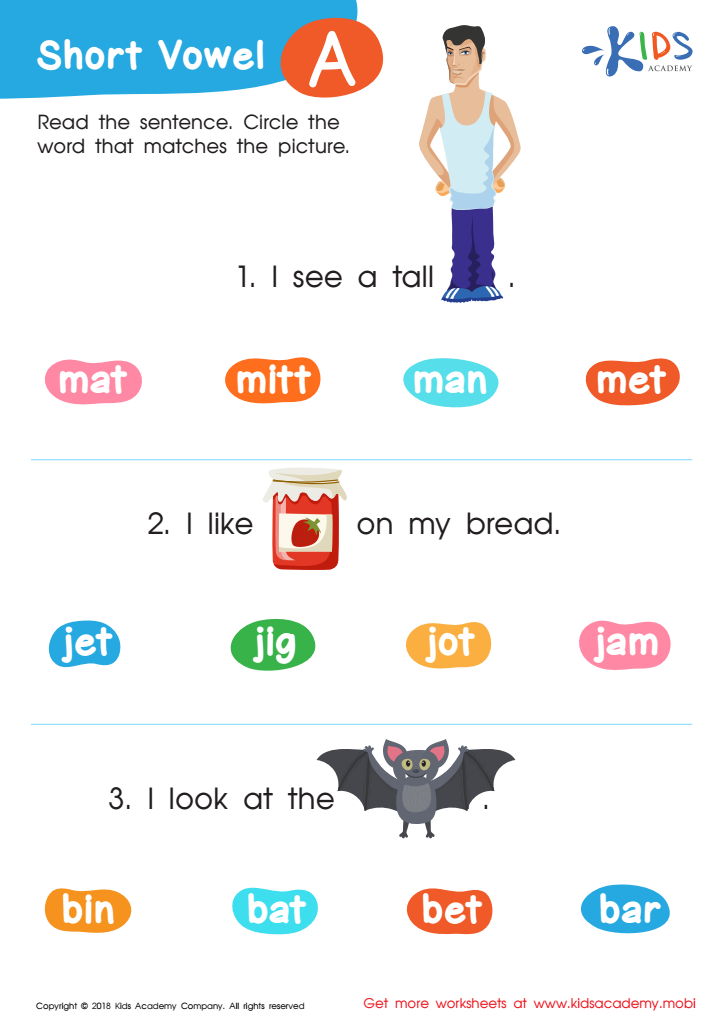
Short Vowel /a/ Worksheet
 Assign to My Students
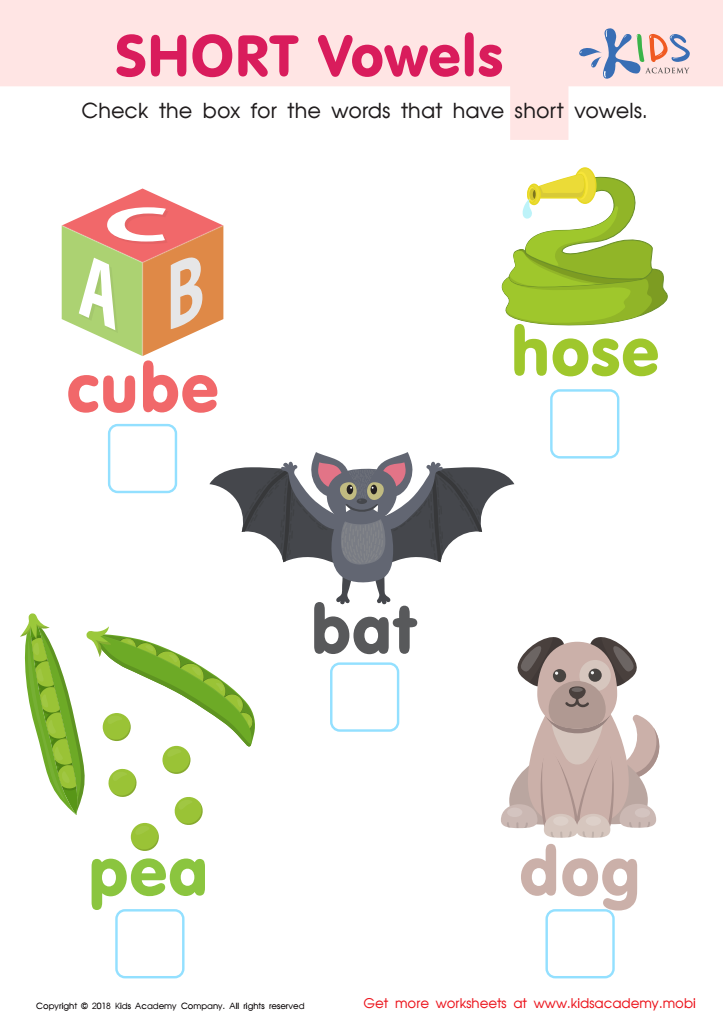
short vowels Worksheet
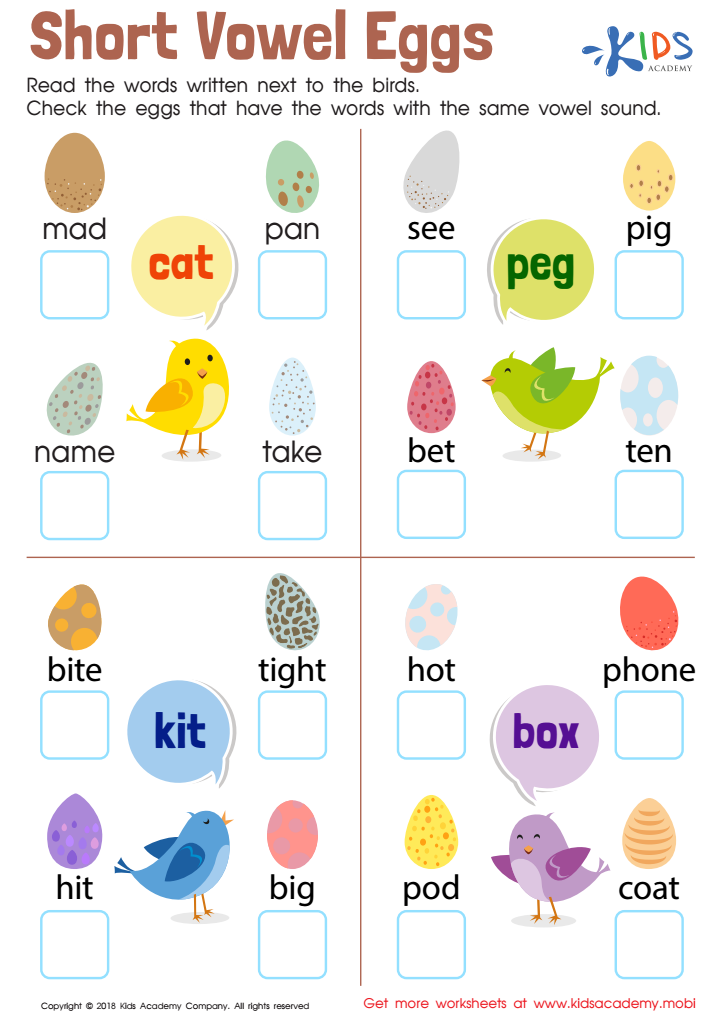
Short Vowel Eggs Worksheet



Parents and teachers should prioritize phonics practice focused on normal short vowels for children aged 4-6 because it forms the bedrock of reading and writing skills. This critical developmental phase is when young learners are most receptive to acquiring foundational literacy abilities. Phonics involves understanding the relationship between sounds and their written symbols, which is essential for decoding words.
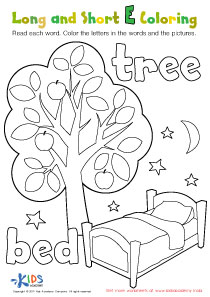
Short vowels—such as "a" in "cat," "e" in "bed," "i" in "sit," "o" in "pot," and "u" in "cup"—are often the first sounds that children learn because they appear frequently in simple, early reading words. Mastering these vowel sounds helps children quickly identify and read words, boosting their confidence and encouraging a love for reading.
Consistent practice with short vowels aids in developing phonemic awareness, enabling children to segment and blend sounds effectively. This skill is crucial for spelling and reading fluently. Furthermore, early success with phonics can have a positive impact on a child's self-esteem and academic performance, creating a strong foundation for future learning.
By engaging children in fun and interactive phonics activities, parents and teachers can foster a supportive and nurturing learning environment. This ensures that young learners gain the essential skills needed to become proficient readers and enthusiastic learners, paving the way for academic success.