Vocabulary expansion Normal Short Vowels Worksheets for Ages 4-6
3 filtered results
-
From - To
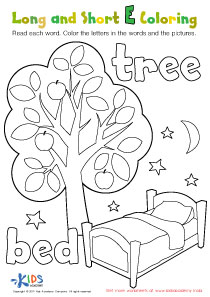
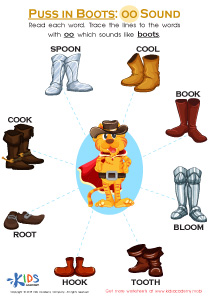
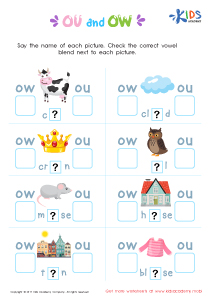
Explore our engaging "Vocabulary Expansion Normal Short Vowels Worksheets" designed specifically for children aged 4-6. These worksheets provide a fun and interactive way to enhance vocabulary by focusing on normal short vowel sounds. Each activity helps young learners identify and utilize short vowels in various words, boosting their language skills while fostering a love for learning. With colorful illustrations, simple instructions, and varied exercises, children will build confidence in their reading and writing abilities. Perfect for use at home or in the classroom, these worksheets offer essential practice that lays the foundation for successful communication. Start expanding vocabulary today!
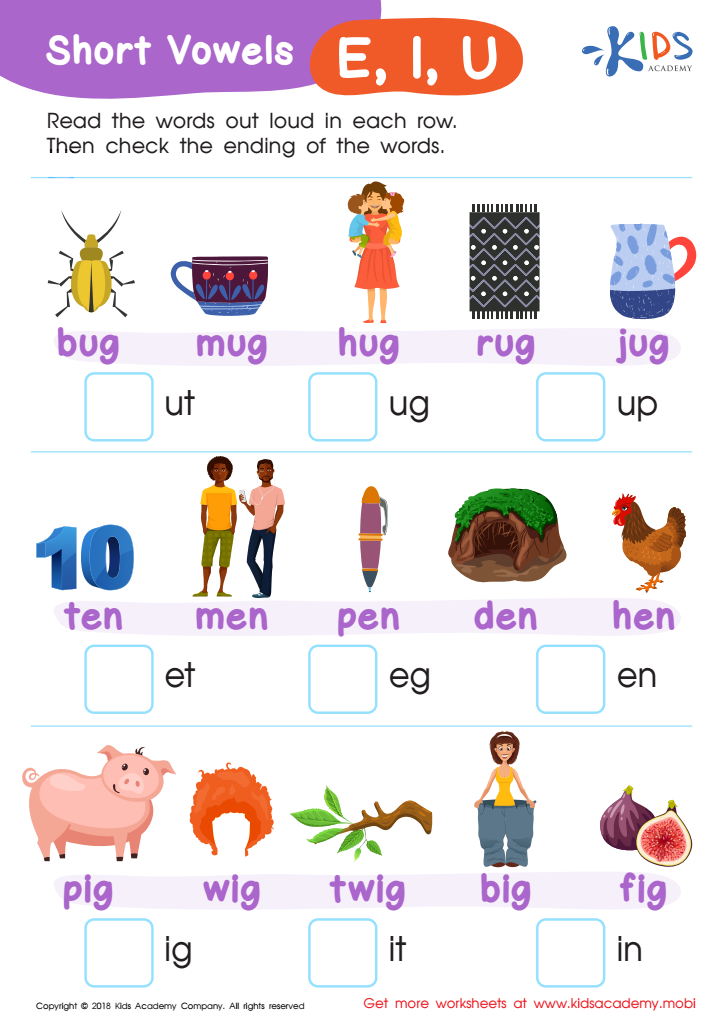
Short Vowels /e/, /i/, and /u/ Worksheet
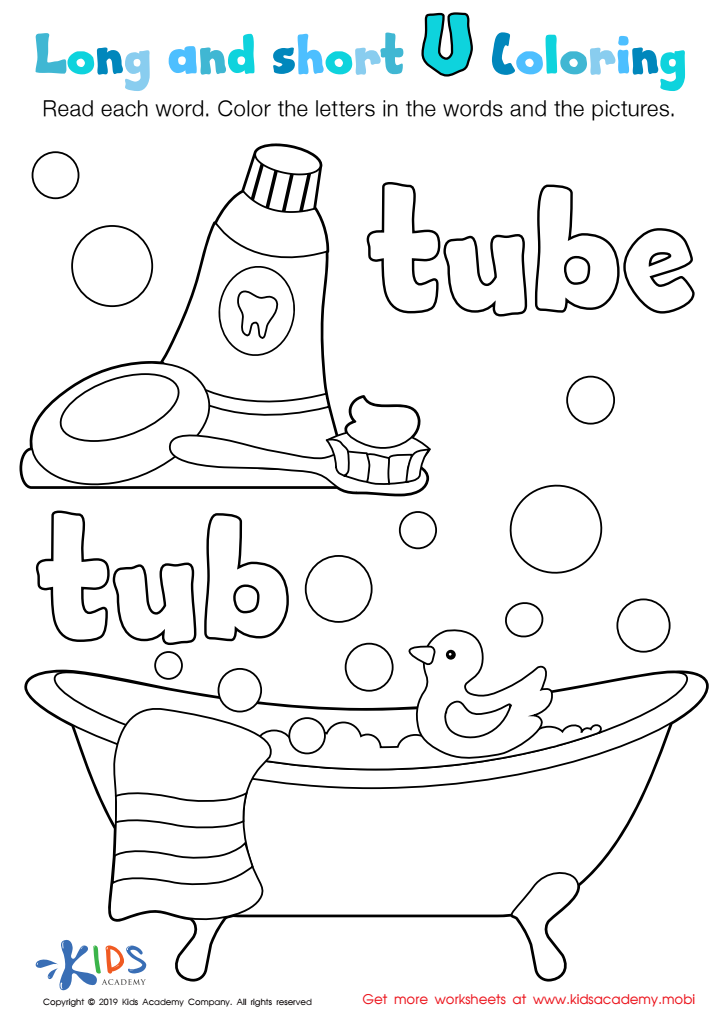
Long and Short U Worksheet
 Assign to My Students
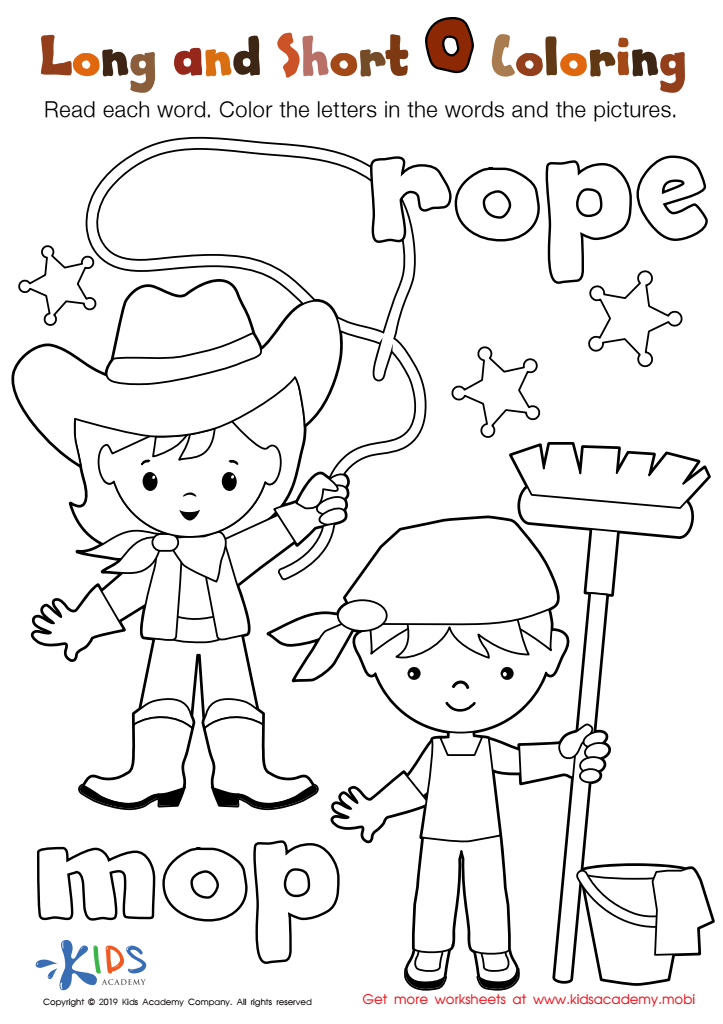
Long and Short O Worksheet
Assign to My Students



Vocabulary expansion in early childhood, particularly through the understanding of normal short vowels, is essential for children aged 4-6. At this developmental stage, children are rapidly acquiring language skills, and a strong vocabulary foundation sets the tone for future literacy and communication success. Short vowels, such as those found in words like "cat," "bed," "pig," and "lot," are fundamental building blocks in phonics and reading.
Parents and teachers should care about this because comprehensive vocabulary knowledge enhances reading comprehension, writing skills, and verbal expression. Children who grasp short vowels can decode words more easily, helping them transition from phonemic awareness to actual reading, which is crucial in later grades when academic demands increase.
Moreover, engaging with vocabulary helps develop critical thinking and cognitive skills. Interactive activities such as storytelling, games, and songs that incorporate short vowel sounds make learning enjoyable and memorable. This early engagement not only supports language skills but also fosters a love for reading, making children more likely to explore literature and learn independently in the future. By focusing on vocabulary expansion, adults can equip children with the linguistic tools they need to thrive both in scholastic settings and in everyday communication.