Normal Silent Vowels Worksheets for Ages 4-6
3 filtered results
-
From - To
Discover our engaging "Normal Silent Vowels Worksheets for Ages 4-6," designed to make learning fun for early readers! These worksheets help young learners identify and practice silent vowels in words, enhancing their phonemic awareness and vocabulary. With a variety of interactive exercises, including coloring activities, word searches, and fill-in-the-blank challenges, children will develop essential reading skills while enjoying themselves. These resources are perfect for both classroom use and at-home learning. Encourage your child's literacy journey today by downloading our vibrant, skill-building worksheets that cater to the educational needs of children aged 4 to 6! Let the learning begin!
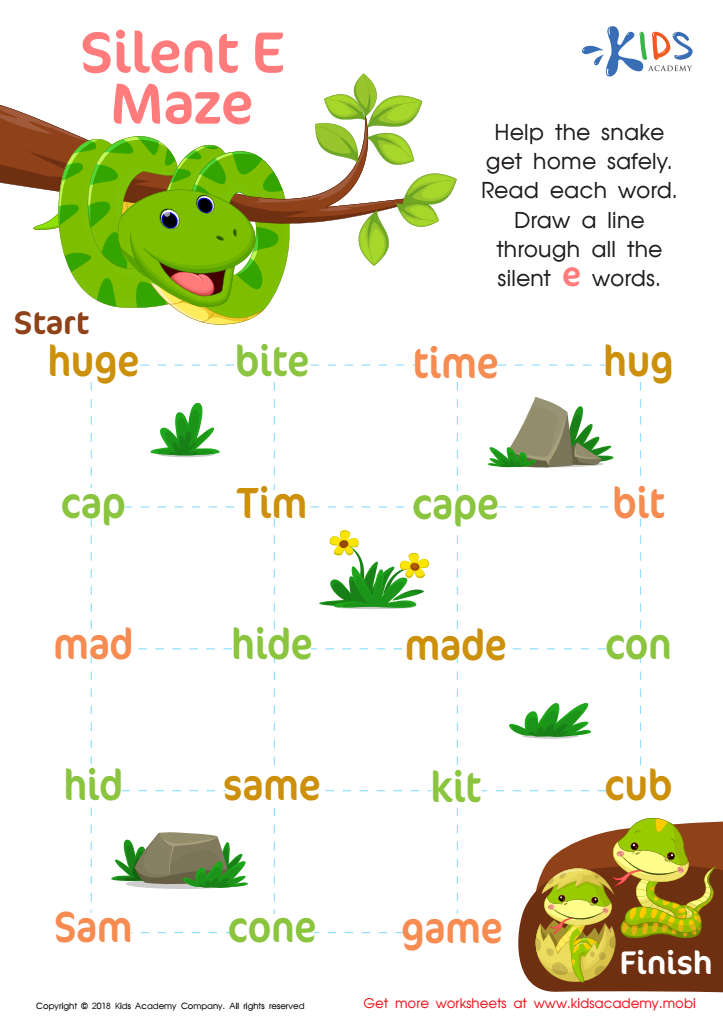
Silent E Maze Worksheet
 Assign to My Students
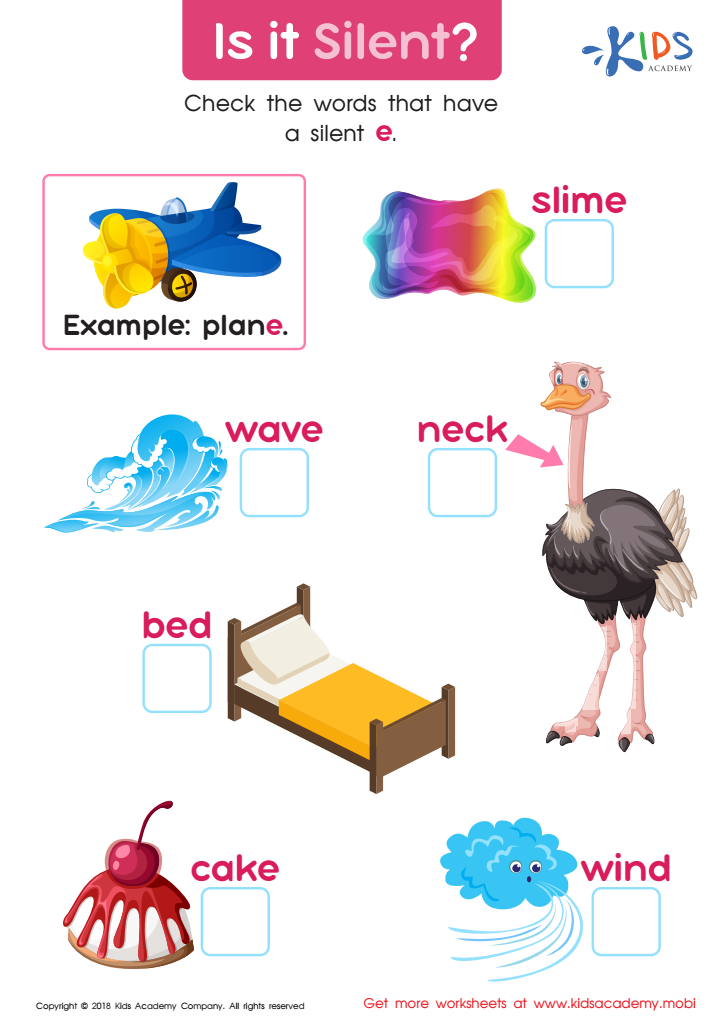
Is It Silent? Worksheet
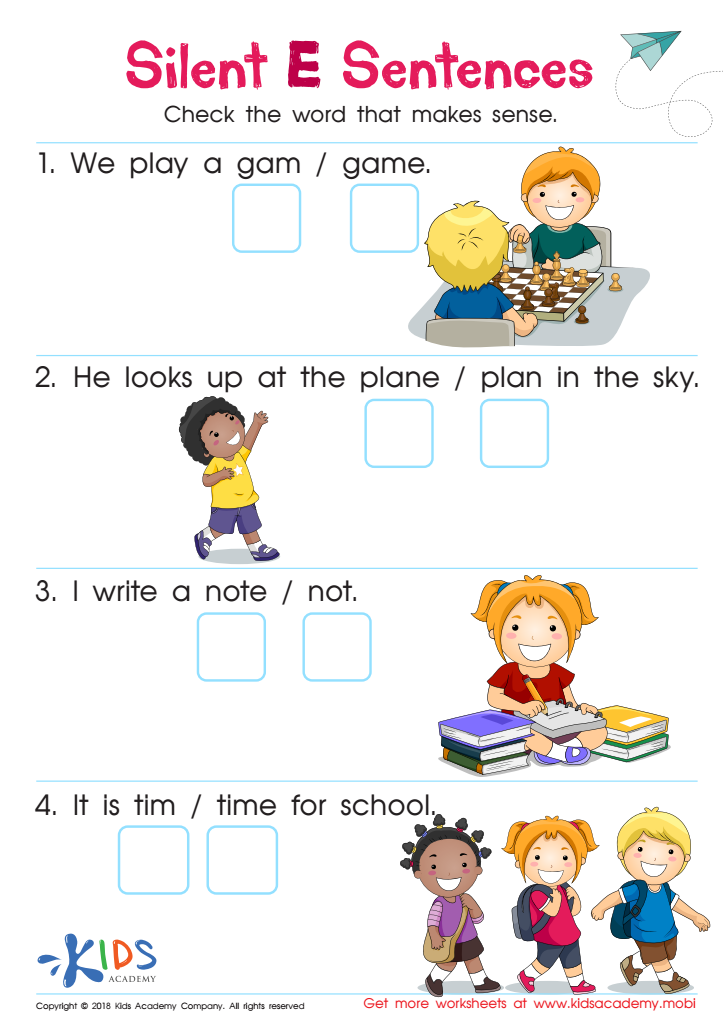
Silent E Sentences Worksheet


Normal silent vowels are an essential aspect of early literacy, particularly for children aged 4-6, as they form the foundation of phonics and spelling skills. Mostly found in words like "cake," "bike," and "time," these vowels not only influence pronunciation but also comprehension. Understanding these concepts helps children develop strong reading skills, enhancing their ability to decode words.
Parents and teachers should care about silent vowels as they are integral in building phonemic awareness. Children who familiarize themselves with the concept of silent vowels can improve their word recognition and fluency, leading to greater confidence in reading. Moreover, recognizing patterns in words with silent vowels enables young learners to tackle more complex words as they advance.
Furthermore, discussions about silent vowels can enhance vocabulary acquisition. By exploring words and their meanings, children can make connections and engage in meaningful conversations, positively influencing their overall language skills. By focusing on silent vowels at an early age, parents and teachers equip children with critical reading strategies, fostering lifelong learning habits. Ultimately, this awareness aids not only in literacy development but also contributes to their overall academic success and love for reading.








