Letter Tracing Practice Normal Tracing Letters Worksheets for Ages 4-6
3 filtered results
-
From - To
Enhance your child's writing skills with our Letter Tracing Practice worksheets designed for ages 4-6. These worksheets provide a fun and engaging way for young learners to master the alphabet. Each sheet features colorful, traceable letters that help develop fine motor skills, hand-eye coordination, and basic handwriting techniques. Ideal for preschool and kindergarten-aged children, our normal tracing letters worksheets allow students to gain confidence in writing while exploring their creativity. Whether used at home or in the classroom, these resources support early literacy development and encourage an enjoyable learning experience. Download today and watch your child's writing flourish!
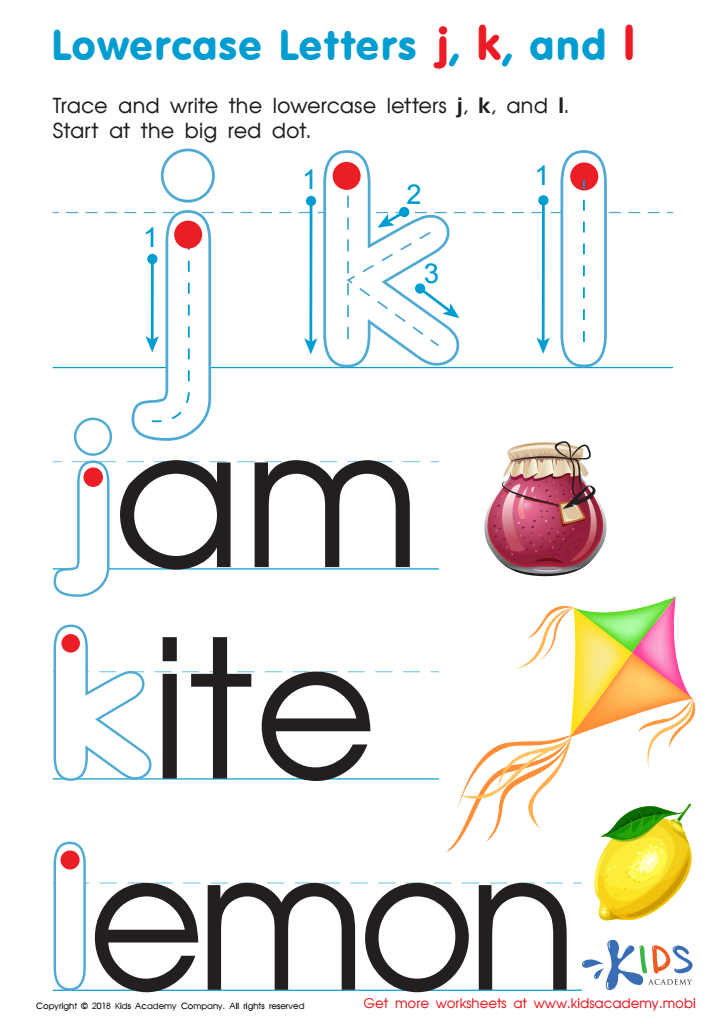
Lowercase Letters j k l Worksheet
 Assign to My Students
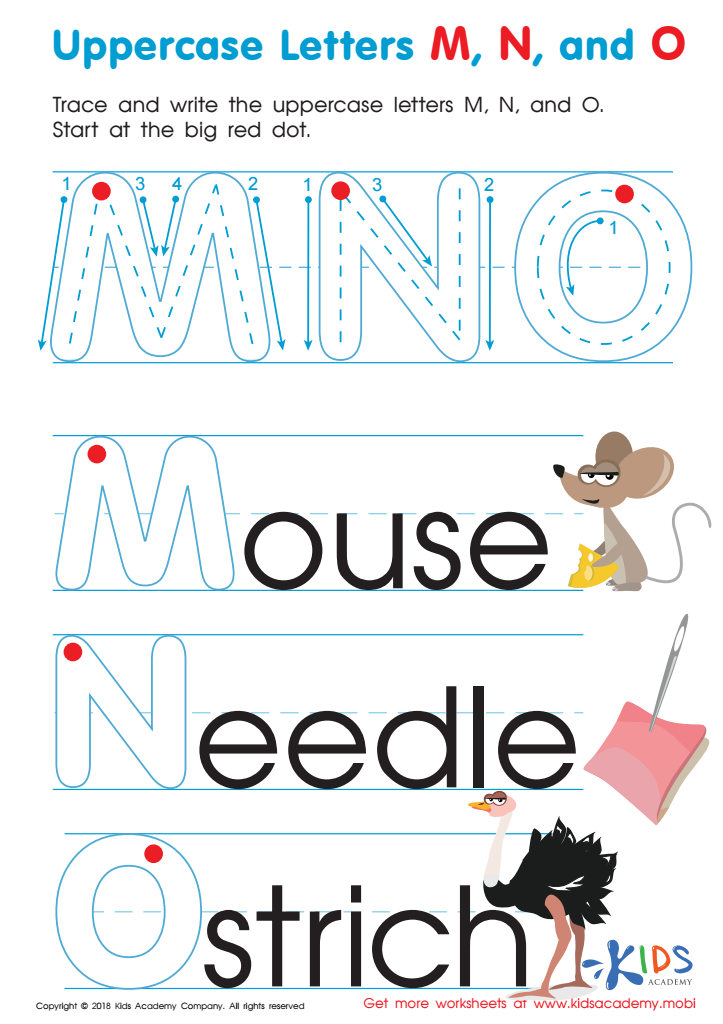
Uppercase Letters M, N, and O Worksheet
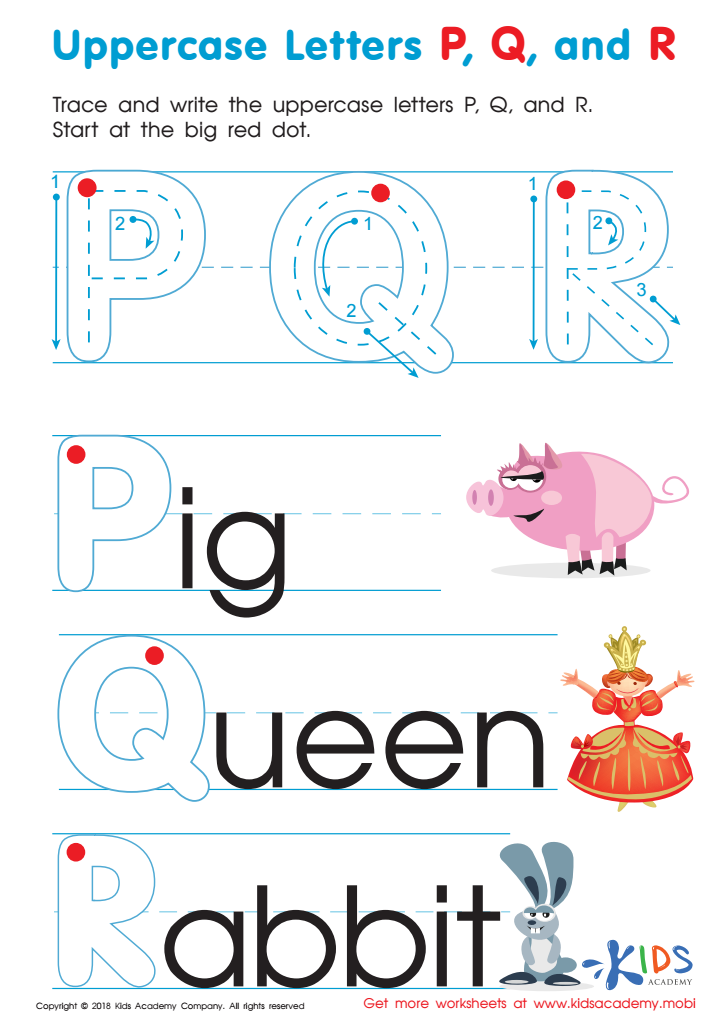
Uppercase Letters P, Q, and R Worksheet







Letter tracing practice is crucial for children aged 4-6 as it lays the foundation for their literacy development. At this stage, children are honing both fine motor skills and cognitive abilities, and tracing letters provides a structured way to develop these essential skills. By tracing, children learn how to form letters correctly, which helps prevent future writing issues.
Additionally, tracing engages multiple senses, reinforcing learning through visual and tactile feedback. This multisensory approach helps children recognize letter shapes and promotes letter-sound association, which is fundamental in early reading. As they trace, children also build confidence in their writing abilities, encouraging them to express themselves more freely through written language.
Moreover, tracing exercises can enhance attention and focus, which are vital for academic success. For parents and teachers, promoting letter tracing not only supports literacy skills but also cultivates a love for learning. It offers a fun and productive activity that can be easily incorporated into daily routines at home or in the classroom. Ultimately, engaging in letter tracing practice can set children on a path toward successful reading, writing, and comprehension skills, making it an essential component of early childhood education and development.








