Uppercase identification Normal Uppercase Letters Worksheets for Ages 4-6
5 filtered results
-
From - To
Explore our engaging Uppercase Identification Normal Uppercase Letters Worksheets, specially designed for children aged 4-6. These interactive worksheets promote early literacy skills by helping young learners recognize and identify uppercase letters in a fun and educational way. Each worksheet features colorful illustrations and easy-to-follow activities that foster a love for learning. With various exercises, children will develop their letter recognition skills, enhance their writing abilities, and build a strong foundation for future reading and writing endeavors. Perfect for classroom settings or home learning, these worksheets make mastering uppercase letters enjoyable and effective. Start your child’s literacy journey today!
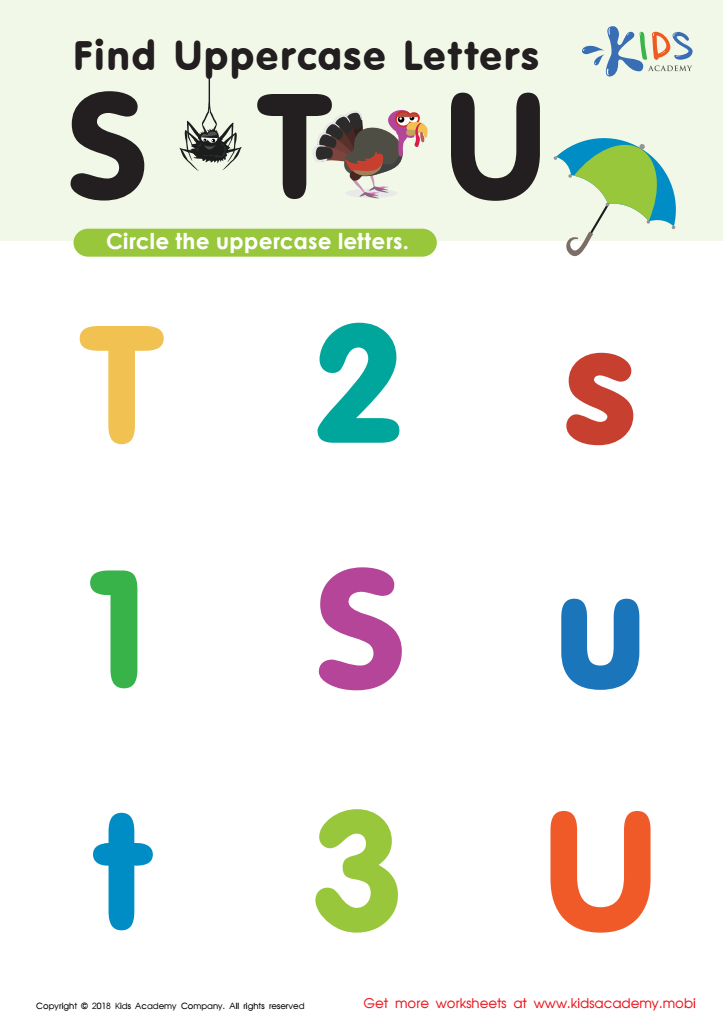
Find Uppercase Letters Worksheet
 Assign to My Students
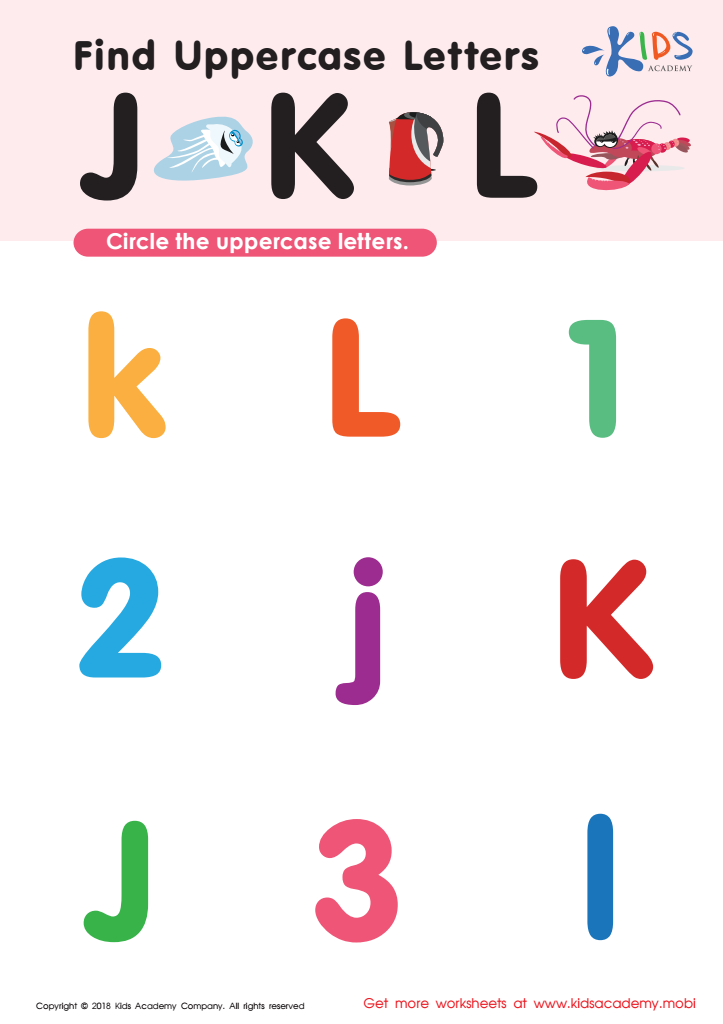
Find Uppercase Letters J, K, and L Worksheet

Find Uppercase Letters A, B, and C Worksheet
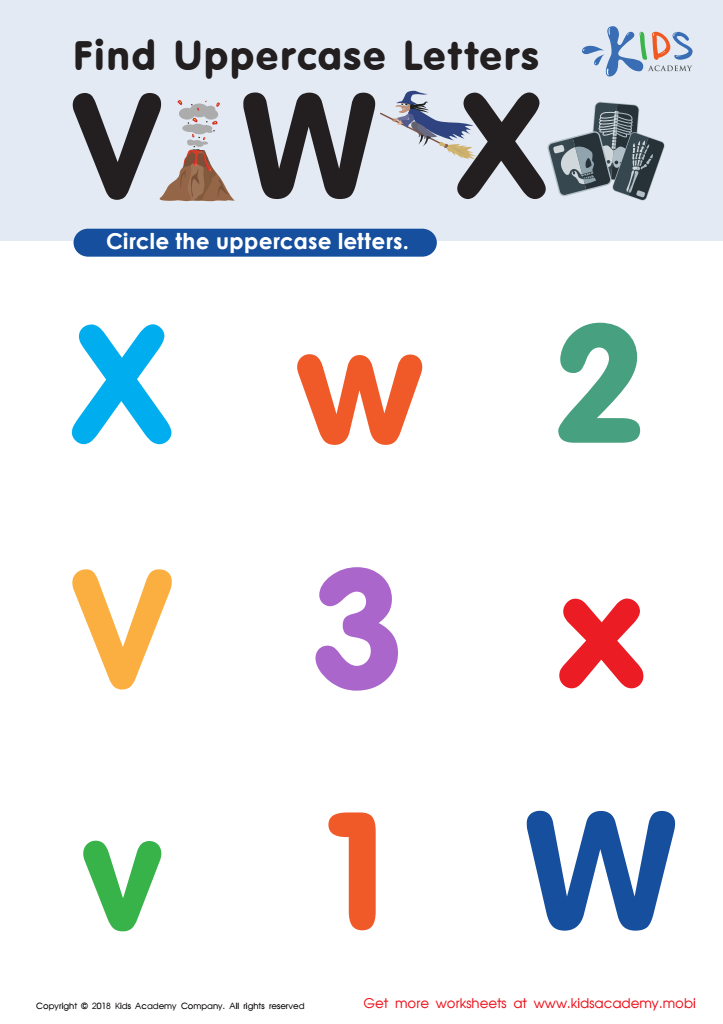
Find Uppercase Letters V, W, X Worksheet
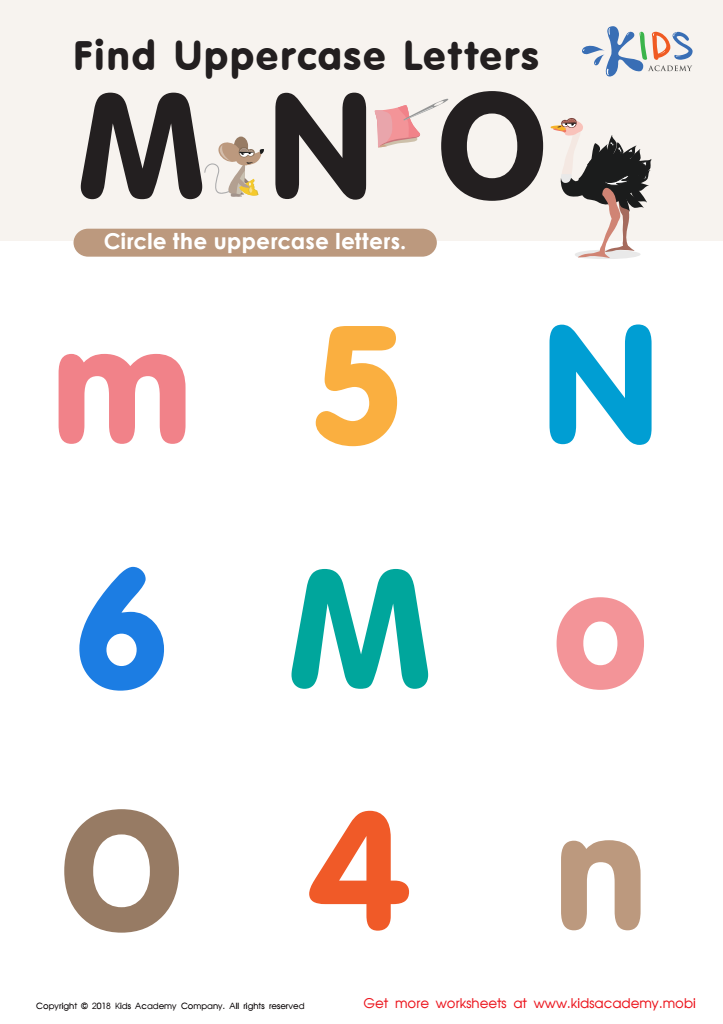
Find Uppercase Letters M, N, and O Worksheet








Understanding and identifying uppercase letters is a foundational skill for children aged 4 to 6, making it crucial for parents and teachers to prioritize this learning. Uppercase letters serve as the building blocks of reading and writing, helping children recognize the structure of words. Mastery of uppercase letters fosters early literacy skills, enabling children to name, read, and write with greater confidence.
At this age, children are often exposed to print in various forms, from storybooks to environmental signs. When they can identify uppercase letters, they improve their ability to navigate this print-rich environment, enhancing their comprehension and vocabulary. Furthermore, uppercase letters are commonly used at the beginning of sentences and in proper nouns, so familiarity with these symbols translates into more effective reading and comprehension.
In addition to literacy benefits, recognizing uppercase letters also promotes fine motor skills through writing practice. As children learn to form letters accurately, they develop hand-eye coordination and writing dexterity, essential skills for their overall academic development.
Ultimately, prioritizing uppercase letter identification helps children build a strong foundation for future learning, making it a crucial focus for parents and teachers alike.