Handwriting practice Normal English for Beginners Worksheets for Ages 4-6 - Page 2
26 filtered results
-
From - To
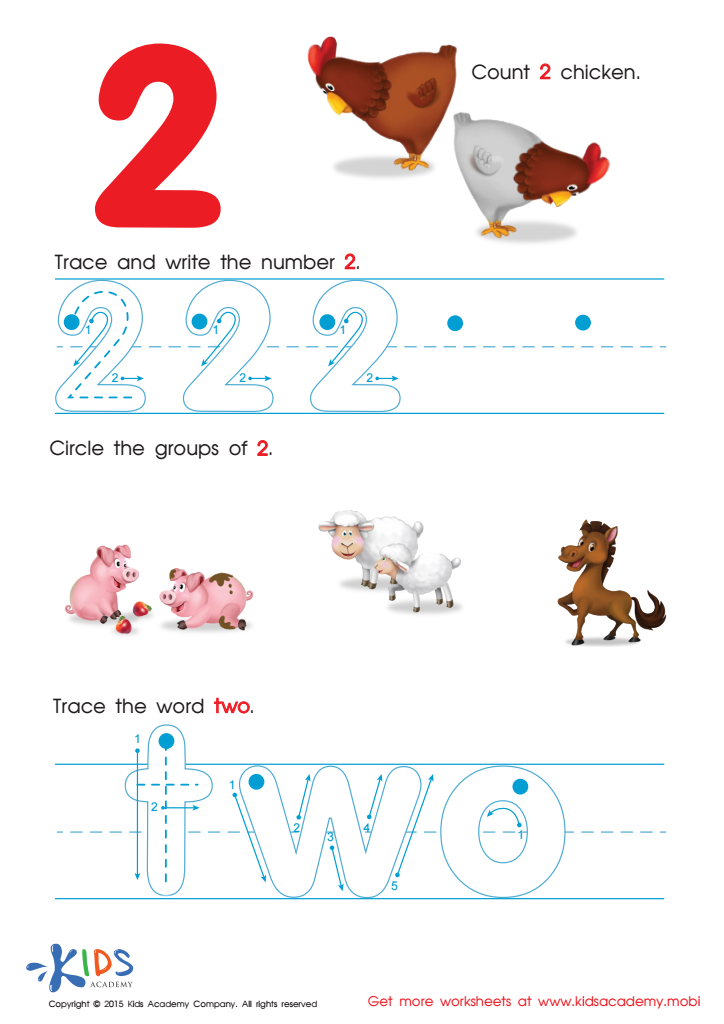
Learn to Write the Number 2 Worksheet

Letter N Coloring Sheet
 Assign to My Students





Handwriting practice is essential for young children aged 4-6 as it lays the foundation for essential skills they will use throughout their lives. Firstly, handwriting helps develop fine motor skills. When children practice writing, they strengthen the muscles in their fingers and hands, improving their dexterity and hand-eye coordination. This is important for everyday activities like tying shoelaces, buttoning jackets, or eating with utensils.
Secondly, handwriting practice enhances cognitive development. Learning to form letters and words helps children recognize the shapes and patterns of the alphabet, aiding in their reading and spelling skills. This preliterate practice helps children understand the relationship between sounds and symbols, a crucial step in literacy.
Moreover, handwriting fosters focus and concentration. When children sit down to write, they learn the discipline of completing tasks and following through on activities. This ability to pay attention and focus is valuable for academic learning and overall growth.
Lastly, practicing handwriting encourages creativity and self-expression. Children can express their thoughts and ideas more freely when they are comfortable with writing. This boosts their confidence and can instill a lifelong love for writing and learning.
In summary, handwriting practice for young children is not just about forming letters; it’s a multi-faceted activity that supports their motor skills, cognitive growth, focus, and creativity. So, parents and teachers should prioritize it for their holistic development.