Basic astronomy knowledge Normal Worksheets for Ages 4-6
3 filtered results
-
From - To
Explore the wonders of the universe with our "Basic Astronomy Knowledge Worksheets" designed for ages 4-6! These engaging, printable worksheets introduce young learners to fundamental astronomy concepts, such as the sun, moon, stars, and planets. Each worksheet features colorful illustrations and fun activities that stimulate curiosity and promote learning through play. Perfect for homeschooling or classroom settings, these resources encourage cognitive development, boost literacy, and inspire a love for science from an early age. Download now and ignite your child's interest in the cosmos while also enhancing their fine motor skills and creativity! Start your stellar adventure today!
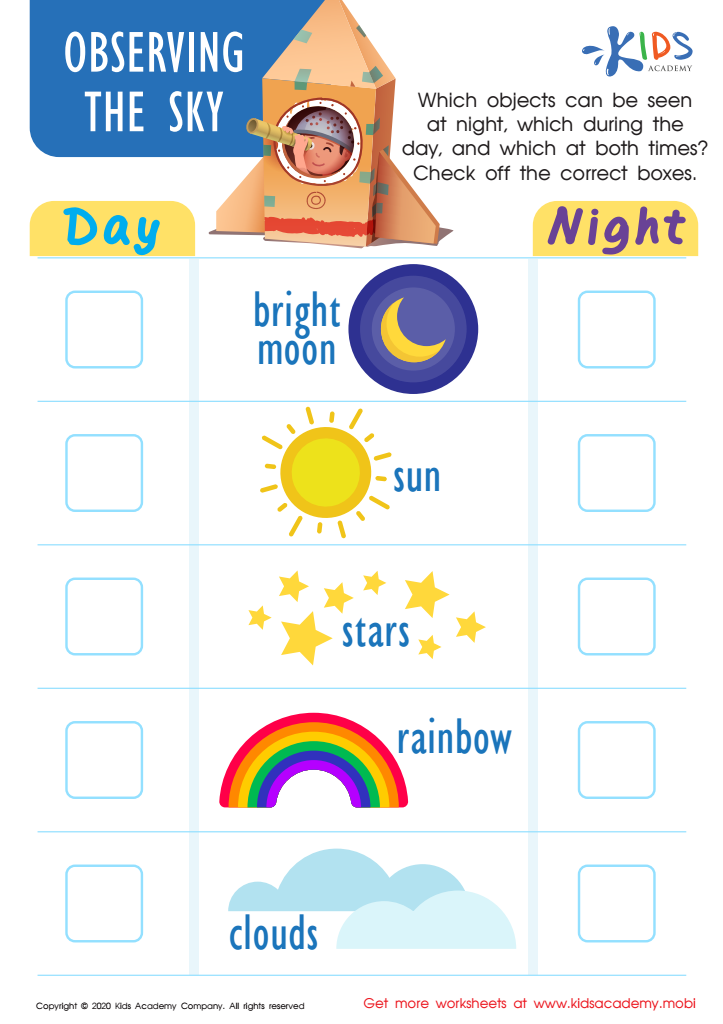
Observing the Sky Worksheet
 Assign to My Students
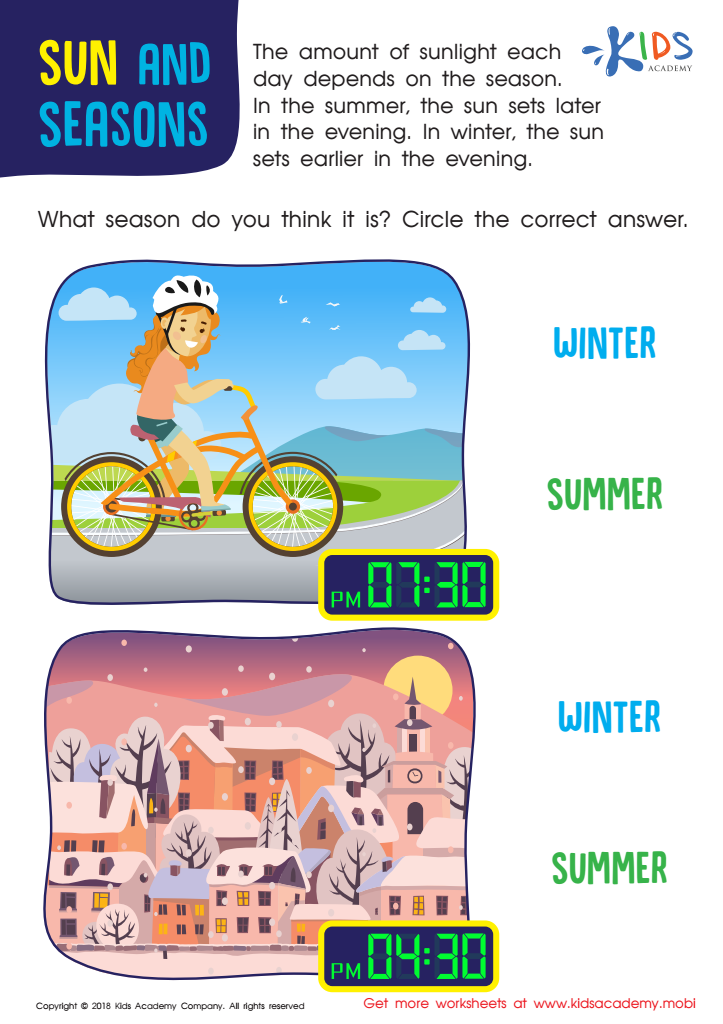
Sun and Seasons Worksheet
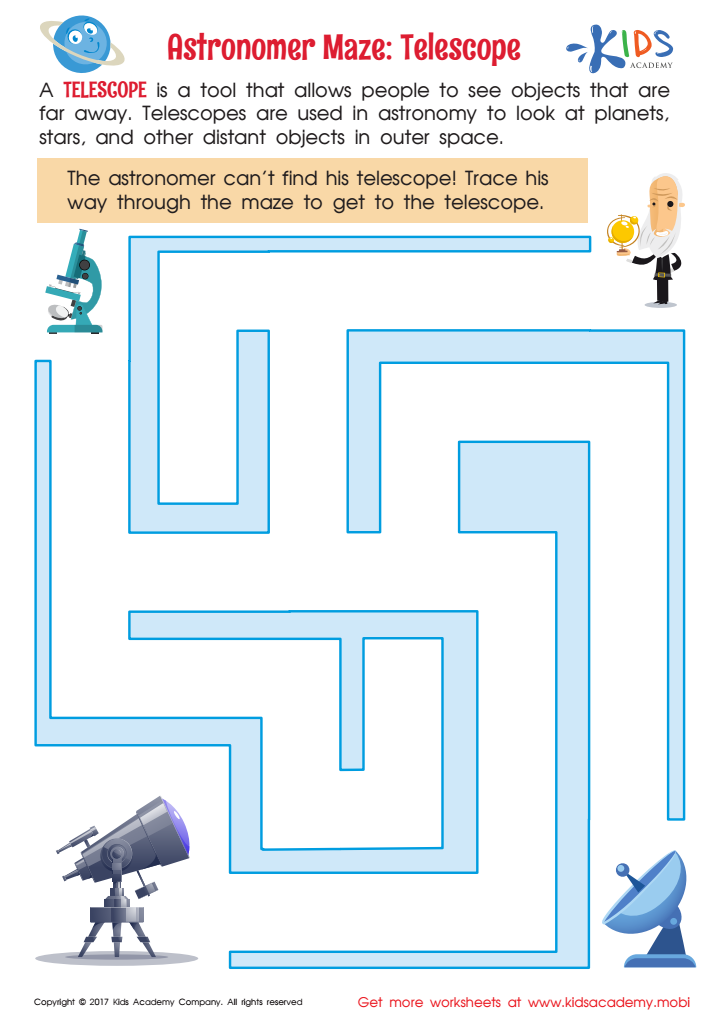
Astronomer Maze: Telescope Worksheet







Teaching basic astronomy to children aged 4-6 provides a multitude of benefits that extend beyond mere knowledge of stars and planets. Understanding the cosmos ignites curiosity and wonder, essential for fostering a love for learning. At this early stage, children are naturally inquisitive, and astronomy can fuel their imagination, encouraging them to ask questions about the universe and their place within it.
Additionally, basic astronomy introduces fundamental scientific concepts such as observation, classification, and patterns. For example, learning about day and night introduces ideas about the Earth’s rotation, while identifying various celestial bodies can lead to discussions about shapes, sizes, and colors, integrating art and science.
Incorporating astronomy also enhances children’s language skills as they learn new vocabulary, such as celestial, eclipse, and constellation, enriching their cognitive development. It encourages critical thinking skills through simple experiments and observations of the night sky.
Moreover, engaging with space-related topics can promote a sense of wonder and respect for the environment and the larger universe, instilling valuable values in children. By laying a foundation in basic astronomy, parents and teachers are helping to cultivate future scientists, thinkers, and lifelong learners who can appreciate the complexity and beauty of our universe.








