Developing critical thinking Normal Worksheets for Ages 4-6
5 filtered results
-
From - To
Unlock the potential of young minds with our "Developing Critical Thinking Normal Worksheets for Ages 4-6". Designed to stimulate cognitive growth and enhance problem-solving abilities, these worksheets engage children in fun, age-appropriate activities. Our activities cover patterns, sequencing, logic puzzles, and more, encouraging children to think creatively and analytically. Perfect for both classroom and at-home learning, each worksheet promotes curiosity, improves decision-making skills, and lays a strong foundation for future academic success. Give your child the tools they need to become innovative thinkers with these effective critical thinking resources from Kids Academy.
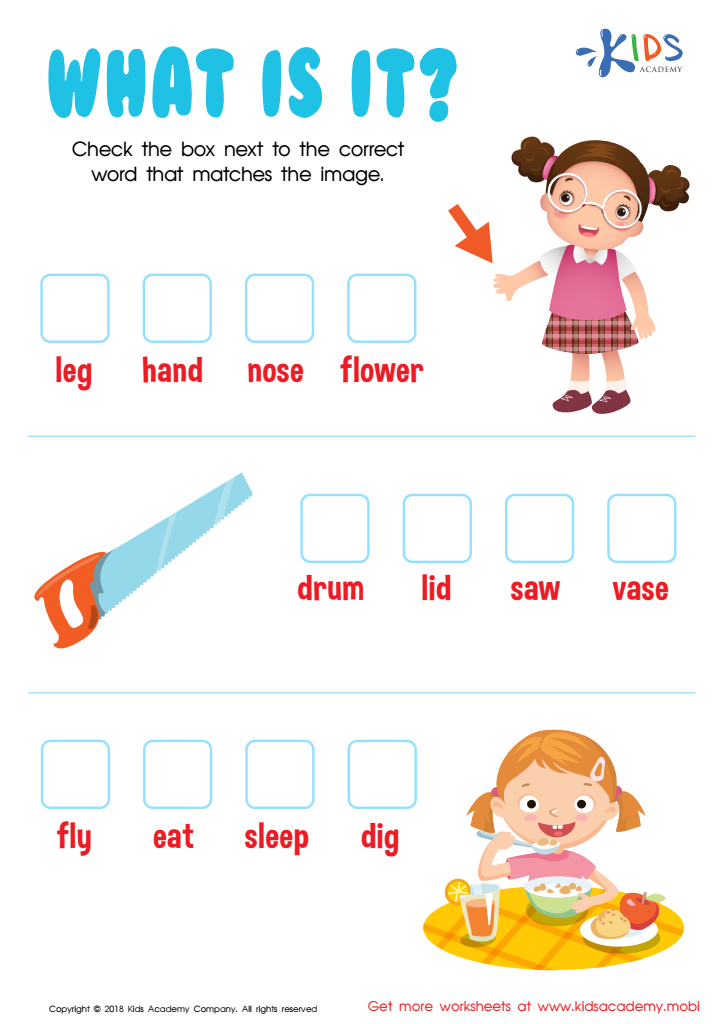
What Is It? Worksheet
 Assign to My Students
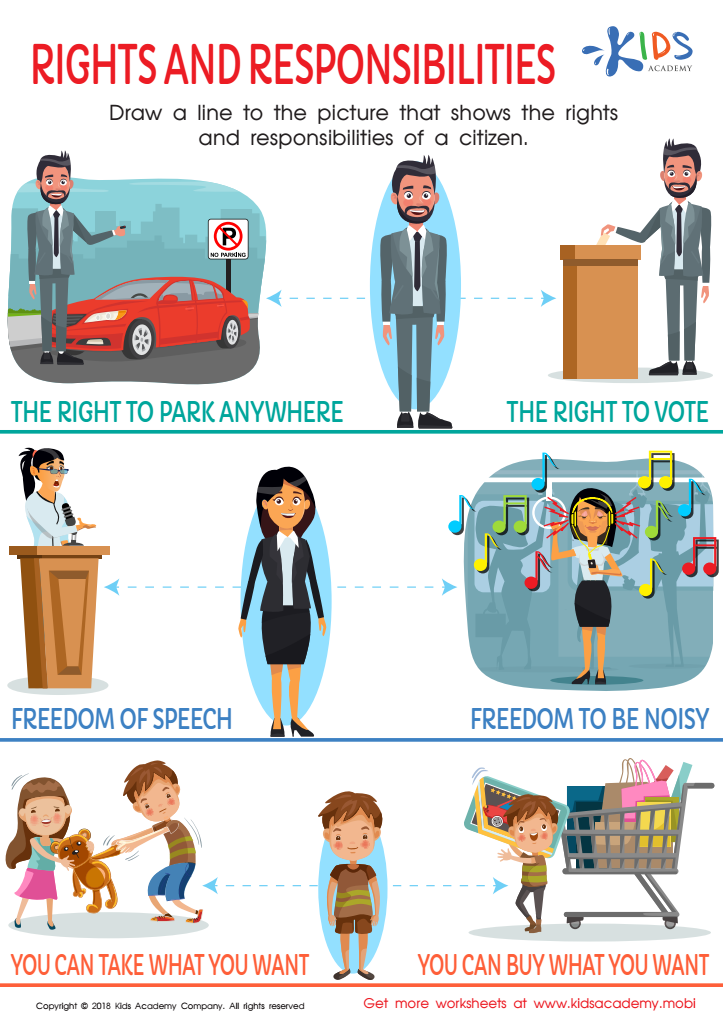
Rights and Responsibilities Worksheet
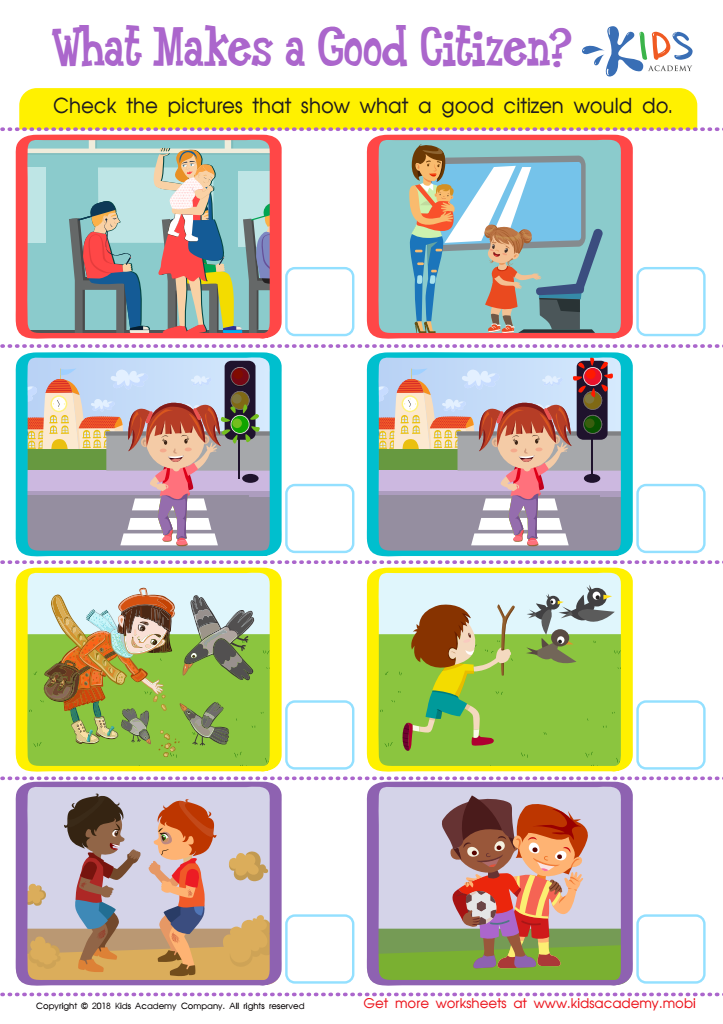
What Makes a Good Citizen? Worksheet
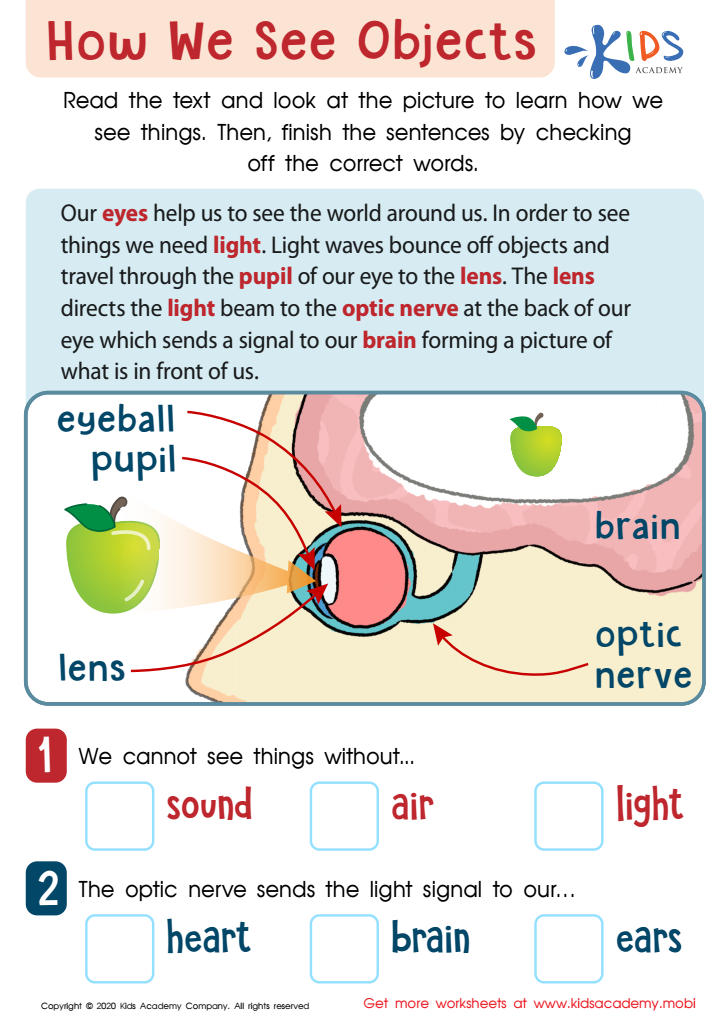
How We See Objects Worksheet
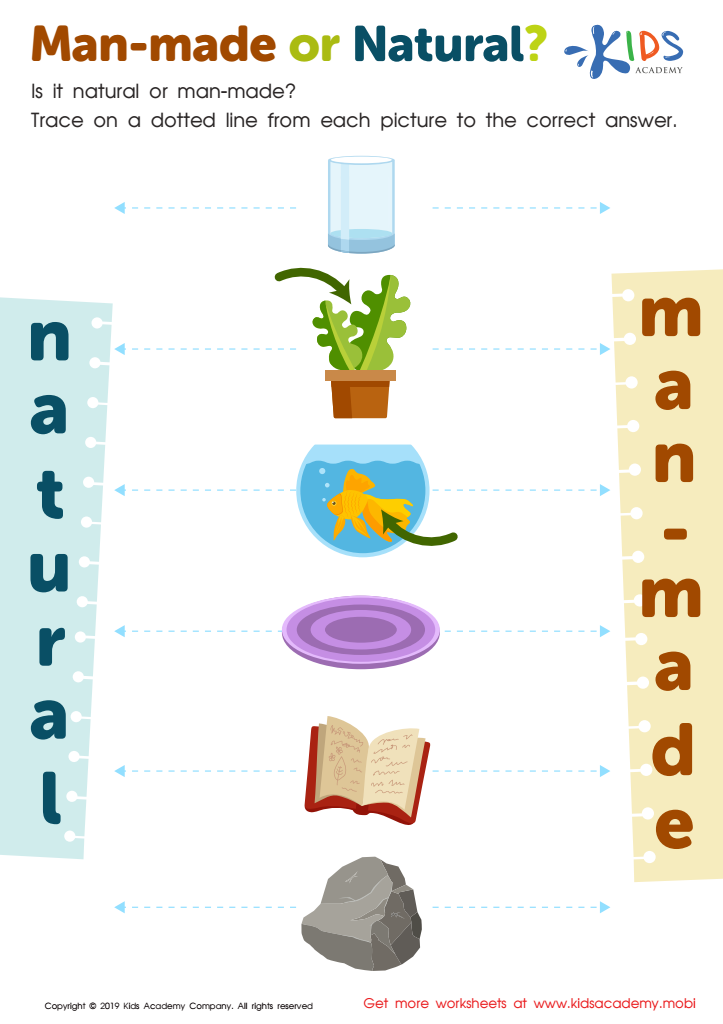
Man-Made or Natural? Worksheet








Developing critical thinking in children aged 4-6 is crucial for their cognitive, social, and emotional growth. At this formative stage, children's brains are highly malleable, which means they are particularly receptive to learning vital skills. Critical thinking nurtures problem-solving abilities, enabling children to approach challenges with confidence and creativity. It also enhances their ability to make decisions based on reasoning rather than impulse.
For parents and teachers, fostering these skills means promoting inquisitiveness and curiosity. A child who learns to ask questions, analyze situations, and understand cause-and-effect relationships from a young age is better prepared for academic success. As these children enter formal education settings, they will find it easier to grasp new concepts and integrate knowledge across different subjects.
Moreover, critical thinking contributes significantly to social and emotional development. When children can evaluate various perspectives, they become more empathetic and better at resolving conflicts. This leads to healthier interactions with peers and adults, cultivating important social skills.
Teachers and parents should incorporate activities that stimulate critical thinking, such as open-ended play, storytelling, and simple problem-solving tasks. Encouraging curiosity not only makes learning enjoyable but also helps children feel more competent and confident in their daily lives. Ultimately, these skills lay a foundation for lifelong learning and well-being.








