Visual interpretation Normal Worksheets for Ages 4-6
3 filtered results
-
From - To
Our "Visual Interpretation Normal Worksheets for Ages 4-6" are designed to boost young learners' visual comprehension and critical thinking skills. Through engaging activities and colorful designs, these worksheets help children recognize patterns, identify differences, and enhance their observational abilities. Perfect for early grade learners, they provide a fun and educational way to support cognitive development. With a focus on interactive and hands-on learning, these worksheets are an excellent resource for parents and educators aiming to foster a love for learning and prepare children for future academic success. Explore a world of discovery with our expertly crafted visual interpretation worksheets.
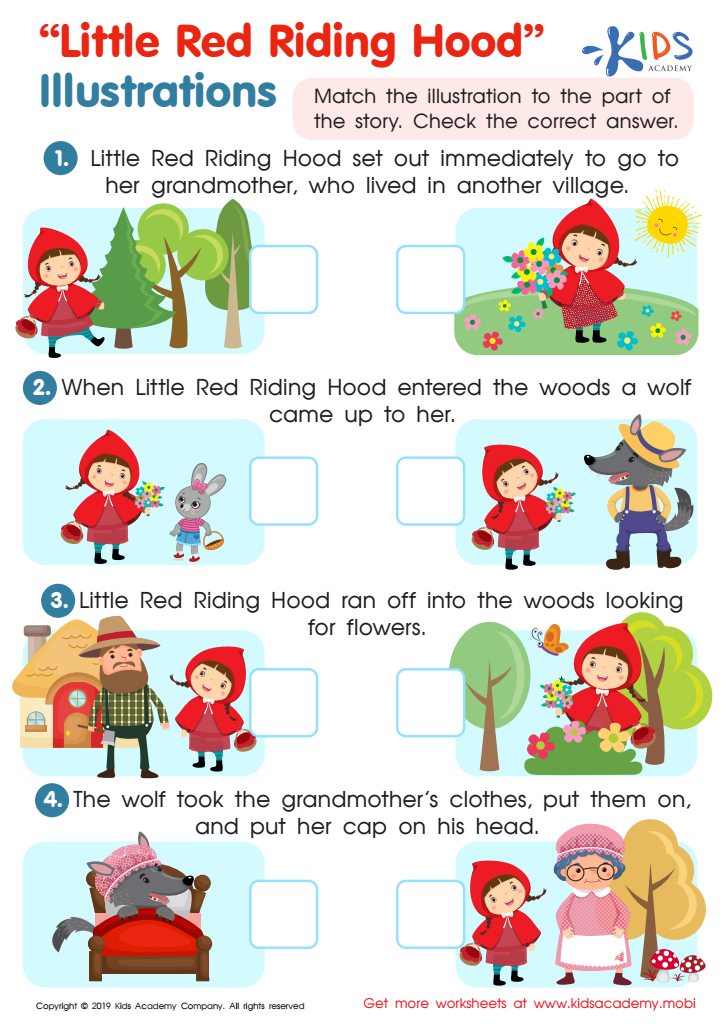
Little Red Riding Hood: Illustrations Worksheet
 Assign to My Students
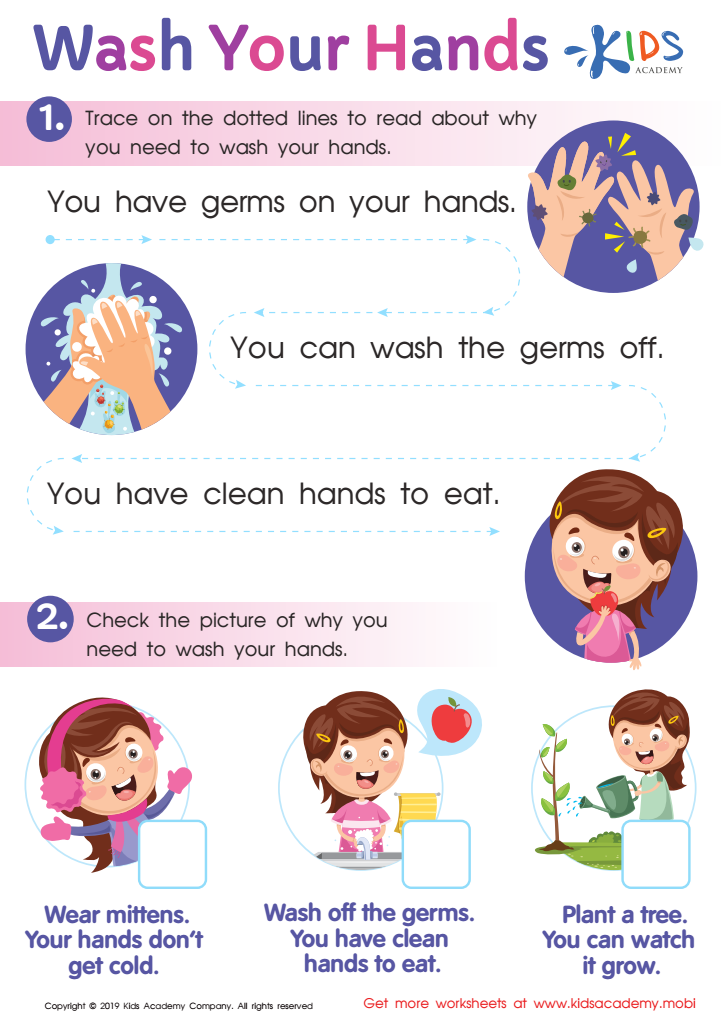
Wash Your Hands Worksheet
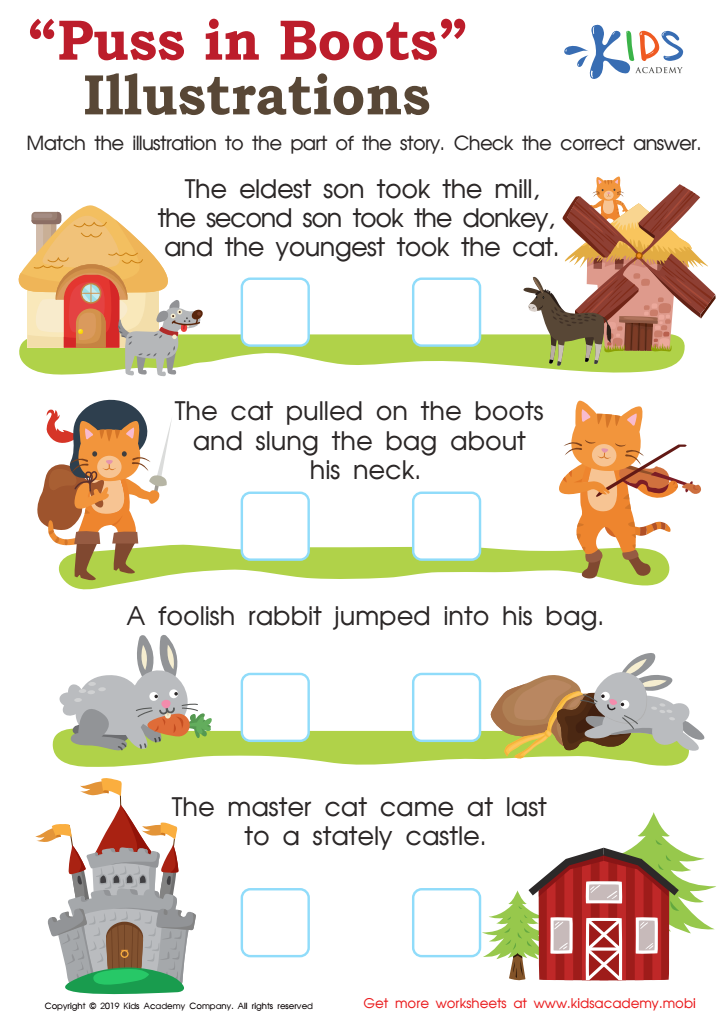
Puss in Boots Illustrations Worksheet








Parents and teachers should care about visual interpretation skills in children ages 4-6 because these years are critical for cognitive and sensory development. At this age, children's minds are highly receptive to visual stimuli, and their ability to interpret visual information is fundamental to learning and comprehension.
Firstly, visual interpretation enhances reading readiness. Recognizing letters, numbers, and eventually words relies on the ability to interpret shapes and symbols accurately. Children with strong visual interpretation skills can better differentiate between similar shapes and patterns, which lays the groundwork for successful reading and writing.
Secondly, visual interpretation is can benefit critical thinking and problem-solving skills. Activities such as puzzles, sorting games, and drawing require children to analyze visual information, identify patterns, and make connections, which are essential steps in developing logical reasoning and spatial awareness.
Additionally, social and emotional development are supported through visual interpretation. Facial expressions, gestures, and body language are all visual cues that children need to understand social interactions and develop empathy.
Lastly, fostering these skills can enhance creativity and self-expression. Through activities like drawing and crafting, children express their thoughts and feelings visually, aiding in emotional development and communication skills.
Overall, strong visual interpretation skills empower children to navigate their world more effectively, leading to better academic outcomes and healthier social interactions. Thus, it is essential for parents and teachers to prioritize activities that develop these abilities during these formative years.








