
Weather Vocabulary Normal Worksheets for Ages 4-6
3 filtered results
Difficulty Level
Grade
Age
-
From - To
Subject
Activity
Standards
Introduce your young learners to the world of weather with our Weather Vocabulary Normal Worksheets for Ages 4-6! These engaging, printable activities are designed to expand your child's understanding of weather terms through fun and educational exercises. Each worksheet offers bright illustrations and simple tasks that help children identify and use words like "sunny," "rainy," "cloudy," and more. Perfect for early learners, these resources promote literacy and observational skills, making weather vocabulary both educational and entertaining. Watch as your child becomes confident in discussing the weather, all while enjoying their learning journey!
Favorites
With answer key
Interactive
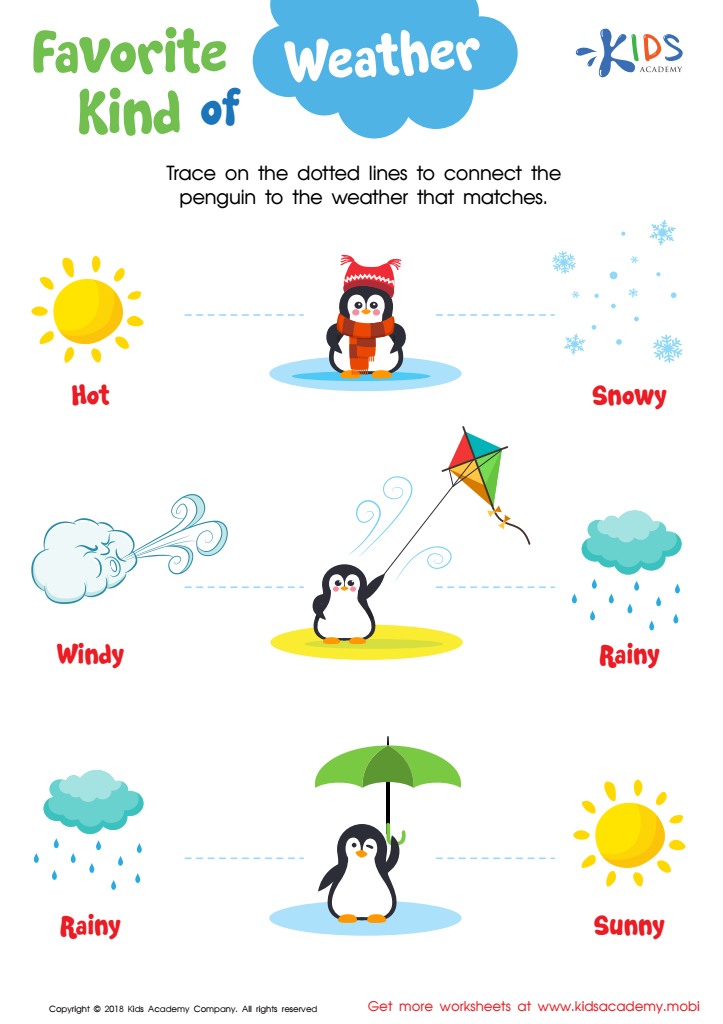
Favorite Kind of Weather Worksheet
!
Help your child understand weather and seasons with this fun worksheet featuring a cute penguin. They'll learn to recognize types of weather and associate them with seasons. To practice their fine motor skills, they'll trace lines to select the right seasons and weather. Kids will make a new friend while broadening their knowledge of nature.
Favorite Kind of Weather Worksheet
Worksheet
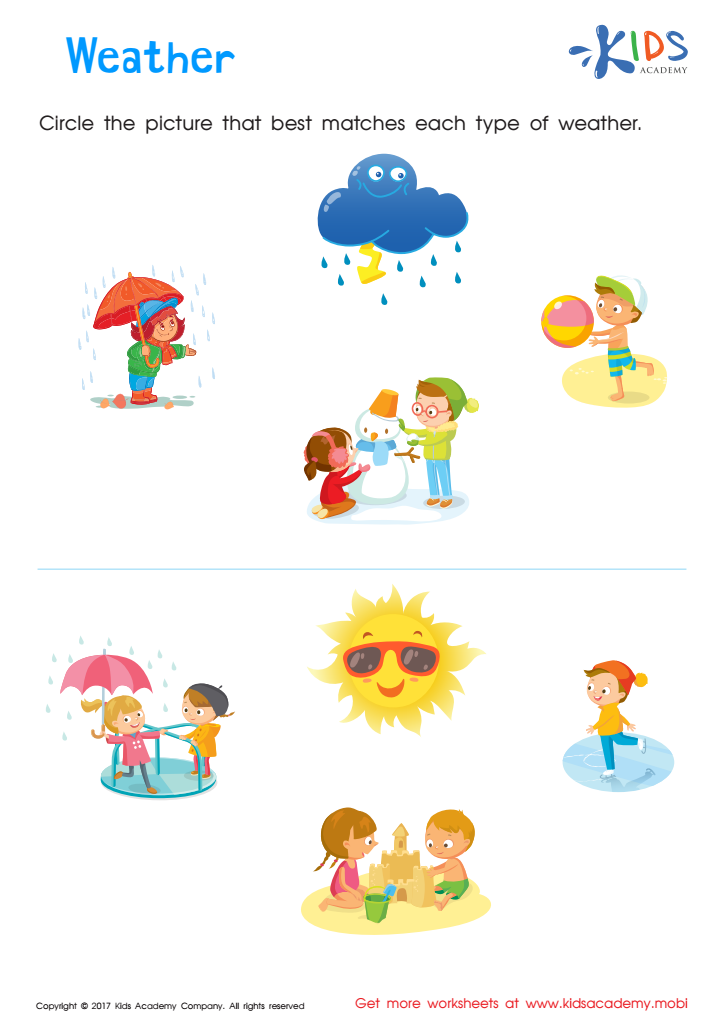
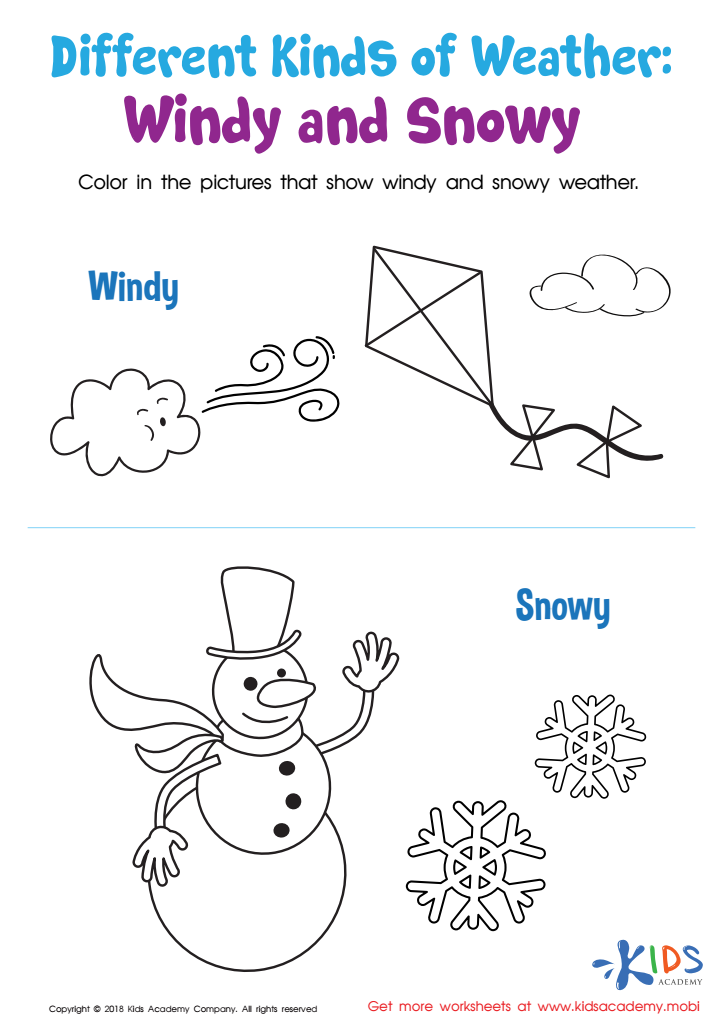
Different Kinds of Weather: Windy and Snowy Worksheet
Invite your little learner to practice their fine motor skills and learn about nature with this fun and charming PDF worksheet! Reinforce weather patterns and examine their environment as they color, giving them a foundation for understanding how weather affects them. No matter the weather, your learner will have a blast!
Download (PDF)
 Assign to My Students
Assign to My Students
Different Kinds of Weather: Windy and Snowy Worksheet
Worksheet
Join Kids Academy for Free
Who is primarily going to use this learning content?




.jpg)



Weather vocabulary is an essential aspect of early childhood education for several reasons, especially for children aged 4-6. First, it helps youngsters build a broad and rich vocabulary that continues to benefit them throughout their academic journey. Learning terms like "sunny," "rainy," or "cloudy" enables children to communicate more effectively about their everyday experiences and surroundings.
Second, understanding weather patterns fosters cognitive and observational skills. Young children are naturally curious. Discussing weather helps them learn to make predictions, observe changes, and understand cause and effect. These foundational skills are critical for scientific thinking and reasoning.
Third, this knowledge often integrates with various subjects like reading, math, and art. Whether drawing a picture of a sunny day or reading a book about storms, weather vocabulary enriches cross-disciplinary academics, making learning more interconnected and engaging.
Lastly, being knowledgeable about weather conditions aids safety and preparedness. Understanding what is meant by "storm" or "hail" can help children react appropriately during extreme weather events.
In sum, parents and teachers should prioritize weather vocabulary because it enhances communication skills, fosters cognitive development, encourages cross-curricular learning, and promotes safety and preparedness in young children. All these skills build a strong foundation for their future endeavors.








