Differentiating shapes Normal Geometry Worksheets for Ages 4-6
3 filtered results
-
From - To
Discover the engaging world of shapes with our "Differentiating Shapes Normal Geometry Worksheets" for ages 4-6. Created by experts, these printables help young learners identify and differentiate between various geometric shapes. Each worksheet is designed to boost shape recognition skills, enhance cognitive development, and make learning fun and interactive. Ideal for both classroom and at-home practice, our worksheets feature colorful illustrations and simple instructions suitable for preschoolers and early kindergarteners. Foster your child's early math skills today with our specialized resources, and watch their confidence and understanding of geometry grow!
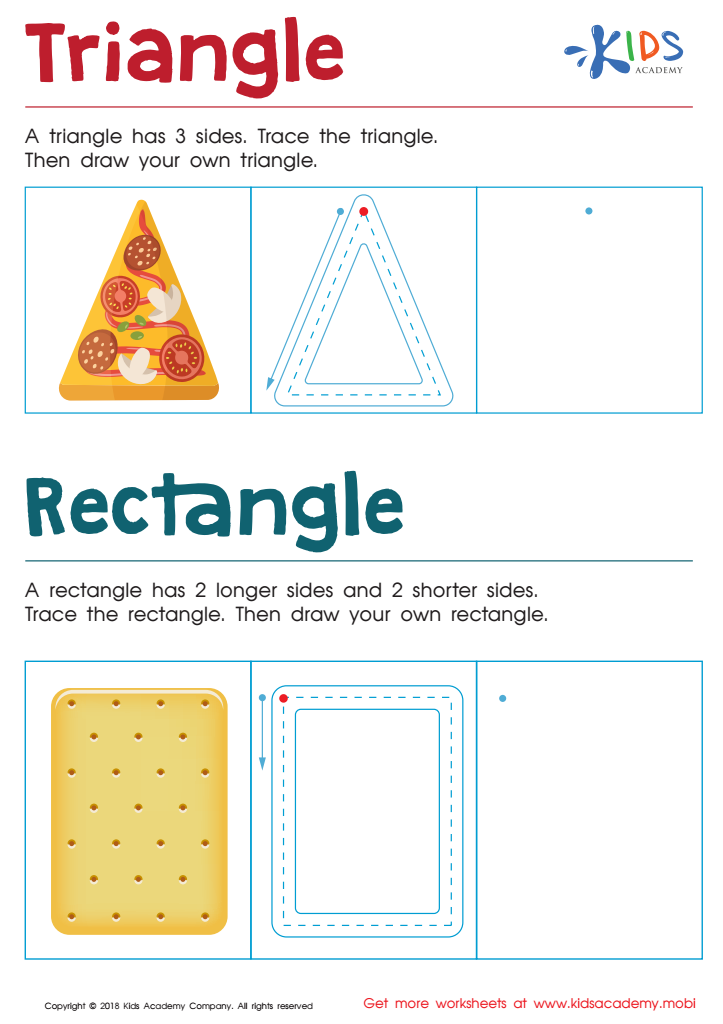
Triangle Rectangle Worksheet
 Assign to My Students











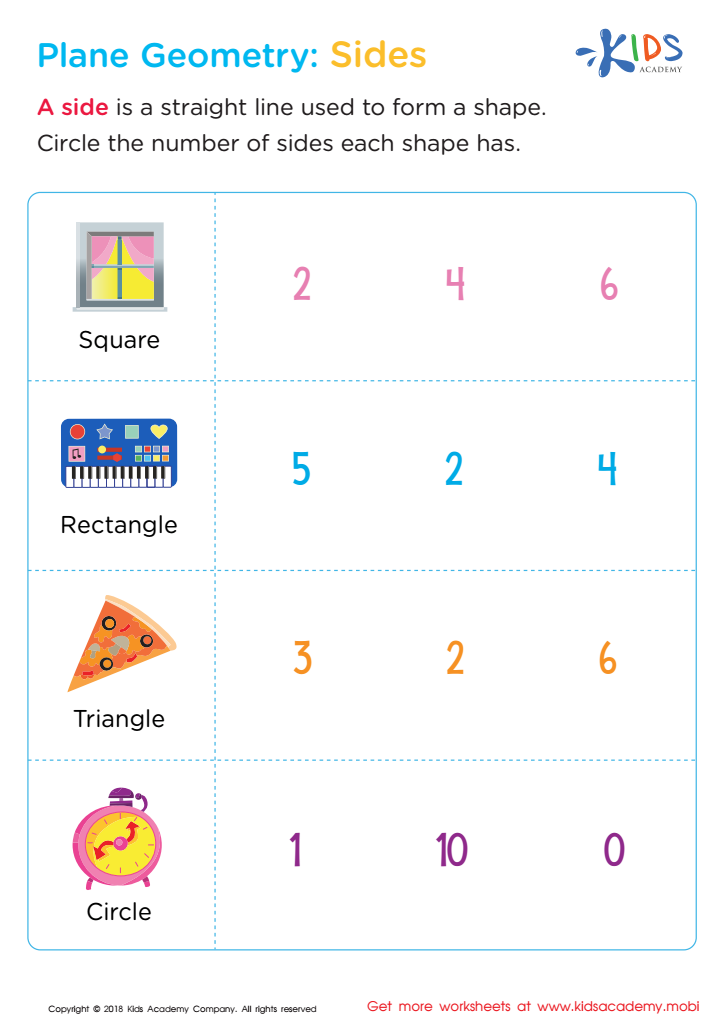
Plane Geometry: Sides Worksheet
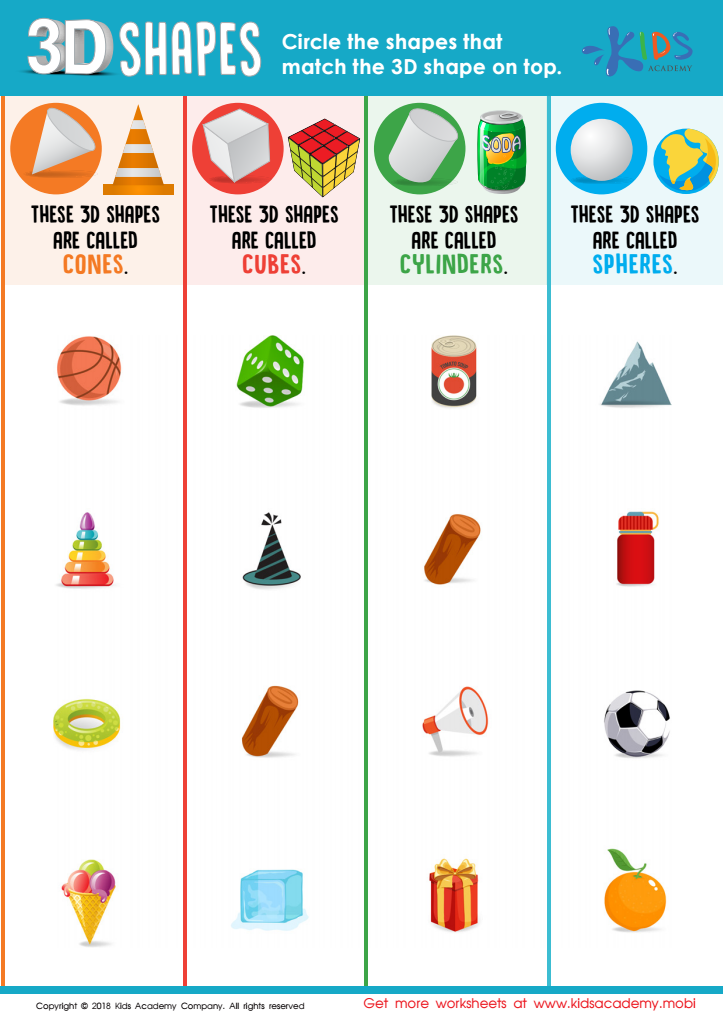
3D Shapes Worksheet








Differentiating shapes in normal geometry for children aged 4-6 is crucial for their cognitive and academic development. First, understanding shapes helps young learners recognize and organize visual information, a fundamental early skill required for reading and writing. For instance, distinguishing a circle from a square contributes directly to discerning different letters and numbers, facilitating literacy and mathematical proficiency.
Moreover, shape differentiation empowers children's problem-solving and critical-thinking abilities. Simple activities like sorting or matching shapes encourage comparison, analysis, and categorization, fostering logical reasoning that is applicable across various academic disciplines. These exercises also promote fine motor skills as children manipulate physical shape puzzles or draw geometric figures, enhancing their hand-eye coordination and preparing them for tasks like handwriting.
Socially and emotionally, recognizing and discussing shapes builds vocabulary and communication skills. By learning descriptive words associated with shapes, children expand their language abilities and can better articulate thoughts and observations. Additionally, successfully identifying and working with shapes boosts self-esteem and confidence, encouraging a positive attitude toward future learning challenges.
Incorporating differentiated shapes into early education supports a holistic approach towards nurturing well-rounded, capable learners who are equipped with essential cognitive, motor, and socio-emotional skills, fostering a solid foundation for lifelong academic and personal success.








