Addition Practice Normal Math Worksheets for Ages 4-6 - Page 2
28 filtered results
-
From - To
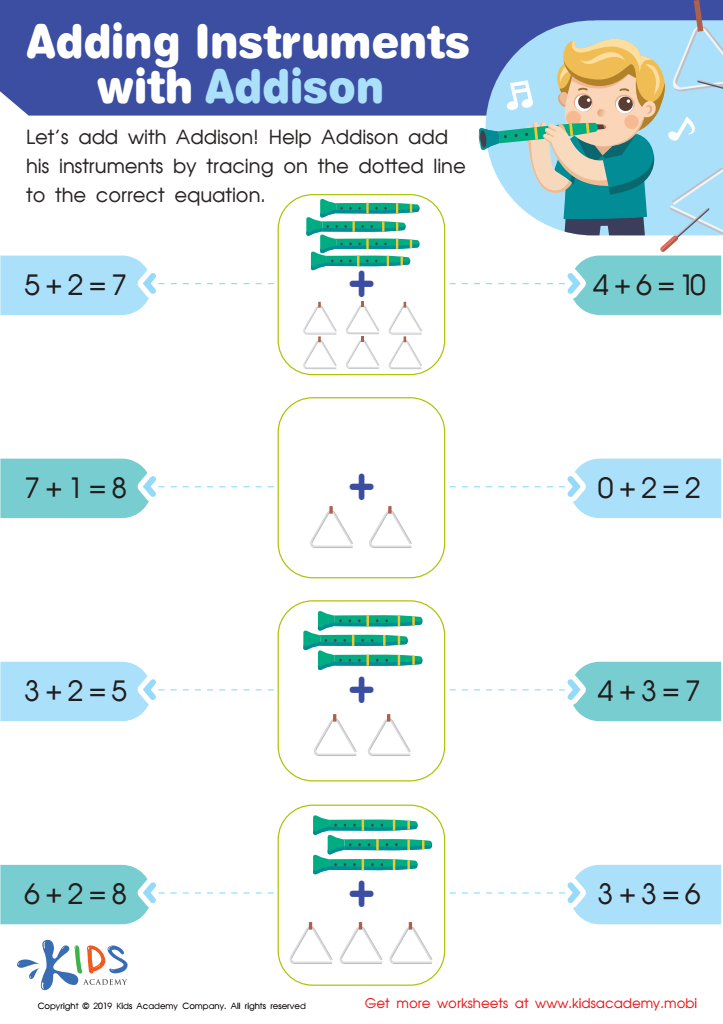
Adding Instruments with Addison Worksheet
 Assign to My Students
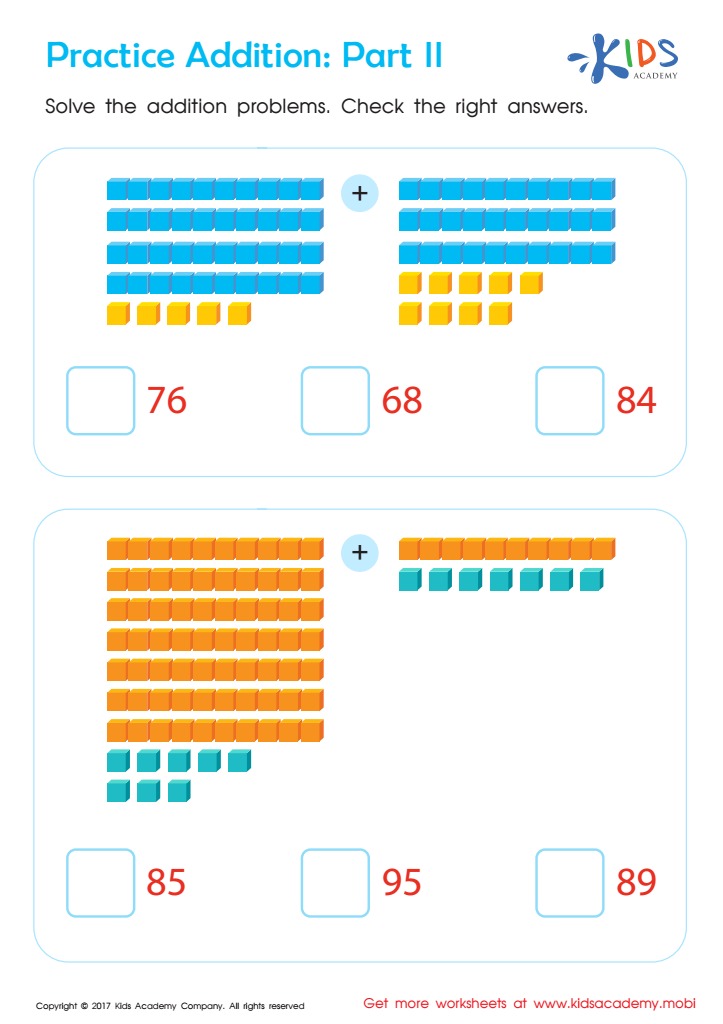
Practice Addition: Part 2 Worksheet
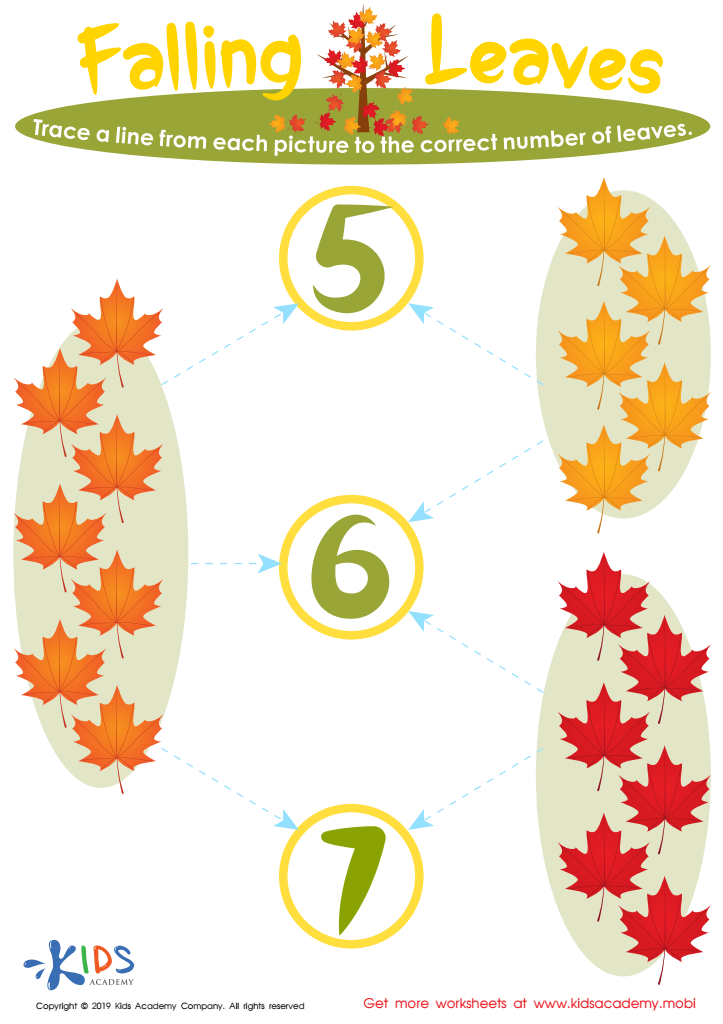
Falling Leaves Worksheet
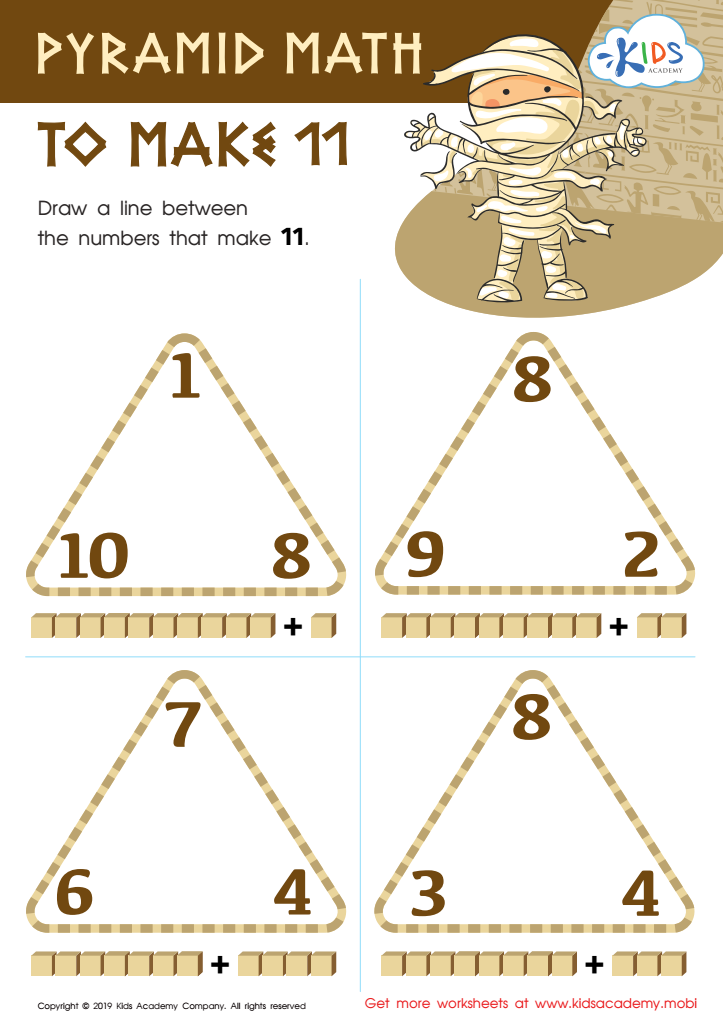
Pyramid Math to Make 11 Worksheet








Addition practice is crucial for children aged 4-6 as it forms the foundation for their future mathematical understanding. At this early stage, children are developing essential cognitive skills, and mastering basic addition helps boost their confidence and fosters a positive attitude towards learning.
First, learning addition promotes critical thinking and problem-solving skills. Engaging with numbers at a young age enhances their ability to recognize patterns and relationships, which are fundamental mathematical concepts. Furthermore, addition practice supports language development, as children learn to articulate their thought processes while explaining how they arrive at their answers.
Parents and teachers should also recognize the social aspect of learning math. Sharing activities related to addition can enhance bonding opportunities between children and adults as they work together to solve problems. This collaborative approach not only reinforces the math concepts but also builds communication and teamwork skills.
Moreover, the skills gained through addition practice lay the groundwork for more complex math topics in later grades. Ensuring that children have a firm grasp of basic addition strengthens their self-efficacy and enhances their ability to tackle more challenging mathematical concepts in the future. Ultimately, prioritizing addition practice is an investment in a child's lifelong learning journey.








