Enhancing critical thinking Normal Math Worksheets for Ages 4-6
3 filtered results
-
From - To
Unlock the power of early education with our "Enhancing Critical Thinking Normal Math Worksheets for Ages 4-6." Tailored to young learners, these expertly designed worksheets cultivate foundational math skills while stimulating analytical thought processes. Activities include engaging puzzles, problem-solving tasks, and interactive challenges, encouraging children to explore math concepts beyond simple computation. Each carefully constructed worksheet aligns with early education standards to ensure a balanced, age-appropriate learning experience. Perfect for classroom or home use, these resources help nurture curiosity, boost confidence in math, and foster a lifelong love for learning. Start enhancing your child's critical thinking with our fun, educational worksheets today!
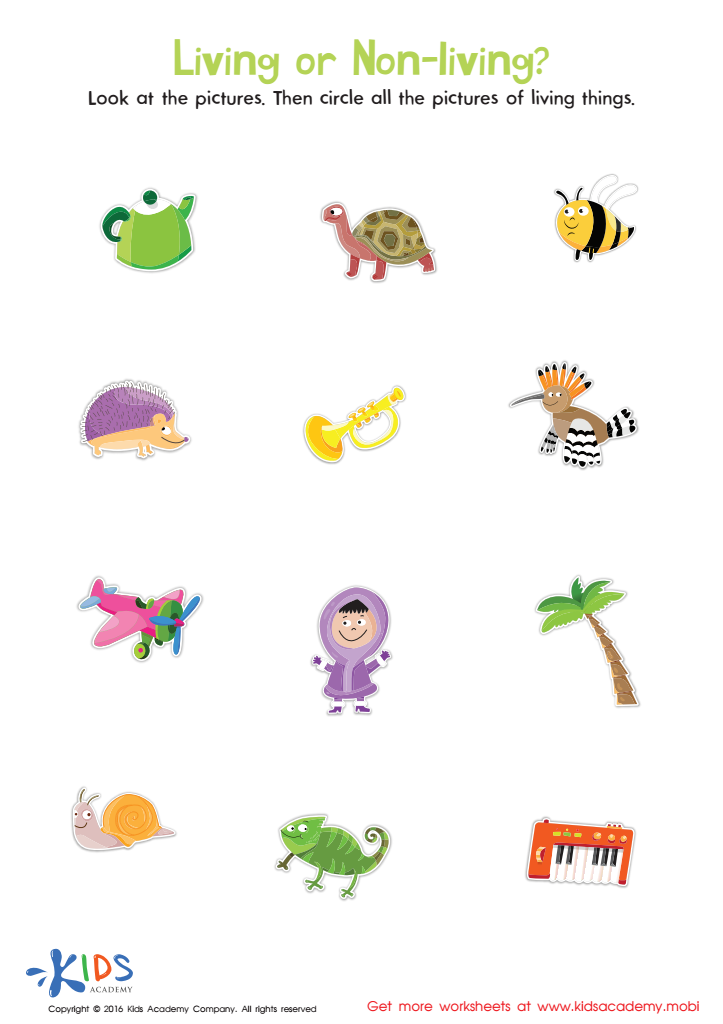
Identifying Living and Non–living Things Sorting Worksheet
 Assign to My Students
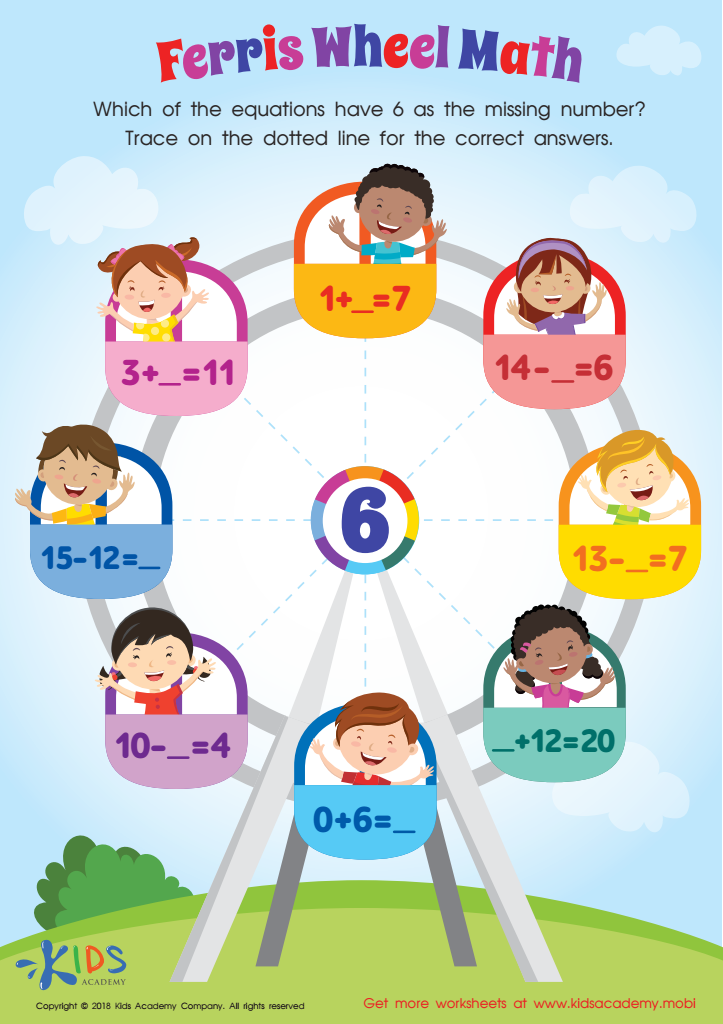
Missing Number: Ferris Wheel Math Worksheet
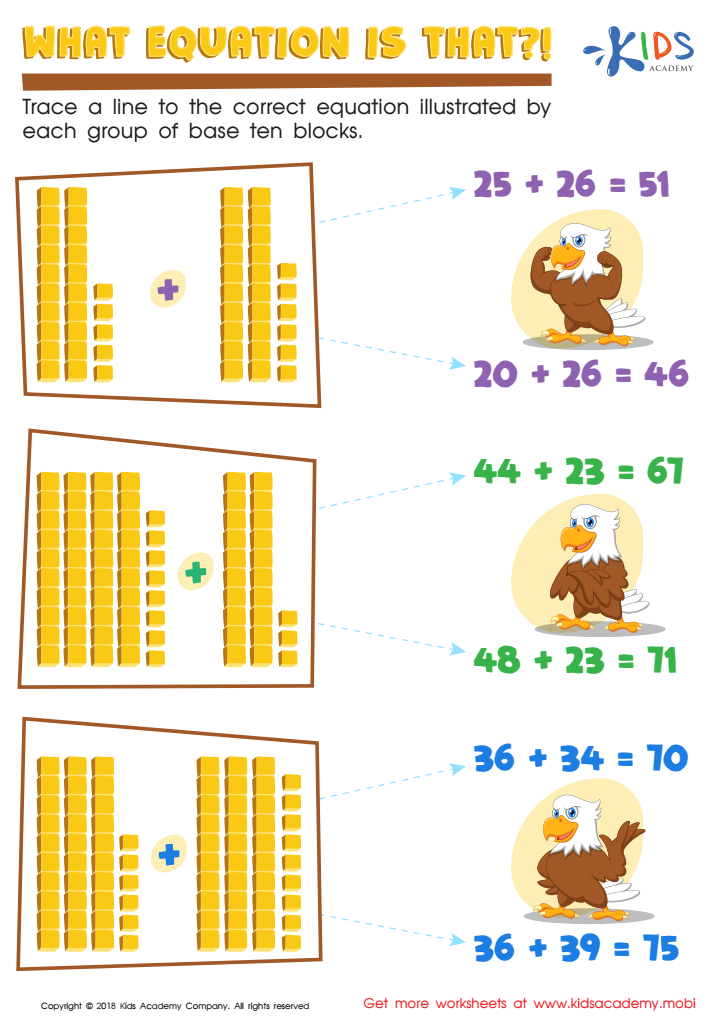
What Equation Is That? Worksheet








Enhancing critical thinking in math for children aged 4-6 is crucial for their cognitive development and problem-solving skills. At this formative age, children’s brains are highly malleable and ready to absorb new information. Encouraging critical thinking helps them not only understand math concepts but also apply logical reasoning to various scenarios. This foundational skill extends beyond math, assisting in all subjects and real-life situations.
Parents and teachers play a significant role in nurturing this ability. By posing thought-provoking questions and encouraging exploration, they help children learn how to think rather than what to think. For example, rather than just teaching numbers and counting, guiding children to recognize patterns, start simple problem-solving tasks, and make reasoned guesses promotes independent thinking.
Moreover, critical thinking fosters curiosity and a love of learning, traits that remain valuable throughout their academic journey and life. It equips children with the confidence to tackle challenges, persist through setbacks, and become more innovative thinkers.
In today’s world, where problem-solving and creativity are highly prized, cultivating critical thinking skills early provides children with a strong foundation. This growth leads them toward academic success and enables them to navigate life’s challenges effectively. Parents and teachers should prioritize this development to prepare children for a future of continuous learning and adaptation.








