Number comparison Normal Math Worksheets for Ages 4-6
3 filtered results
-
From - To
Explore our engaging "Number Comparison Normal Math Worksheets" designed specifically for children aged 4-6! These worksheets help young learners grasp essential math skills by comparing numbers, fostering their understanding of greater than, less than, and equal to concepts. Each worksheet is crafted with colorful designs and age-appropriate activities, making math fun and interactive. Ideal for preschoolers and kindergarteners, these resources support early math development while encouraging critical thinking and problem-solving. Parents and educators will appreciate the ease of use and the significant benefits these worksheets provide in building confident young mathematicians. Discover the joy of math exercises today!
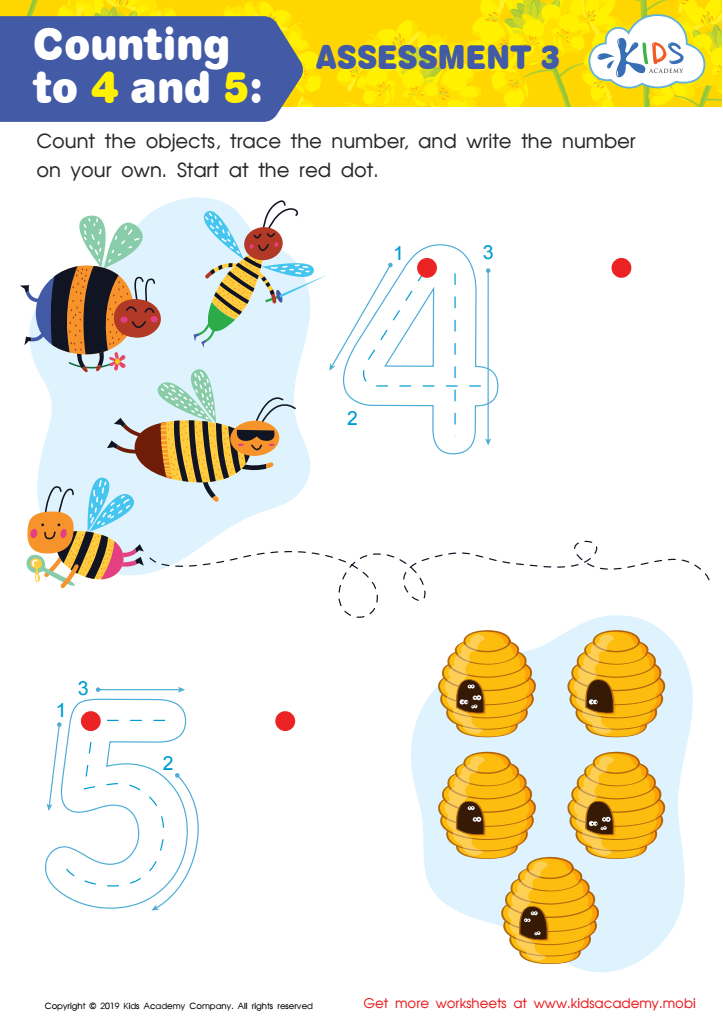
Counting to 4 and 5: Assessment 3 Worksheet
 Assign to My Students
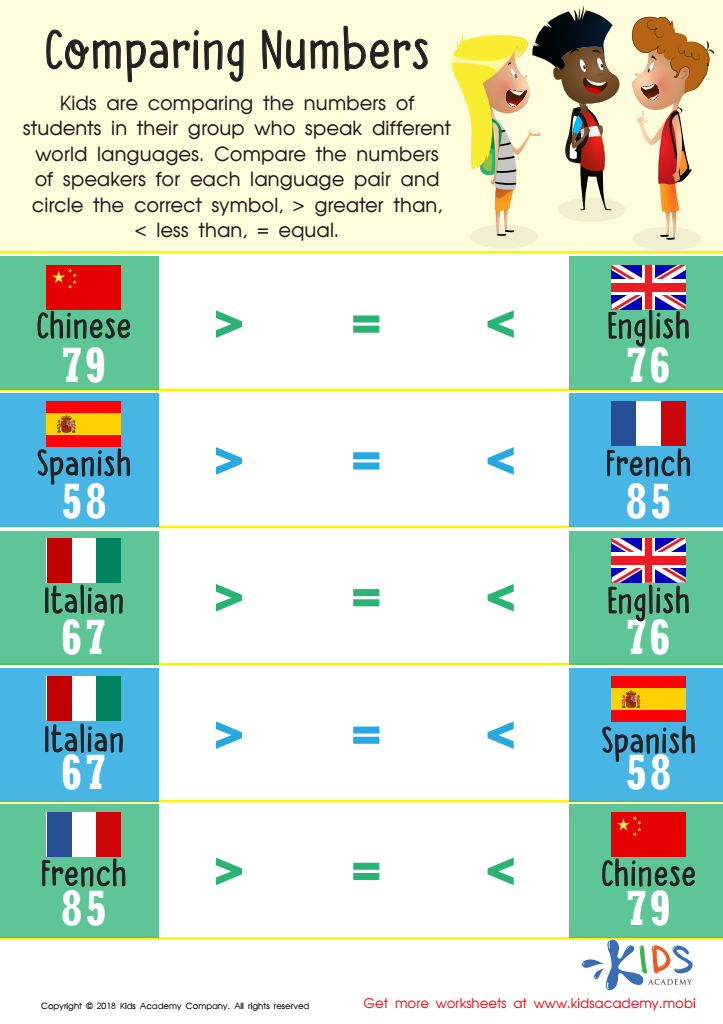
Comparing Numbers Worksheet for 1st Grade
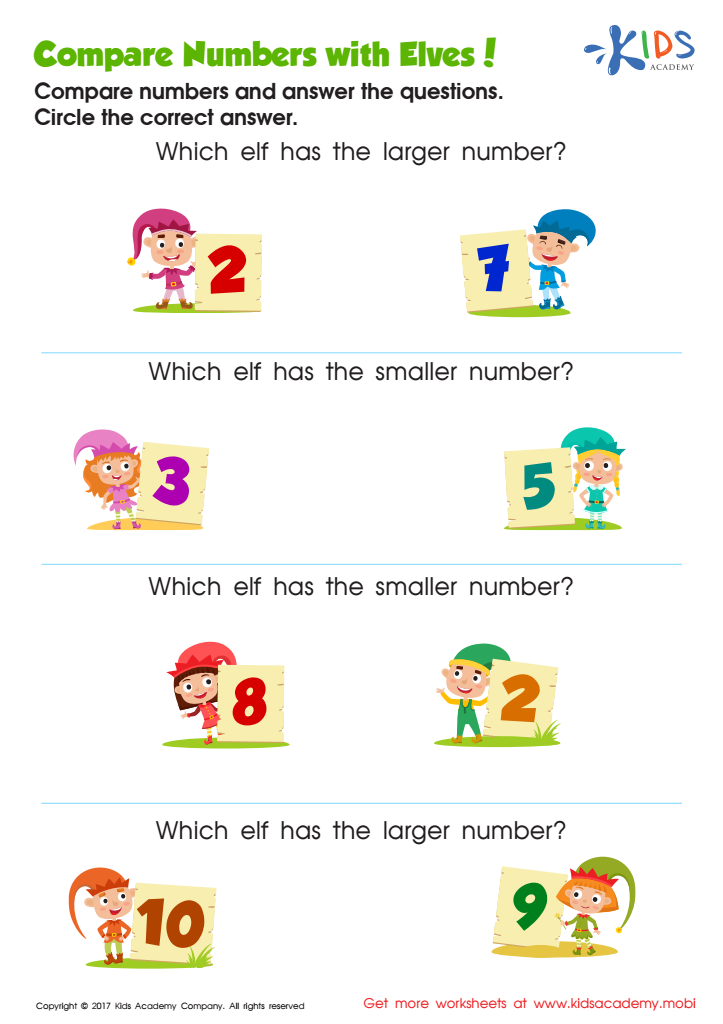
Comparing Numbers Worksheet for Kindergarten








Number comparison is a fundamental skill that lays the groundwork for future mathematical understanding in young children aged 4-6. Parents and teachers should care about this concept for several reasons.
Firstly, number comparison helps children develop a strong number sense, which is crucial for basic arithmetic. By learning to identify which numbers are larger or smaller, children become more comfortable with quantitative relationships. This foundational skill enables them to tackle more complex mathematical operations later on.
Secondly, early mastery of number comparison fosters critical thinking and problem-solving abilities. As children compare and categorize numbers, they engage in cognitive processes that enhance their analytical skills. This early exposure not only aids in math but also benefits overall academic performance.
Moreover, in today's technology-driven world, a solid arithmetic foundation is essential to navigate real-life situations, from budgeting to cooking measurements. Encouraging this skill also boosts children's confidence, as they experience success in understanding numerical concepts.
Finally, involving parents and teachers in reinforcing number comparison skills creates a supportive learning environment. By working together, adults can ensure that children remain excited about learning and engage them in activities that make math fun and relatable.








