Spatial reasoning Normal Math Worksheets for Ages 4-6
3 filtered results
-
From - To
Boost your child’s development with our "Spatial Reasoning Normal Math Worksheets for Ages 4-6." Designed to enhance crucial early learning skills, these engaging worksheets focus on spatial awareness, pattern recognition, and problem-solving. Each activity is tailored to captivate young learners while fostering their ability to visualize and manipulate objects in space. Perfect for both classroom use and at-home practice, our worksheets ensure a fun, educational experience that paves the way for future math success. Help your child build a solid foundation in spatial reasoning and watch their confidence soar! Explore more and download today.
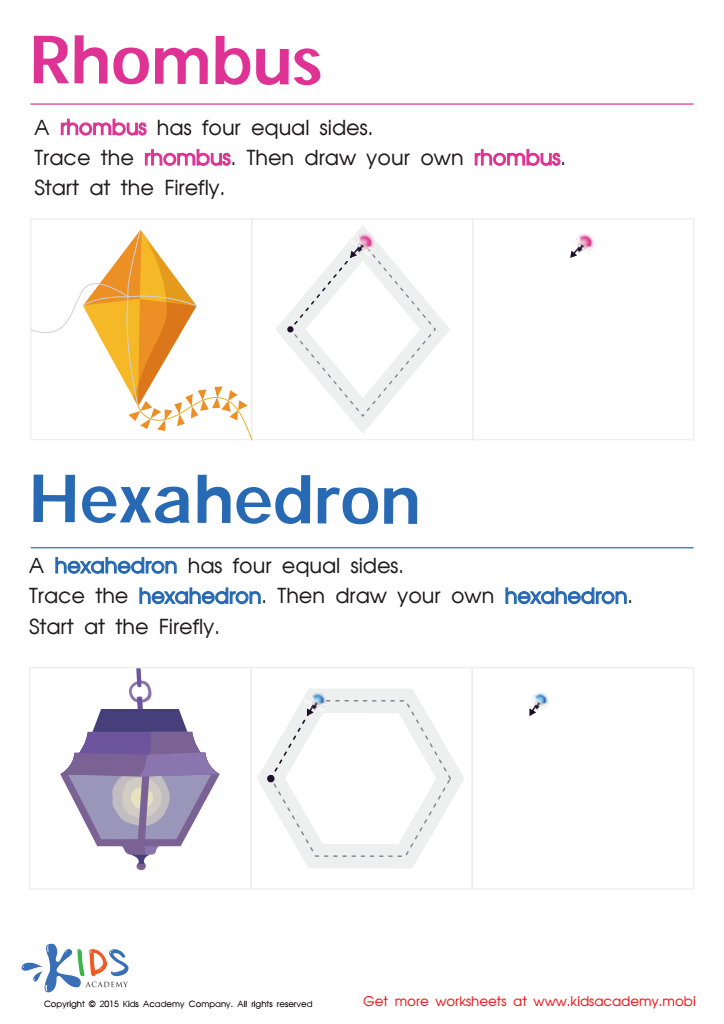
Draw a Rhombus And a Hexahedron Printable
 Assign to My Students
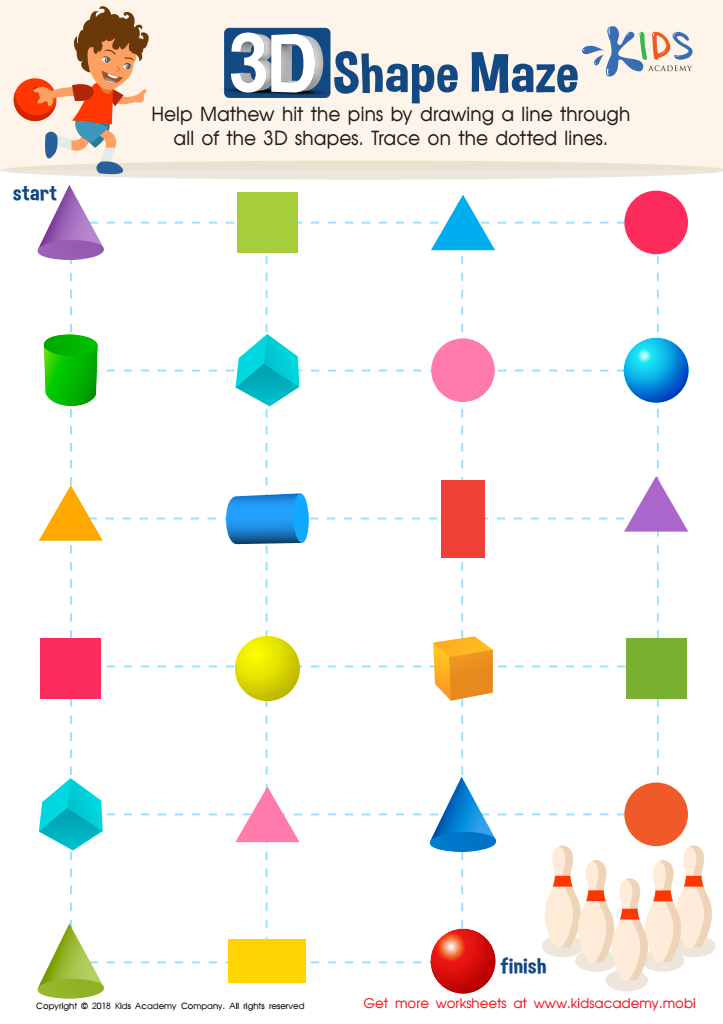
Shapes Maze Geometry Worksheet
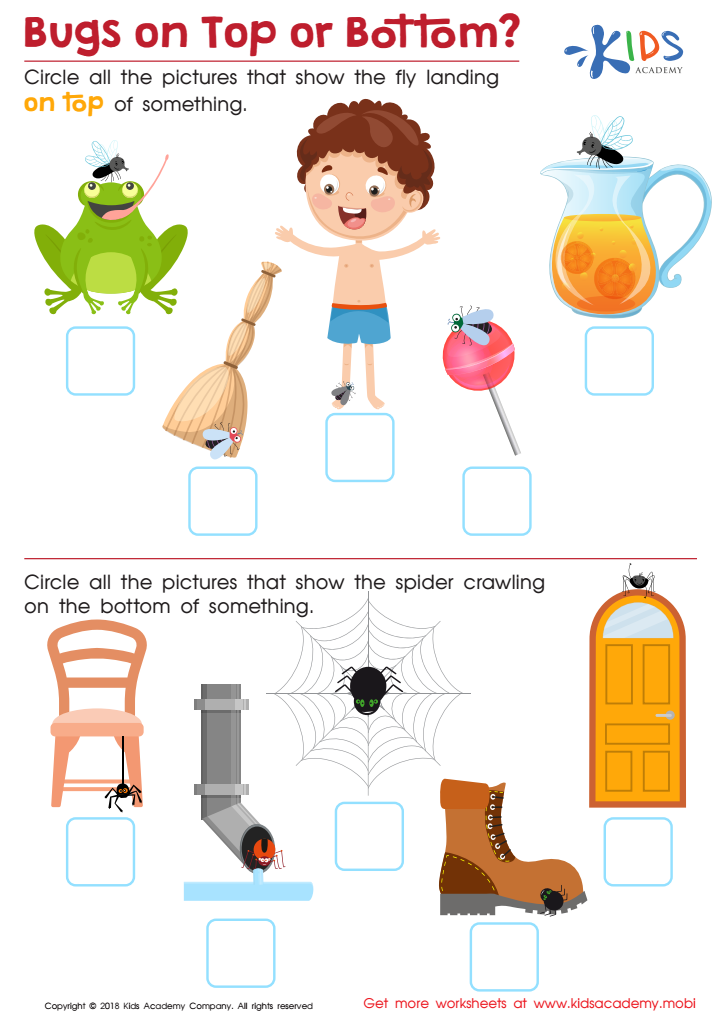
Bugs on Top or Bottom? Worksheet







Spatial reasoning is a foundational skill that significantly influences a child's academic progression, especially in mathematics. For children ages 4-6, this skill involves the ability to visualize and manipulate objects in their mind, understand shapes and their properties, and recognize spatial relationships.
Firstly, spatial reasoning is directly connected to early math skills. Activities that engage children in building with blocks, solving puzzles, or playing with patterns encourage their understanding of concepts such as geometry, measurement, and number sense. These early experiences lay the groundwork for more complex mathematical thinking.
Secondly, spatial reasoning is crucial for problem-solving and logical thinking. When children navigate spaces, arrange objects, or follow step-by-step instructions, they improve their ability to organize their thoughts and approach challenges methodically. These cognitive skills are beneficial not just academically but in everyday life scenarios as well.
Lastly, caring about spatial reasoning supports overall cognitive development. It cultivates creativity and helps children perform actions like following maps or assembling objects. Furthermore, studies have shown that children with strong spatial skills tend to excel in STEM (science, technology, engineering, and math) fields later in life.
Therefore, parents and teachers should actively incorporate spatial reasoning activities into a young child's learning environment to support holistic cognitive, academic, and personal development.








