
Story analysis Normal Building Vocabulary Worksheets for Ages 4-6
3 filtered results
Difficulty Level
Grade
Age
-
From - To
Subject
Activity
Standards
Discover a fun and engaging way to enhance young children's vocabulary with our Story Analysis Normal Building Vocabulary Worksheets for ages 4-6. These carefully crafted worksheets offer a delightful blend of learning and play, fostering critical vocabulary and comprehension skills. Each worksheet helps kids explore new words, understand story elements, and develop their ability to analyze simple narratives. Perfect for parents and educators, these resources ensure that children enjoy their early learning journey while building a strong foundation for reading success. Bring stories to life and boost language skills with our exciting, age-appropriate vocabulary worksheets!
Favorites
With answer key
Interactive
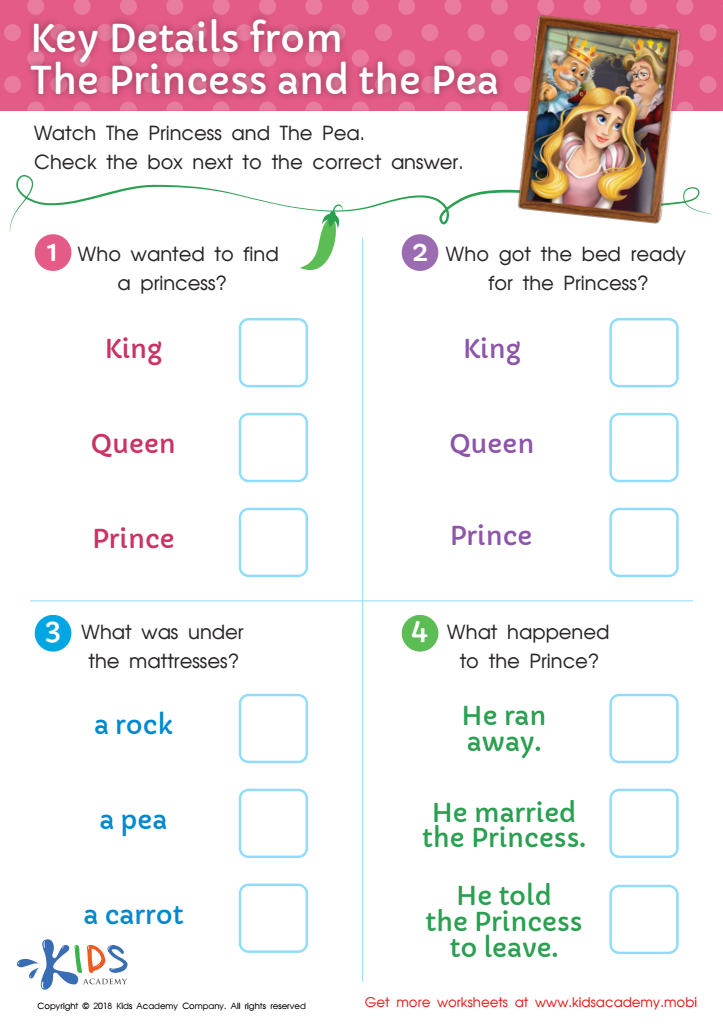
Key Details from the Princess and the Pea Worksheet
After reading The Princess and the Pea, ask your students questions to assess their comprehension of the story. Check their knowledge of key details. This printable can be used to help evaluate their understanding. Encouraging the recall of story events helps build important reading skills.
 Assign to My Students
Key Details from the Princess and the Pea Worksheet
Worksheet











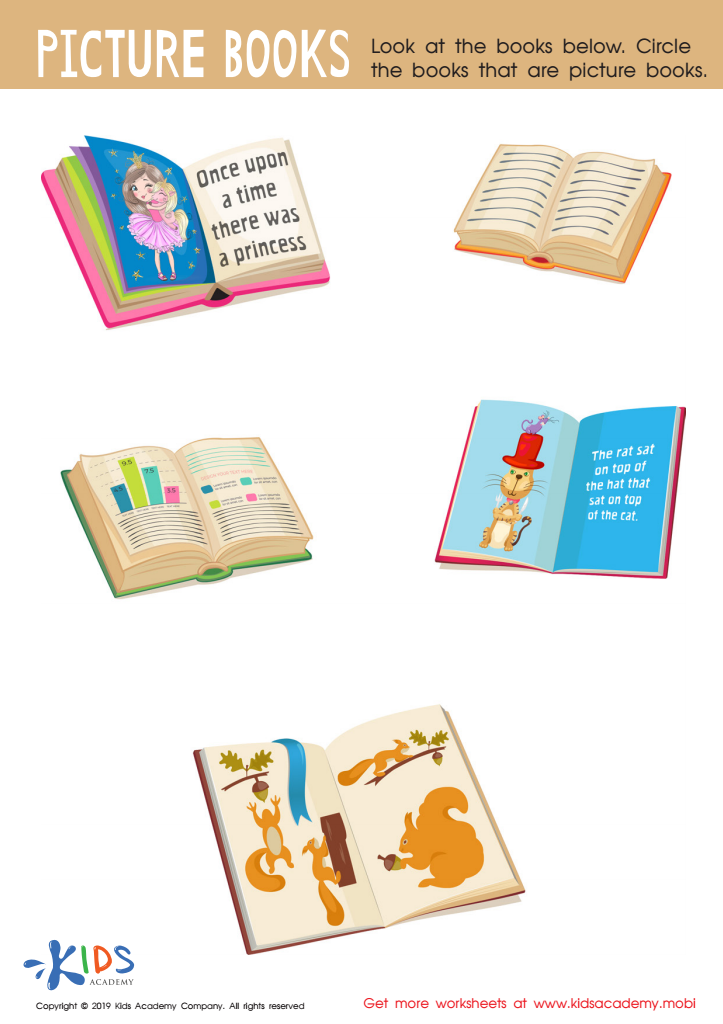
Picture Books Worksheet
Kids will love this exercise! Get their imaginations going with five colorful picture books. Ask them to circle the books that are picture books and have them enjoy the exciting stories, along with the colorful images. Reading can become that much more enjoyable!
Picture Books Worksheet
Worksheet
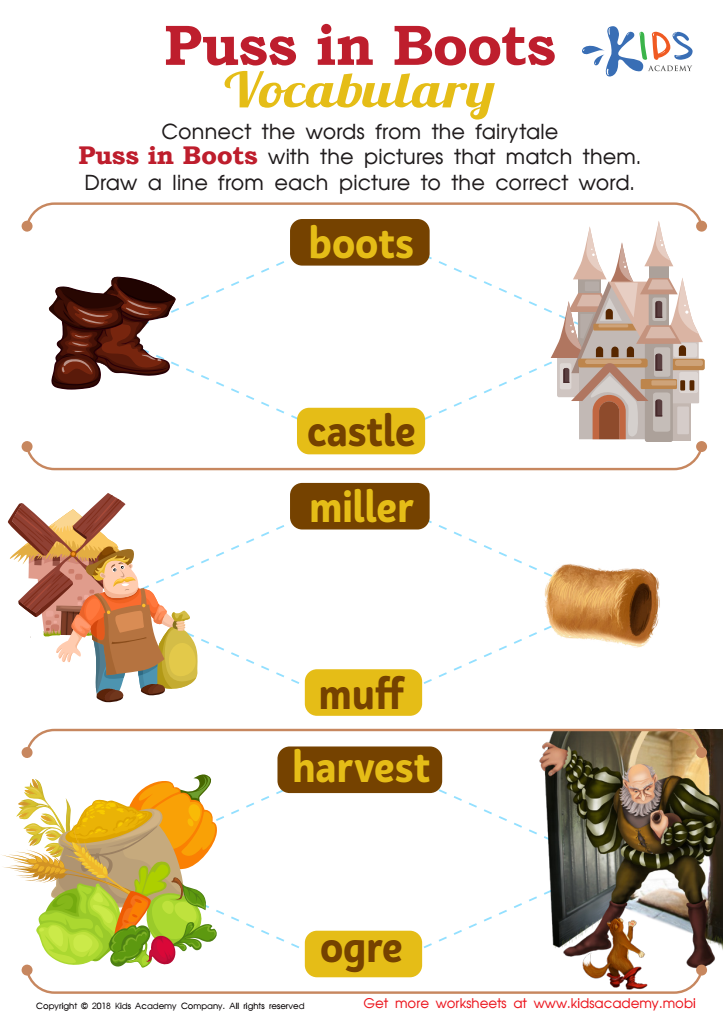
Puss in Boots Vocabulary Worksheet
Let your kids enjoy story-telling while learning at the same time. Help them learn from the fairytale, Puss in Boots, by connecting words from the worksheet with the matching pictures. Ask them to draw a line between each picture and corresponding word to build their vocabulary.
Puss in Boots Vocabulary Worksheet
Worksheet
Join Kids Academy for Free
Who is primarily going to use this learning content?








Parents and teachers should care deeply about story analysis and normal vocabulary-building for children ages 4-6 because these formative years set the foundation for future literacy and cognitive skills. Story analysis helps young minds understand narrative structure, character development, and the sequence of events, all of which are critical for reading comprehension. By breaking down stories, children learn to predict results, identify key messages, and develop critical thinking abilities.
Building a robust vocabulary during these early years enhances children's communication skills. A broad vocabulary allows them to express themselves more clearly and precisely, which is vital for social interactions and academic success. It also aids in better understanding when they begin to read independently, boosting their confidence and fostering a positive attitude towards learning.
Furthermore, frequent exposure to a wide variety of words through story analysis enriches children's language by introducing new words in context. This context-specific learning is more effective than rote memorization, making vocabulary both meaningful and relatable. Investing time in these activities equips children with the tools needed for future educational achievements. Such a foundation nurtures lifelong readers and curious learners, which ultimately cultivates a child's potential to thrive academically and socially.








