Shape Recognition Normal Reading Worksheets for Ages 4-6
3 filtered results
-
From - To
Discover our engaging Shape Recognition Normal Reading Worksheets designed specifically for children aged 4-6! These worksheets provide a fun way to help young learners identify and understand various shapes while enhancing their reading skills. Each activity is crafted to promote essential early literacy development through colorful visuals and interactive exercises, making learning enjoyable. Ideal for both classroom and home use, our resources support parents and teachers in fostering a strong foundation in shape recognition. Encourage creativity and boost confidence as children explore shapes and practice their reading with our thoughtfully designed materials! Start your child's learning journey today!
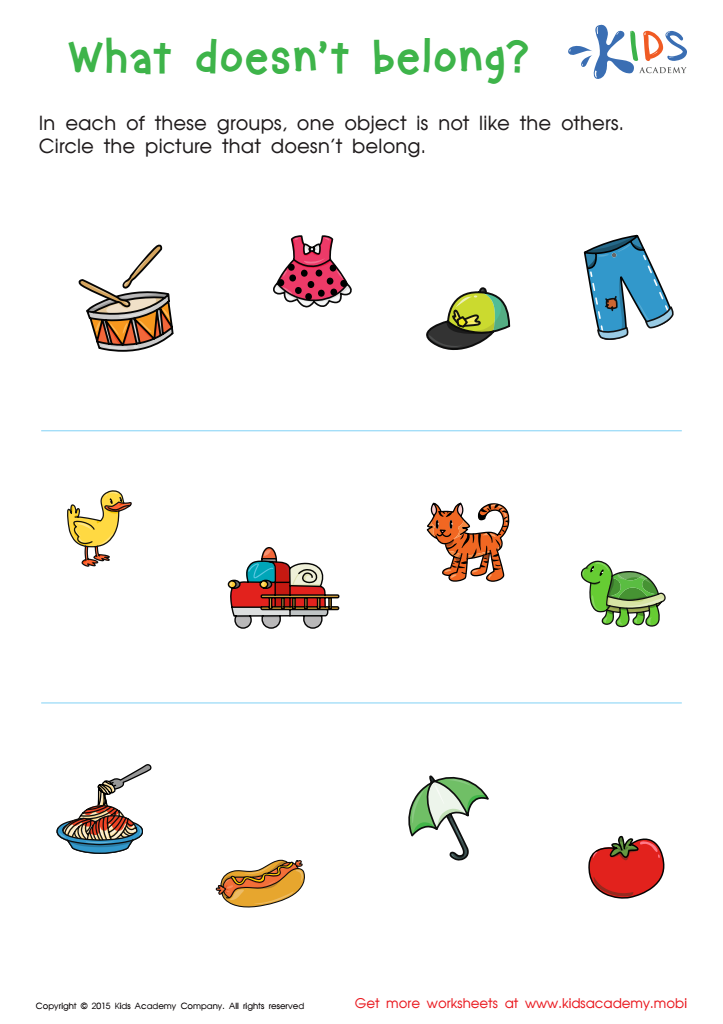
First Words: What Doesn't Belong Worksheet
 Assign to My Students
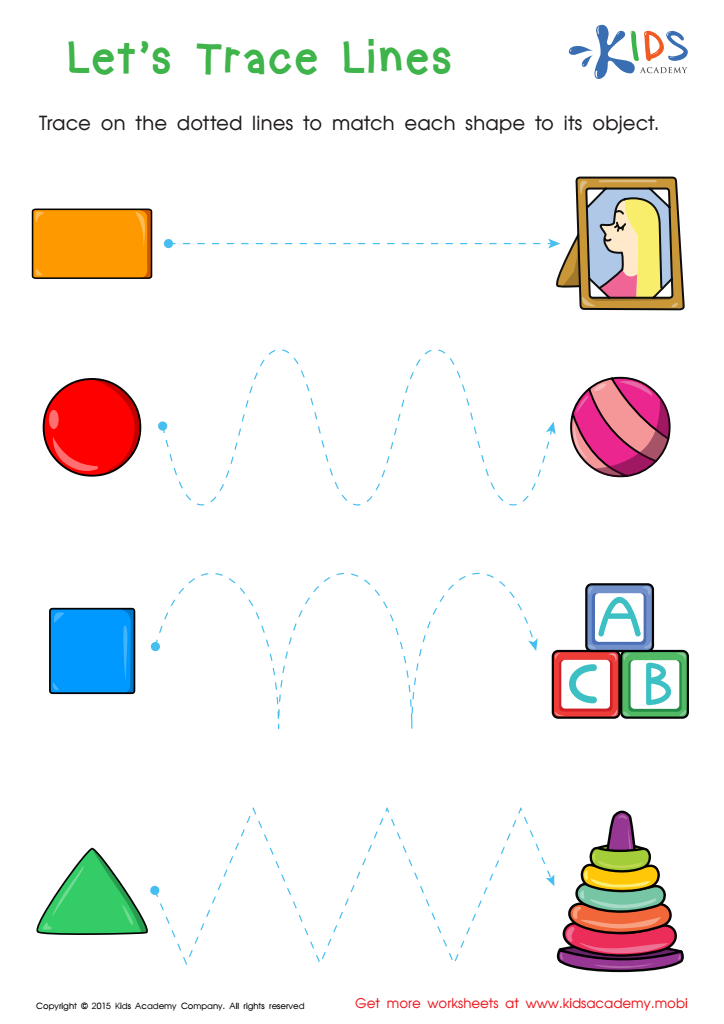
First Words: Let's Trace Lines Worksheet
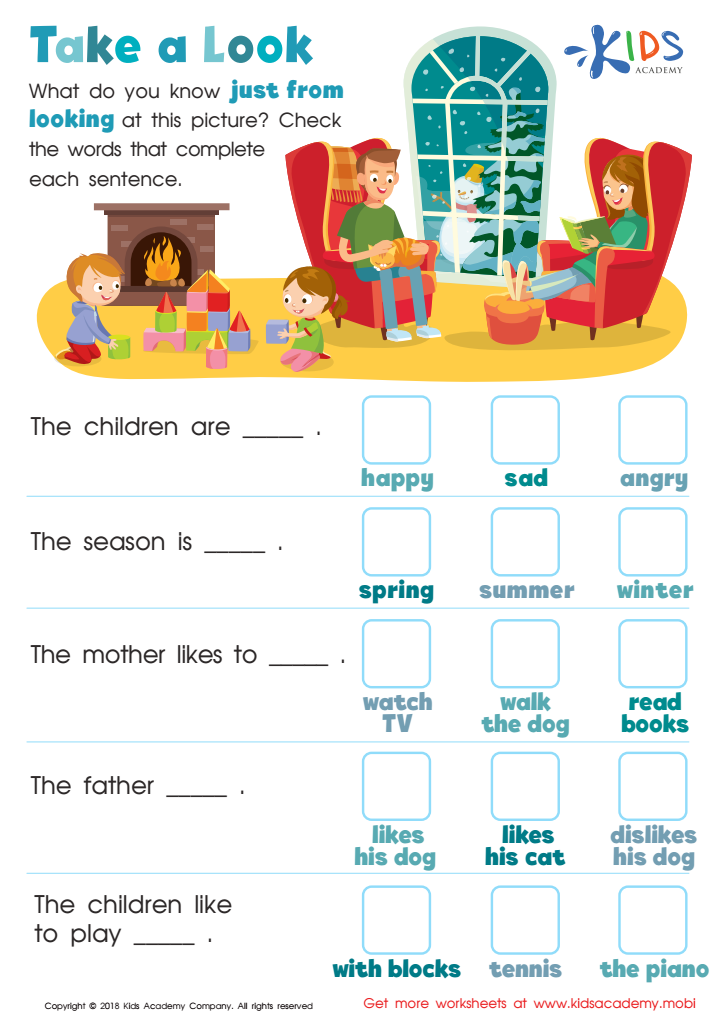
Take a Look - Part 1 Worksheet






Shape recognition is a fundamental skill for children aged 4-6, laying the groundwork for their overall cognitive development and literacy. Parents and teachers should prioritize this skill because it helps children understand the world around them, fostering spatial awareness and problem-solving abilities. Recognizing shapes also enhances language development, as children learn to describe and categorize objects, building their vocabulary and communication skills.
Moreover, shape recognition serves as a precursor to mathematical concepts. Understanding shapes paves the way for future skills in geometry, symmetry, and measurement. When children can identify and manipulate shapes, they become more adept in activities like sorting and classifying, which are essential in preschool and early elementary curricula.
Additionally, engaging in shape recognition activities can stimulate a child's creativity through art and play. Incorporating shapes into storytelling and everyday contexts helps to reinforce learning in a fun and meaningful way.
By emphasizing shape recognition during early education, parents and teachers create a strong foundation for children's academic success while supporting their social and emotional growth. Fostering these early skills nurtures a lifelong love for learning, making it essential for caregivers to actively participate in this developmental journey.








