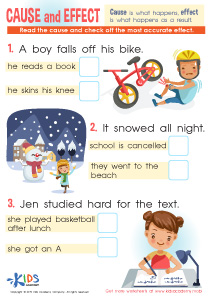
Critical Thinking Normal Reading Non-Fiction Worksheets for Ages 4-6
3 filtered results
Difficulty Level
Grade
Age
-
From - To
Subject
Activity
Standards
Enhance your child's critical thinking skills with our engaging non-fiction reading worksheets designed for ages 4-6. These worksheets provide age-appropriate materials that develop comprehension and analytical abilities while exploring fascinating topics. With fun illustrations and interactive activities, children will learn to make observations, ask questions, and draw conclusions about the world around them. Perfect for preschool and early elementary students, our resources promote cognitive growth and a love of learning. Equip your little learners with essential skills that lay the foundation for academic success. Download our critical thinking non-fiction worksheets today and watch your child thrive!
Favorites
With answer key
Interactive
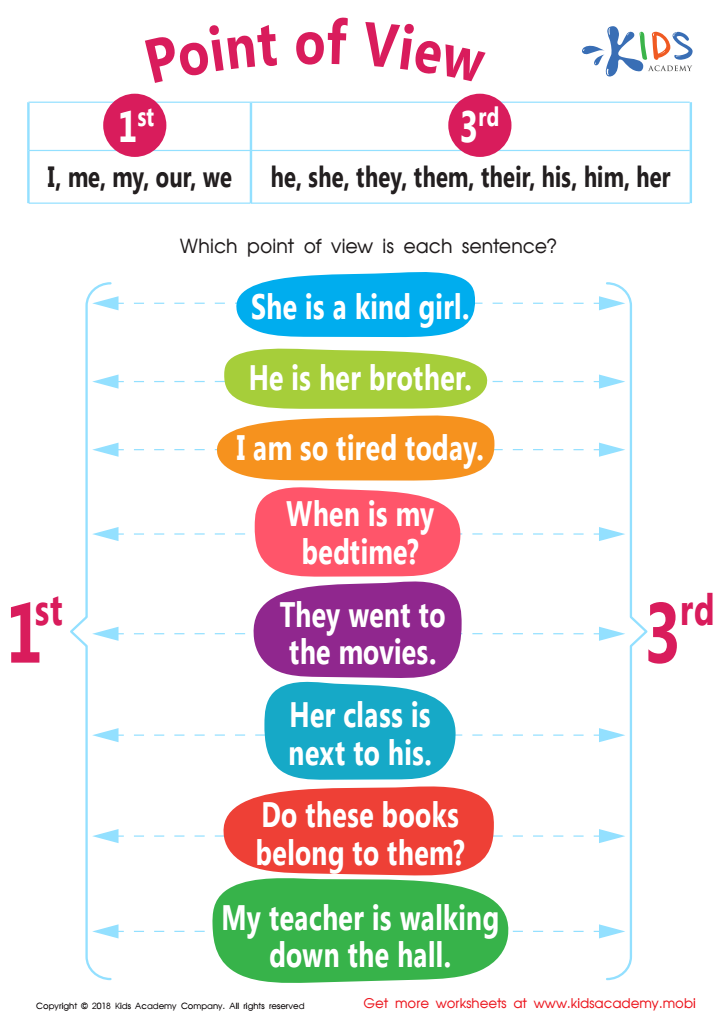
Point of View Worksheet
This printable worksheet helps kids understand Point of View by providing 1st and 3rd person choices. It's a fun way to practice differentiating between the two viewpoints and improve their reading comprehension. Match the sentences to 1st or 3rd person to strengthen understanding and enjoy the task!
 Assign to My Students
Point of View Worksheet
Worksheet
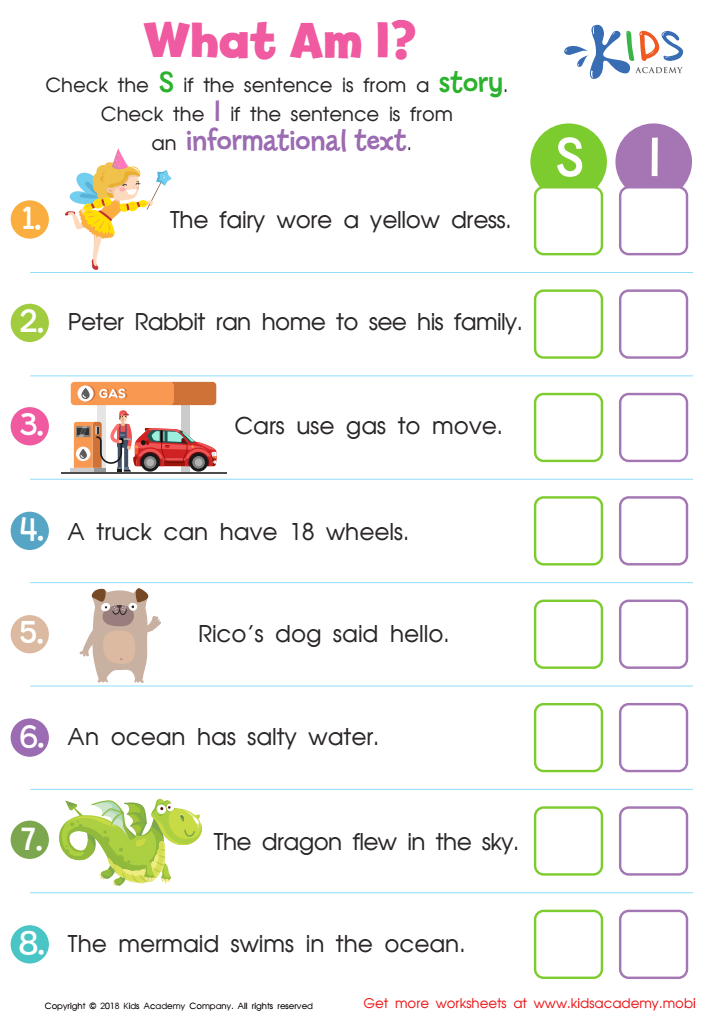
What Am I? Worksheet
This worksheet assesses students' ability to differentiate between stories and texts they read for facts. Students learn to distinguish between reading for pleasure and reading for information. It includes statements from both a story and an informational text, and students must decide what type of text it is.
What Am I? Worksheet
Worksheet
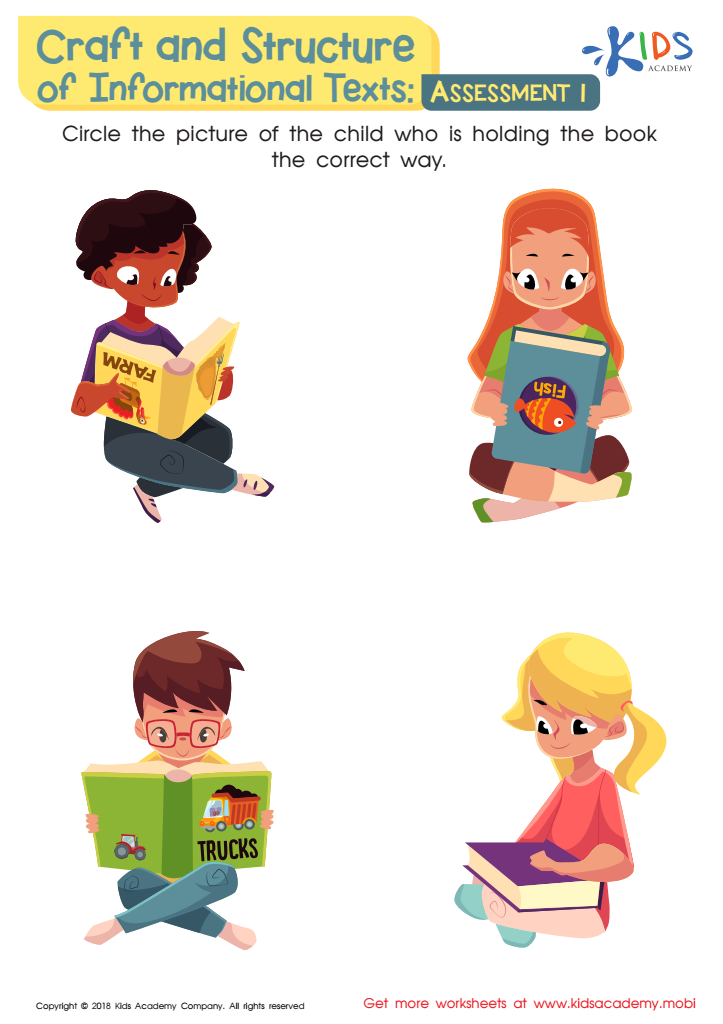
Craft and Structure of Informational Texts: Assessment 1 Worksheet
Young children need to know how to hold books correctly when they start reading. This assessment worksheet helps them show they know what to do. They'll look at the pictures and circle the child who is holding the book correctly. It's a great way to tell they are well on their way to becoming lifetime readers!
Craft and Structure of Informational Texts: Assessment 1 Worksheet
Worksheet
Join Kids Academy for Free
Who is primarily going to use this learning content?








Critical thinking skills are essential for children, even at a young age. Encouraging critical thinking through non-fiction reading for ages 4-6 helps children develop the ability to analyze, evaluate, and apply information effectively. Unlike fictional stories, non-fiction exposes young learners to real-world concepts, facts, and ideas, nurturing their natural curiosity about the environment, science, and society.
Parents and teachers should prioritize critical thinking in non-fiction reading as it lays the foundation for informed decision-making and problem-solving skills later in life. By engaging with non-fiction materials, children learn to ask questions, compare information, and form opinions based on evidence. This early exposure reinforces the importance of reasoning and understanding various perspectives.
Furthermore, critical thinking enriches vocabulary and comprehension, as children encounter new terms and concepts, enabling them to articulate their thoughts more clearly. When adults model questioning and exploratory conversations, they encourage children to reflect deeper on what they read, fostering a love for learning.
Incorporating critical thinking through non-fiction not only enhances cognitive development but also helps children connect their learning to everyday experiences. This holistic approach prepares them for ongoing educational success and active citizenship. Ultimately, cultivating these skills early can yield significant long-term benefits.