Animal Classification Normal Science Worksheets for Ages 4-6
4 filtered results
-
From - To
Explore the fascinating world of animal classification with our engaging Normal Science Worksheets designed specifically for children ages 4-6! These thoughtfully crafted worksheets introduce young learners to the basics of categorizing animals based on their characteristics. Each activity encourages curiosity and helps develop critical thinking skills as kids sort animals into various groups, reinforcing their understanding of nature. Perfect for at-home learning or classroom activities, our worksheets make science fun and accessible. Join us in cultivating a love for learning about wildlife while enhancing your child's knowledge and understanding of the diverse animal kingdom! Discover the joy of classification today!
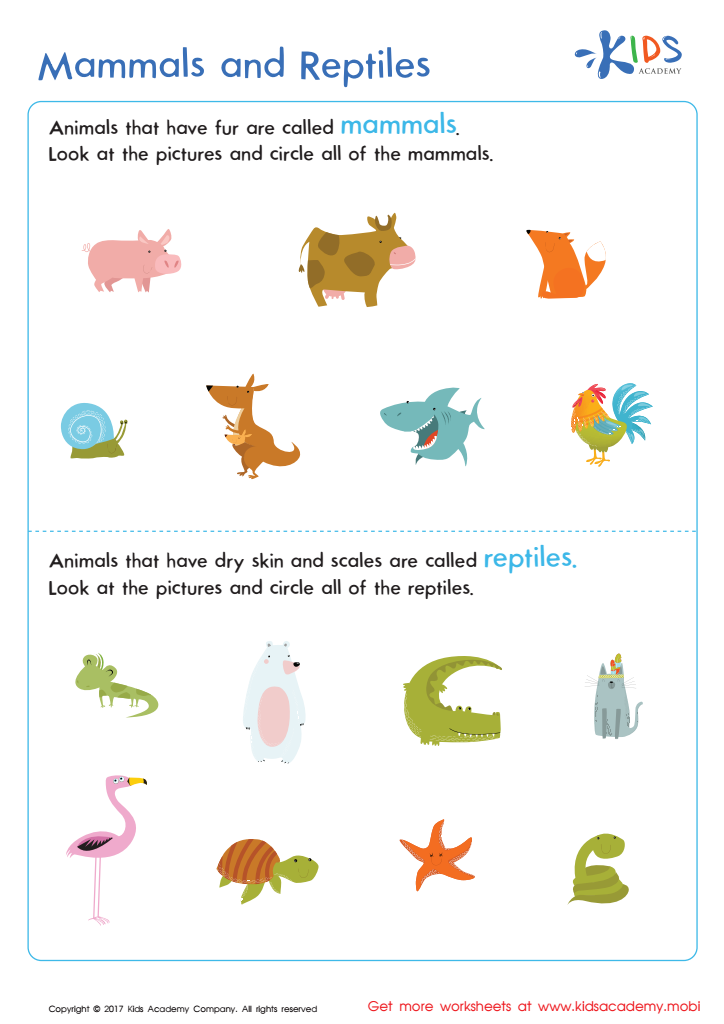
Mammals and Reptiles Worksheet
 Assign to My Students
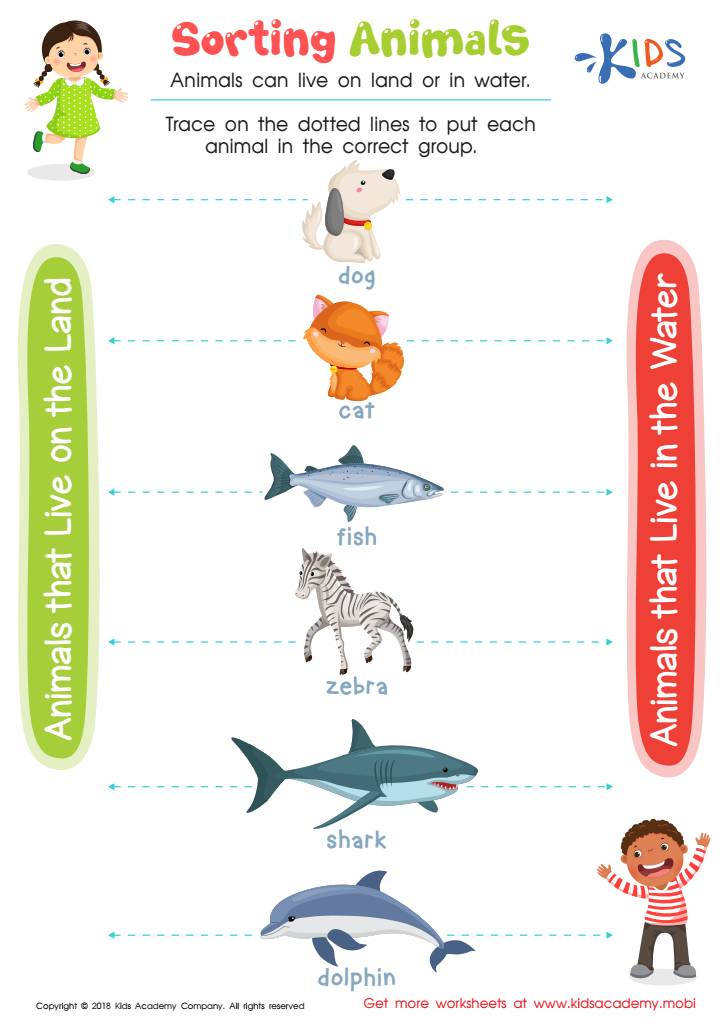
Sorting Animals Worksheet
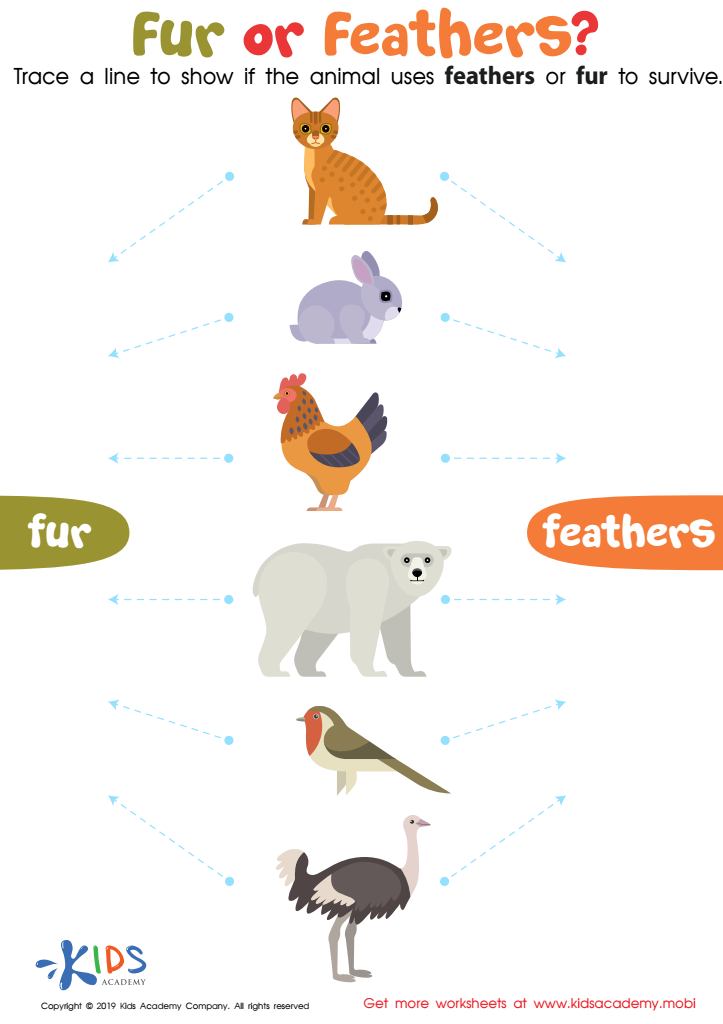
Fur or Feathers? Worksheet
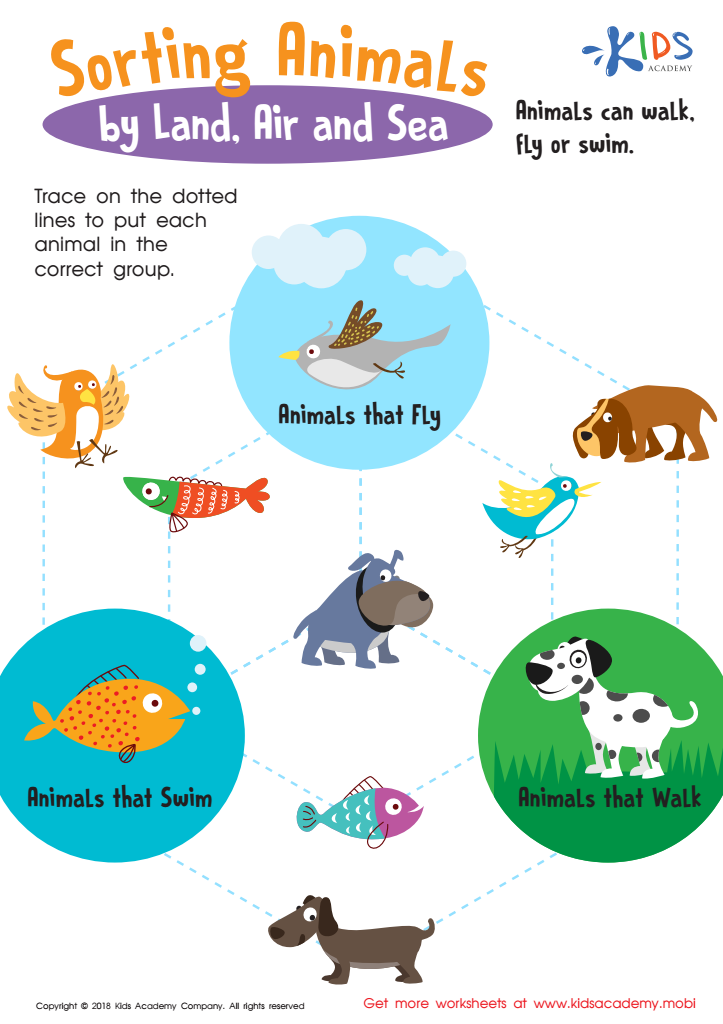
Sorting Animals by Land, Air and Sea Worksheet





Parents and teachers should care about Animal Classification for ages 4-6 because it lays a foundational understanding of the natural world and promotes cognitive development. At this age, children are naturally curious about their surroundings, and exploring how animals are classified based on characteristics allows them to engage their curiosity in a structured way.
Introducing the concepts of classification—such as mammals, birds, reptiles, amphibians, and fish—helps children learn to group objects based on shared traits. This develops critical thinking and observational skills, essential in problem-solving later in life. Understanding differences and similarities among animals fosters empathy, as children learn that all living things have a role in their ecosystem.
Moreover, animal classification can integrate various subjects, such as science, language arts, and art, enhancing the overall learning experience. For instance, classifying animals can involve storytelling, songs, or creative crafts related to different animal categories. It encourages collaboration and discussion, allowing children to express their thoughts while learning from others.
Ultimately, teaching animal classification in early education forms a basis not only for scientific literacy but also for emotional and social growth, preparing children for lifelong love and respect for the environment.







