
Critical thinking skills Normal Science Worksheets for Ages 4-6
3 filtered results
Difficulty Level
Grade
Age
-
From - To
Subject
Activity
Standards
Nurture your child's critical thinking abilities with our specially designed Science Worksheets for Ages 4-6. Each engaging activity focuses on enhancing problem-solving skills, encouraging curiosity, and fostering logical reasoning through age-appropriate science concepts. Our fun, interactive worksheets make learning enjoyable, promoting active participation and getting young minds ready for a lifetime of discovery. Whether it's identifying patterns, matching objects, or sorting data, these exercises provide a strong foundation for analytical thinking. Perfect for home or classroom use, our worksheets offer an essential resource for early learning development. Give your child the tools to think critically and explore the wonders of science today!
Favorites
With answer key
Interactive
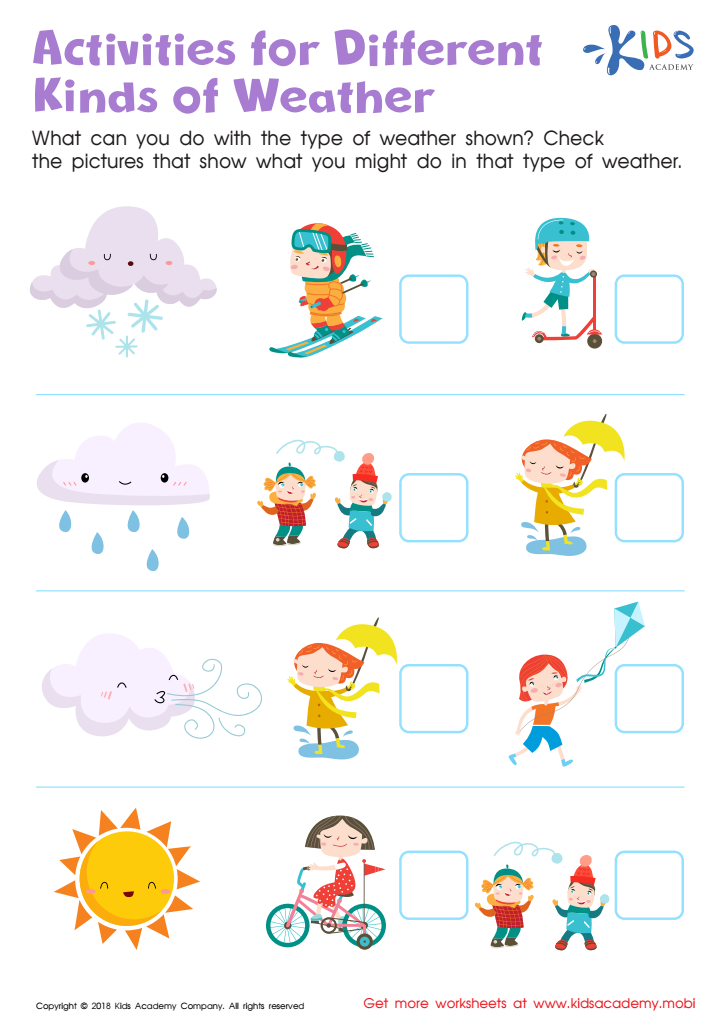
Activities for Different Kinds of Weather Worksheet
Help your child explore the changing seasons with this interactive worksheet. Ask them to name the different seasons and activities associated with each type of weather. Show the pictures and explain what they can do in that kind of weather. Have them check off the activities to help them learn and enjoy the changing seasons.
 Assign to My Students
Activities for Different Kinds of Weather Worksheet
Worksheet
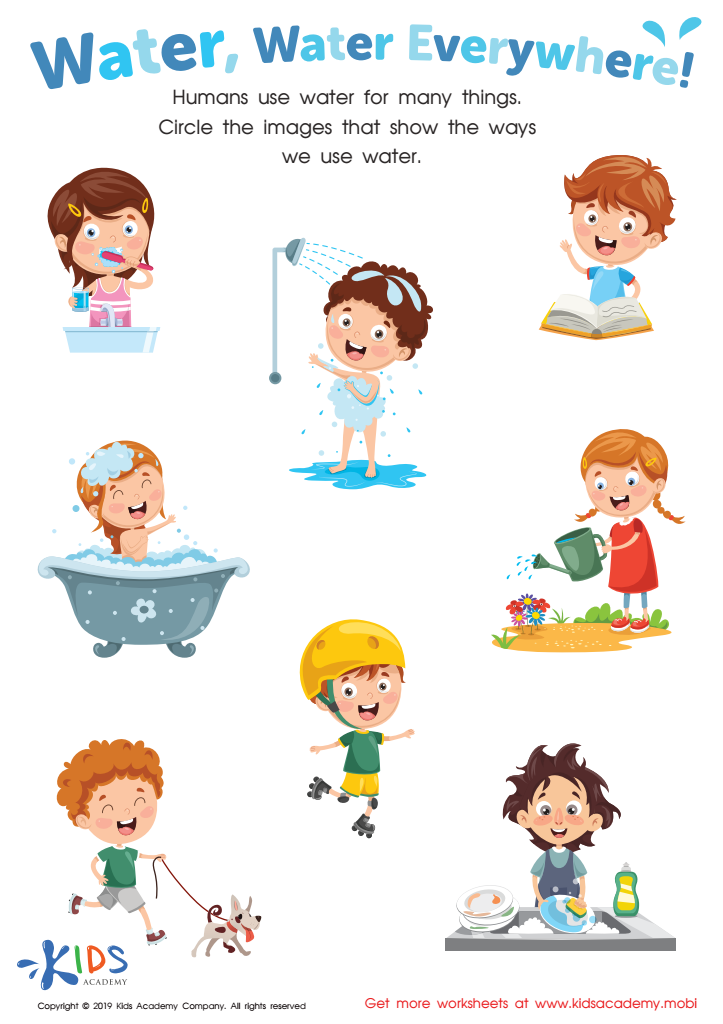
Water, Water Everywhere! Worksheet
Ask your kids how we use water daily. Point out how vital it is to the environment, as many living things couldn't exist without it. Show them this worksheet with kids doing different things that involve water. Ask them to identify what each one is doing, then help them circle the images which show the ways we use the water.
Water, Water Everywhere! Worksheet
Worksheet
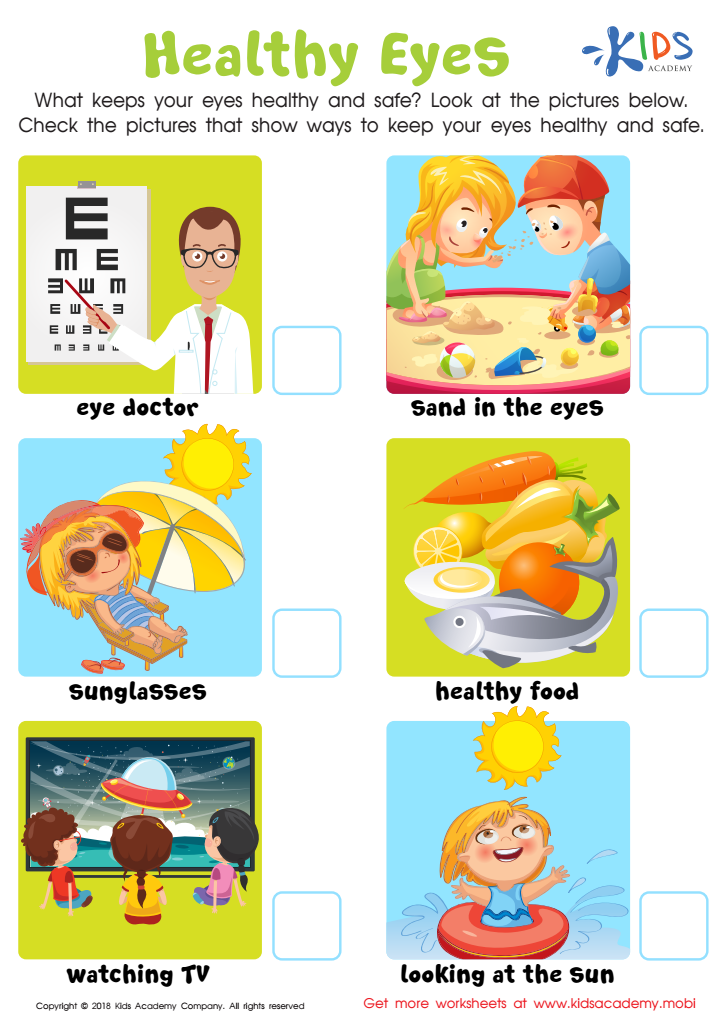
Healthy Eyes Worksheet
Does your child know how to care for their eyes? Help them understand with this worksheet. Look through the pictures together and discuss the different ways to keep the eyes healthy and safe. These include visits to the doctor, wearing sunglasses, and eating healthy food.
Healthy Eyes Worksheet
Worksheet
Join Kids Academy for Free
Who is primarily going to use this learning content?







Critical thinking skills are foundational for young children's development and future success. For kids aged 4-6, learning basic critical thinking processes allows them to better understand and interact with the world around them. By fostering these skills at an early age, parents and teachers help children learn how to make decisions, solve problems, and evaluate the information they encounter.
In the realm of normal science, critical thinking encourages curiosity by pushing children to ask questions like "why" and "how." It enables them to understand simple cause and effect, identify patterns, and make basic predictions. When children can think critically, they become more engaged learners who can explore topics deeply and meaningfully. For example, a simple classroom experiment about plants needing sunlight can stimulate questions about where light comes from, what happens in the dark, and why plants respond the way they do.
Moreover, critical thinking promotes social-emotional growth. As children articulate their thought processes, they develop better communication skills and learn to respect other viewpoints, forming the basis for collaborative learning environments.
Parents and teachers should emphasize critical thinking in early education to prepare children for more complex learning. This involves regular activities and discussions that require analytical thinking, as well as encouraging a mindset that values inquiry and evidence-based understanding.







