Developing analytical skills Normal Science Worksheets for Ages 4-6
3 filtered results
-
From - To
Enhance your child's learning journey with our "Developing Analytical Skills Normal Science Worksheets" tailored for ages 4-6. This collection of engaging, age-appropriate worksheets encourages young minds to think critically and explore scientific concepts. Through interactive activities, children will sharpen their reasoning, observation, and problem-solving skills in a fun and stimulating way. Each worksheet is designed to foster curiosity and promote a deeper understanding of the natural world while aligning with educational standards. Perfect for parents and teachers seeking to enrich science education, our worksheets provide a solid foundation for essential analytical skills that will benefit children throughout their studies. Explore now!
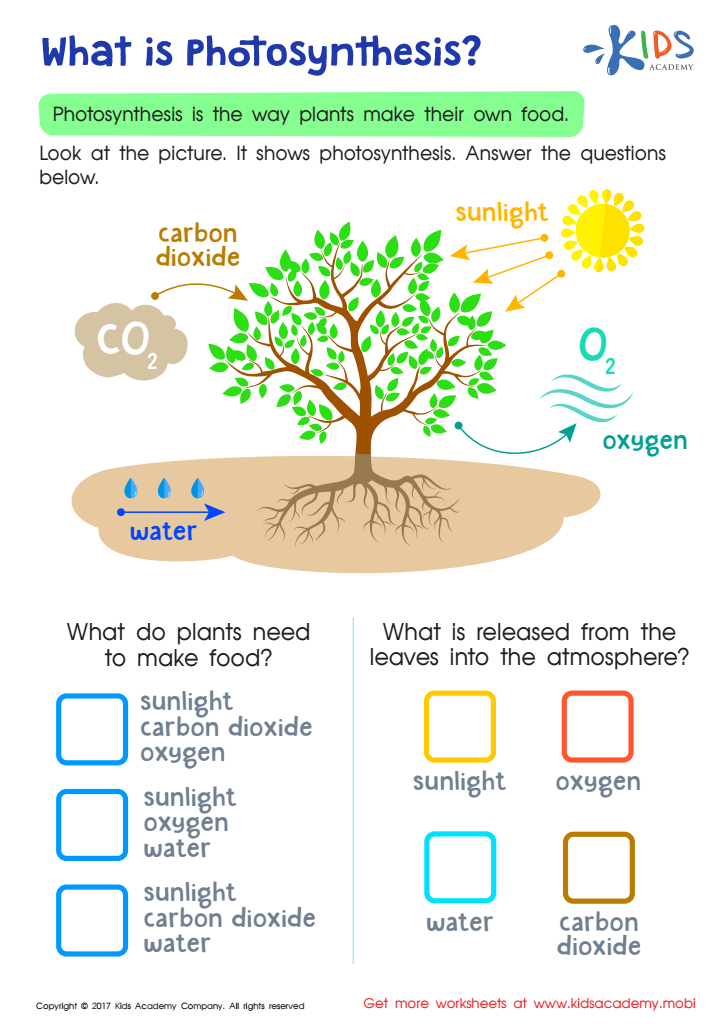
What is Photosynthesis Printable
 Assign to My Students
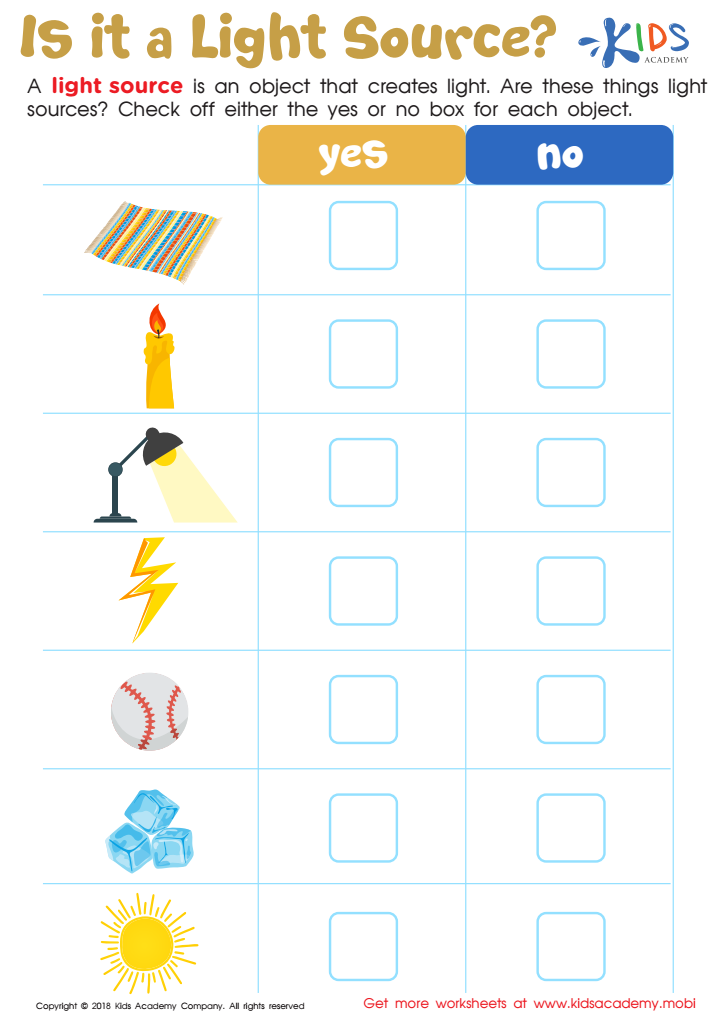
Is It a Light Source? Worksheet

How Light Travels Worksheet








Developing analytical skills through Normal Science for children ages 4-6 is crucial for several reasons. At this early age, children are naturally curious and eager to explore the world around them. By engaging them in scientific inquiry, parents and teachers can harness this curiosity, encouraging critical thinking and problem-solving abilities that are foundational for later learning.
Analytical skills foster cognitive development, enabling children to observe, question, and make connections between different concepts. Through activities like sorting objects, classifying animals, or conducting simple experiments, young learners can practice reasoning and decision-making. These experiences not only nurture intellectual growth but also build confidence as children learn to form hypotheses and see the results of their exploration.
Moreover, in our rapidly evolving world, these early analytical skills contribute to a child's adaptability and resilience. Children become better equipped to face challenges, think independently, and innovate as they grow. Ultimately, by prioritizing the development of analytical skills through engaging scientific experiences, parents and teachers lay a solid foundation for lifelong learning, fostering passionate, inquisitive individuals who are ready to tackle the complexities of the future.







