Understanding directions Normal Science Worksheets for Ages 4-6
4 filtered results
-
From - To
Discover our "Understanding Directions" Normal Science Worksheets, designed specifically for children ages 4-6. These engaging worksheets promote essential directional skills while making learning both fun and interactive. Tailored to young learners, our activities foster critical thinking as kids explore concepts of directionality through colorful visuals and relatable scenarios. Whether navigating through a maze or following guided prompts, children will enhance not only their understanding of directions but also their confidence in applying these concepts in real-world situations. Perfect for classroom use or at-home learning, these worksheets provide an excellent foundation in science while cultivating important listening and comprehension skills. Explore our collection today!
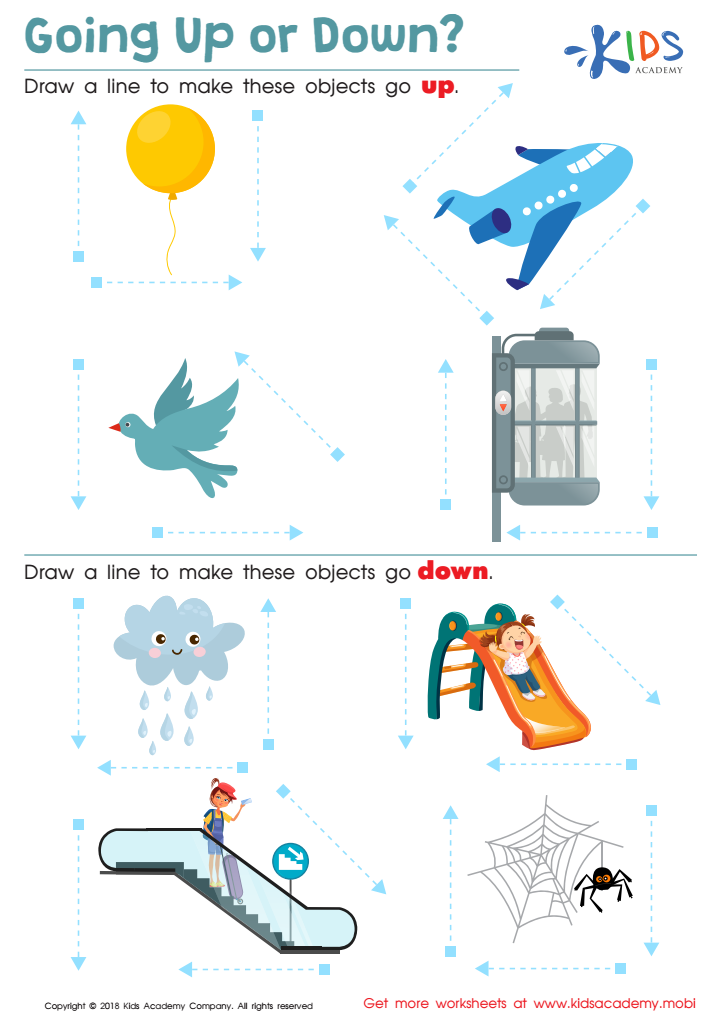
Going up or Down? Worksheet
 Assign to My Students
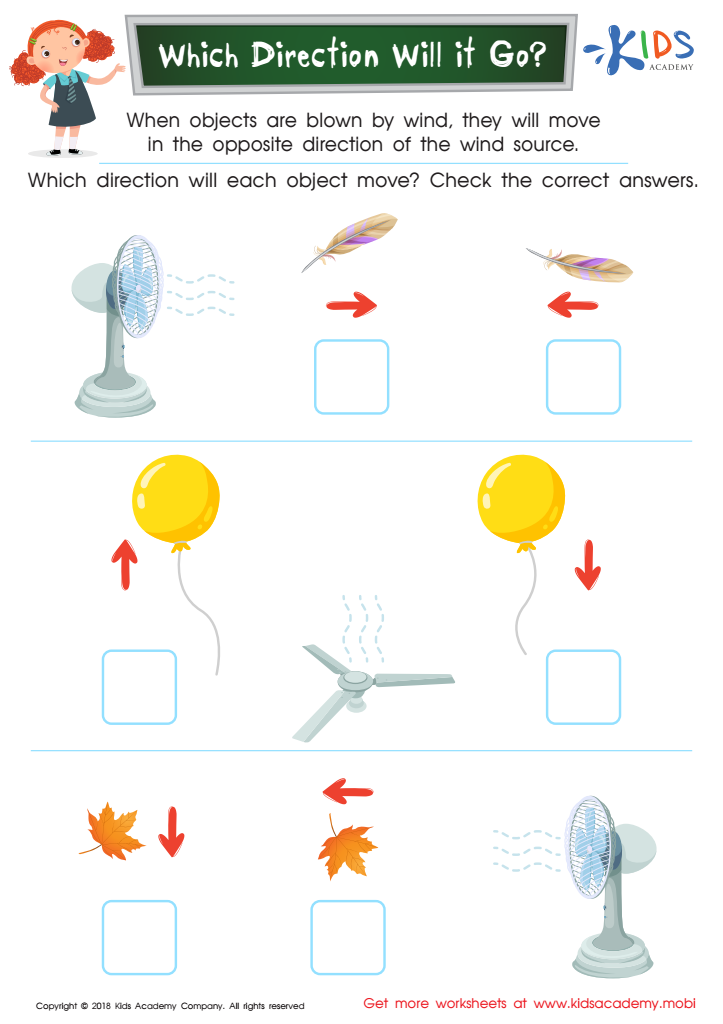
Which Direction Will it Go? Worksheet
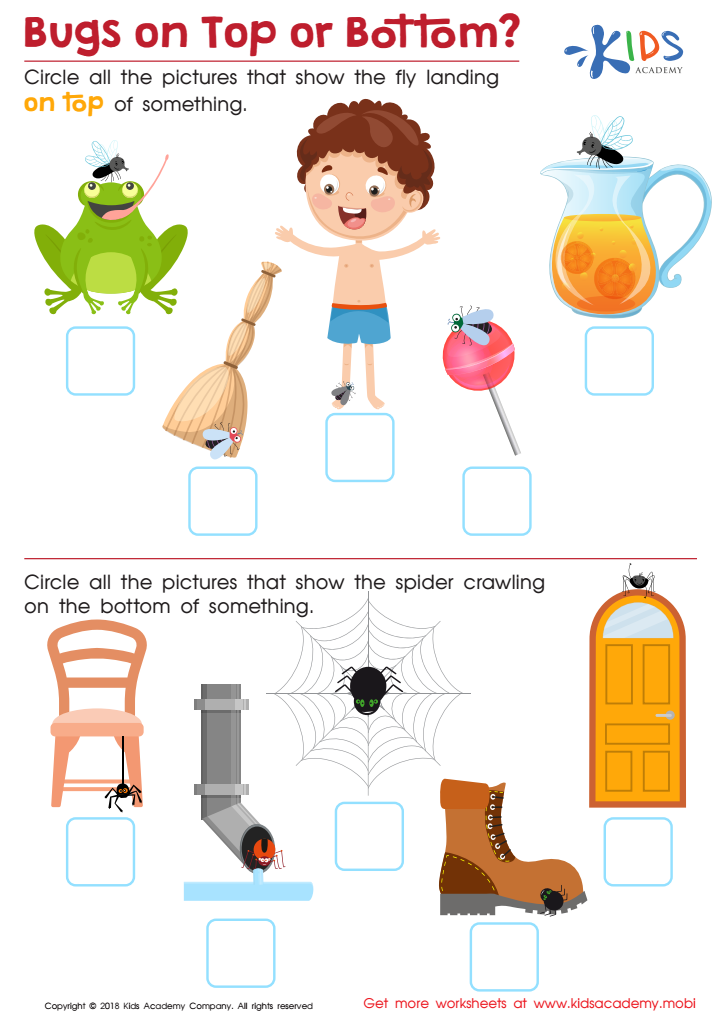
Bugs on Top or Bottom? Worksheet
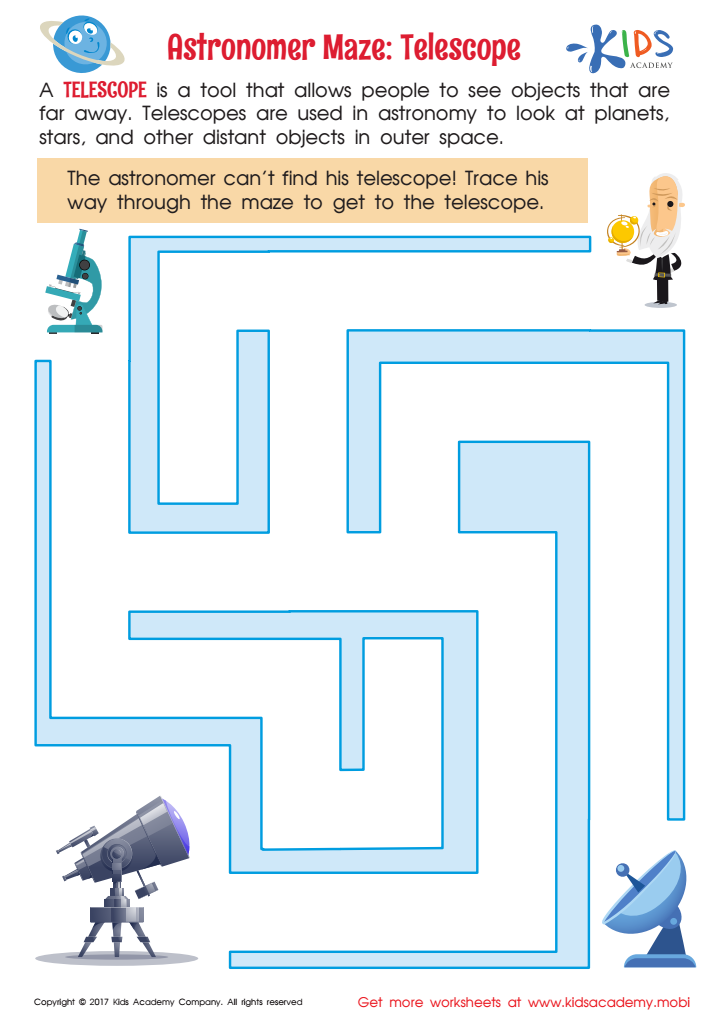
Astronomer Maze: Telescope Worksheet






Understanding directions in the context of "Normal Science" is crucial for children aged 4-6 because it lays the foundation for critical thinking and problem-solving skills essential in everyday life and academic success. At this age, children are incredibly curious and eager to explore their surroundings, making it a pivotal time to guide them in interpreting and following directions accurately.
For parents and teachers, fostering the ability to understand directions enhances children's independence and self-confidence. When children grasp how to follow instructions, they can effectively engage in activities, whether it's completing a simple task, playing a game, or conducting basic experiments. This cognitive ability encourages collaboration, as they learn to communicate their needs and comprehend the thoughts and actions of others.
Additionally, learning to follow directions is linked to improved literacy and numeracy skills. As kids begin to read simple instructions or count steps in a task, they are cultivating foundational skills that will support future learning. By prioritizing direction comprehension within Normal Science, parents and teachers can better prepare children for academic transition and lifelong learning, ensuring they have the tools needed to navigate an increasingly complex world.







