Weather identification Normal Science Worksheets for Ages 4-6
4 filtered results
-
From - To
Discover our engaging Weather Identification Normal Science Worksheets, designed specifically for children aged 4-6! These interactive activities introduce young learners to various weather types, helping them recognize and understand the environment around them. With vibrant illustrations and simple instructions, children can explore concepts like sunshine, rain, snow, and storms in a fun and educational way. Ideal for early childhood classrooms or home learning, our worksheets promote critical thinking and observational skills, providing a solid foundation for future science education. Equip your young explorers with the tools they need to identify and appreciate the wonders of weather while having fun!
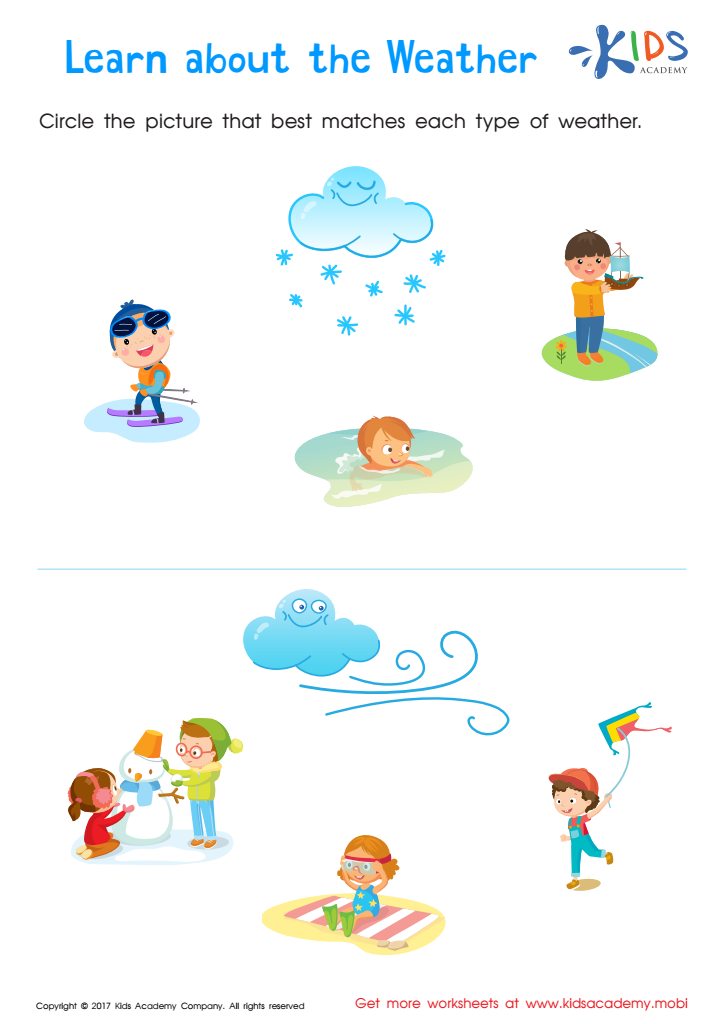
About the Weather Printable
 Assign to My Students
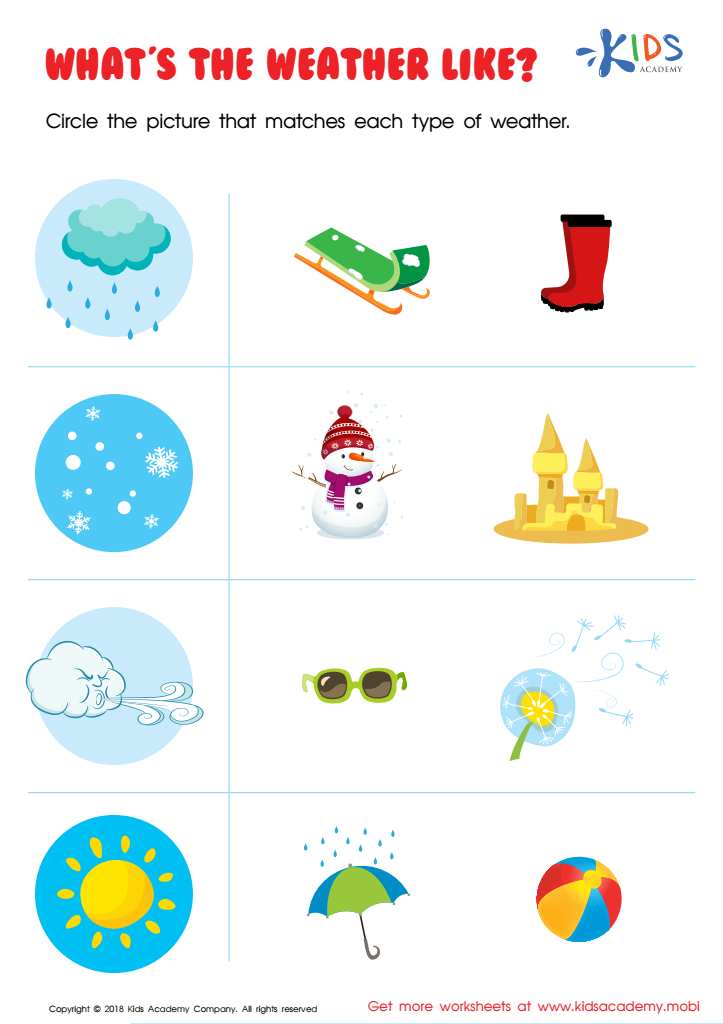
What's the Weather Like? Worksheet
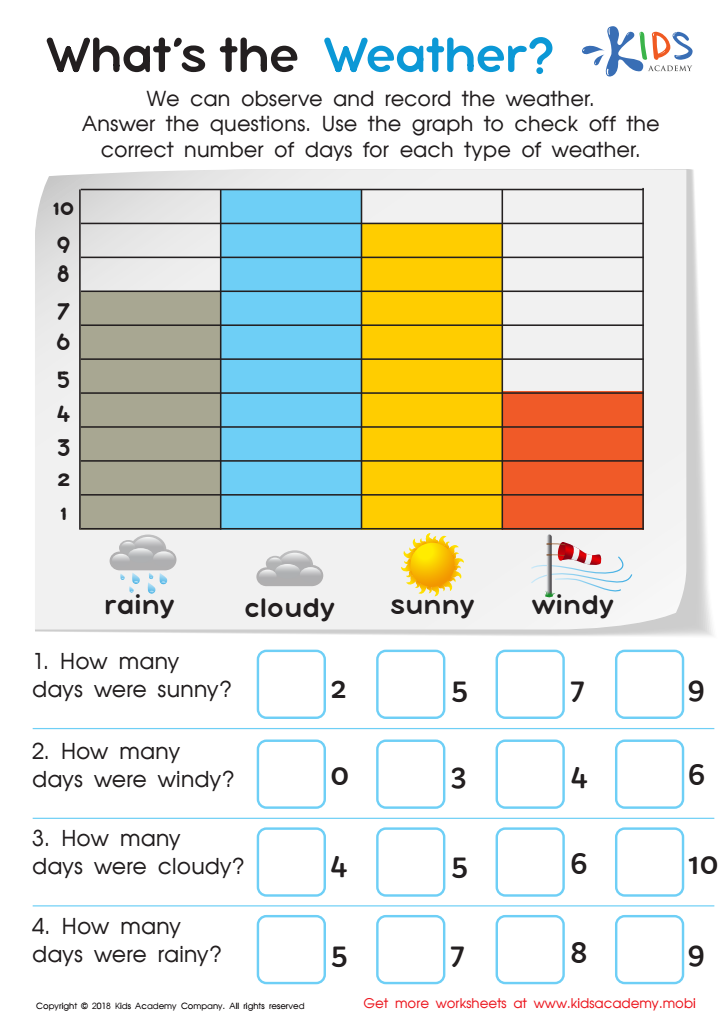
What's the Weather? Worksheet
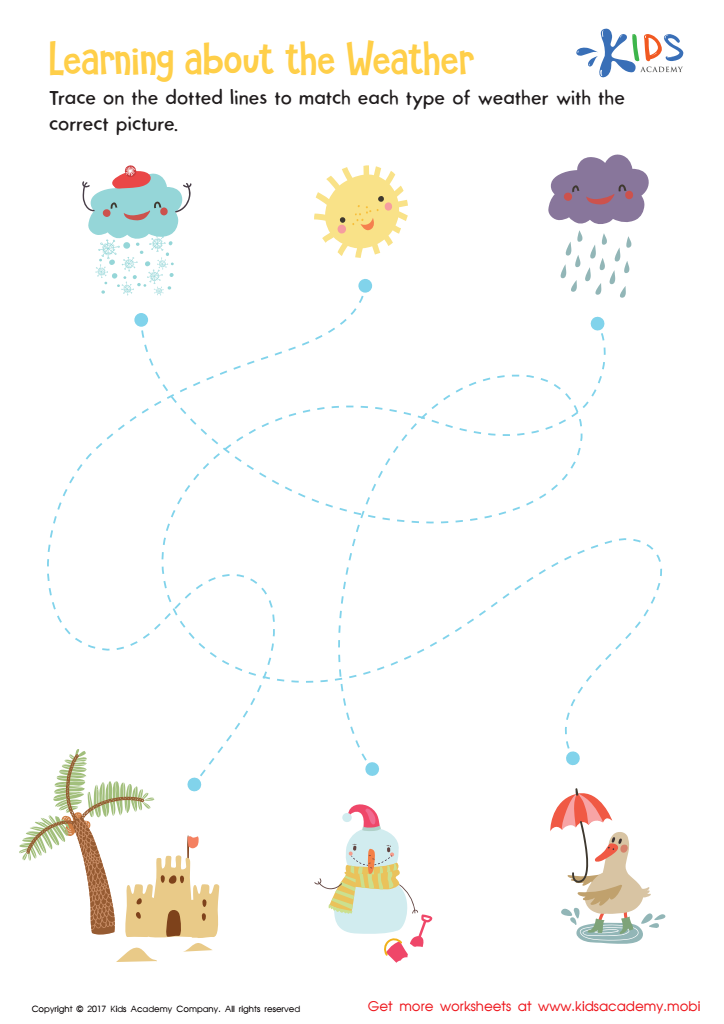





.jpg)
.jpg)

Understanding weather identification is vital for young children aged 4-6, as it lays the groundwork for scientific literacy and observation skills. At this age, children are naturally curious about their environment, making it an ideal time to introduce basic concepts of weather. Learning about different weather types—such as sunny, rainy, snowy, and windy—helps children make sense of their surroundings, promoting critical thinking and interaction with nature.
Parents and teachers play an important role in fostering this understanding. Engaging children in conversations about weather phenomena encourages language development and vocabulary expansion as they learn to express concepts related to temperature, precipitation, and seasonal changes. Additionally, it enhances observational skills as children learn to notice and discuss weather patterns, leading to greater engagement with the world around them.
Incorporating weather-related activities into daily routines, such as tracking the weather chart or making simple observations outdoors, makes learning enjoyable and interactive. It also fosters an early appreciation for science and inspires lifelong curiosity. Ultimately, by valuing weather identification as normal science, parents and teachers equip children with essential skills for understanding not only weather phenomena, but also the scientific method, observation, and inquiry that underpin broader scientific learning in the future.







