Understanding light sources Normal Physical Science Worksheets for Ages 4-6
3 filtered results
-
From - To
Introduce young learners to the fascinating world of physical science with our "Understanding Light Sources" worksheets, meticulously designed for ages 4-6. These engaging worksheets cover essential concepts, helping children distinguish between natural and artificial light sources. Through a delightful mix of fun illustrations and interactive activities, kids will learn to identify sunlight, candles, lamps, and more. Our materials are crafted to enhance observational skills and scientific curiosity, laying a strong foundation for future learning. Ideal for both classroom and homeschool environments, these worksheets make understanding light sources an enjoyable and educational experience. Illuminate your child's path to knowledge today!
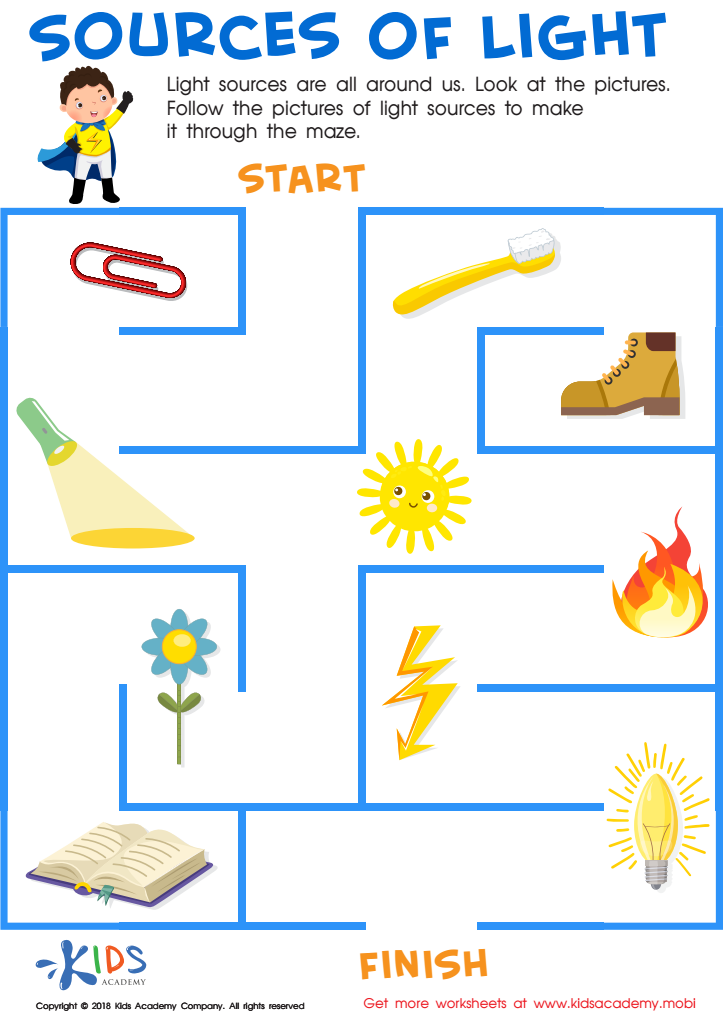
Sources of Light Worksheet
 Assign to My Students
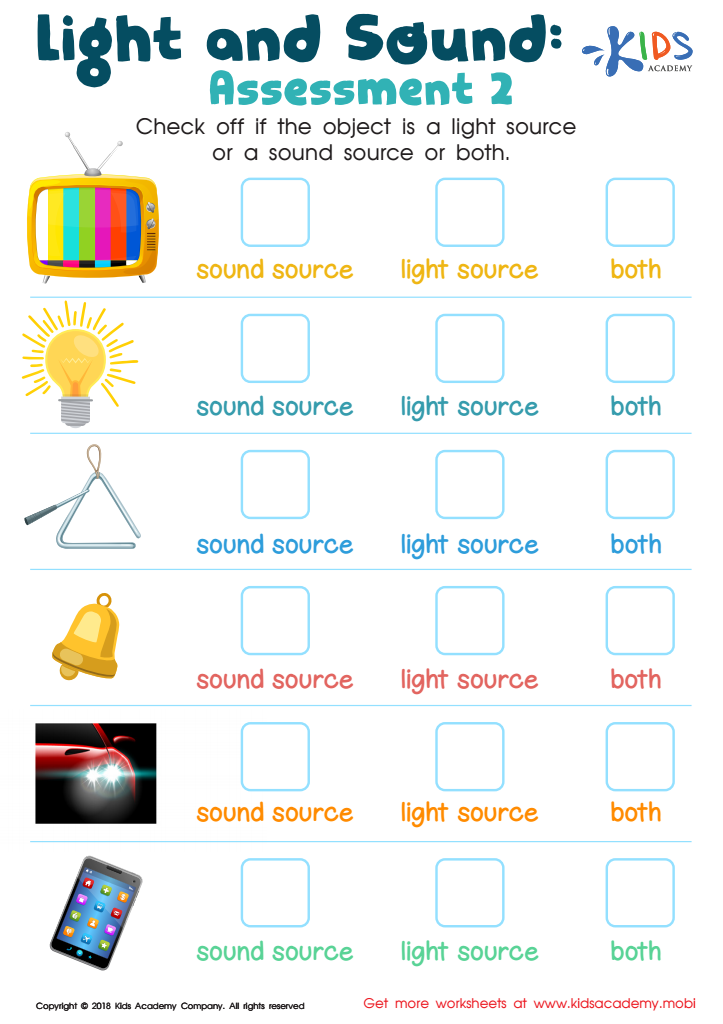
Light and Sound: Assessment 2 Worksheet
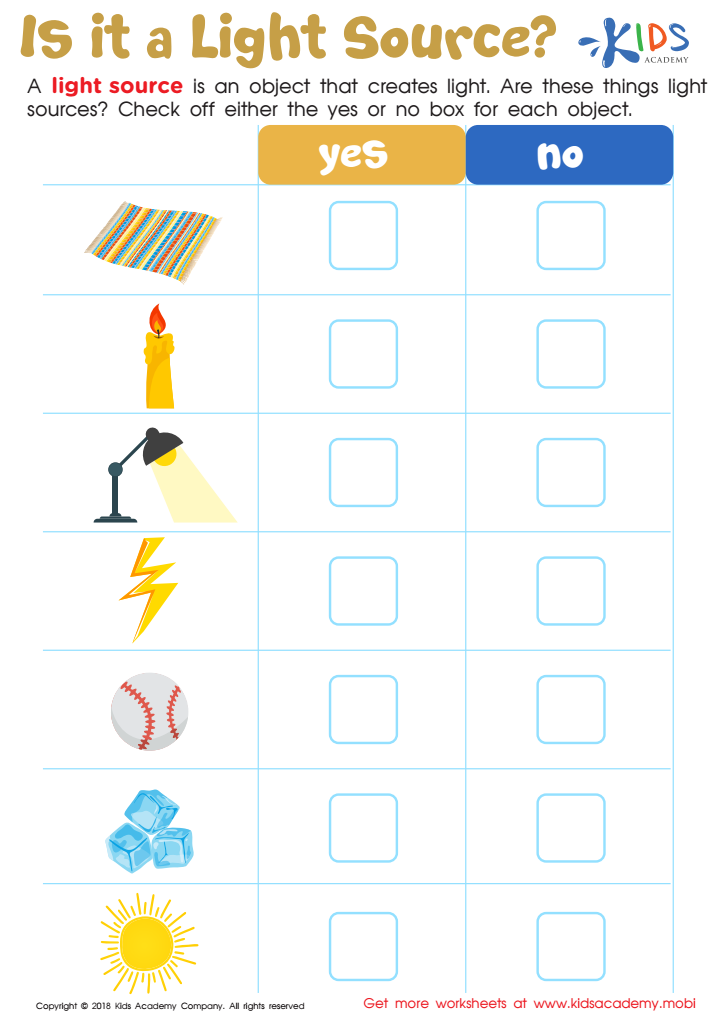
Is It a Light Source? Worksheet








Understanding light sources is crucial for young children's cognitive and sensory development. For ages 4-6, this lesson provides more than just basic science knowledge; it cultivates observational skills and stimulates curiosity about the world around them. Grasping the concept of where light comes from—like the sun, lamps, or candles—helps children comprehend their environment and the differences between natural and artificial light.
Early exposure to these concepts lays the groundwork for future scientific learning. In early grade physical science, understanding light sources teaches children how light affects what we see, shapes our daily routines, and even impacts our emotions. For instance, natural sunlight can indicate daytime, influencing playtime and nap schedules, while artificial light signals evening, preparing them for rest.
Parents and teachers should care about these early lessons because they play a pivotal role in developing a child's critical thinking and problem-solving skills. Engaging children with simple experiments, such as using a flashlight to create shadows or explaining how plants need sunlight to grow, makes learning interactive and enjoyable. This fosters a healthy curiosity and encourages children to ask questions, laying a strong intellectual foundation that benefits their overall educational journey.







