Building vocabulary Normal Community Worksheets for Ages 4-6
3 filtered results
-
From - To
Discover our "Building Vocabulary Normal Community Worksheets" designed for children ages 4-6. These engaging, educational worksheets feature vibrant images and simple exercises to help young learners expand their vocabulary related to the community around them. From identifying places and people in the neighborhood to understanding everyday activities, our worksheets support early language development and boost confidence in reading and speaking. Perfect for both classroom and at-home learning, our carefully crafted resources make language fun and accessible for preschoolers and kindergarteners. Help your child explore and master new words with ease today!
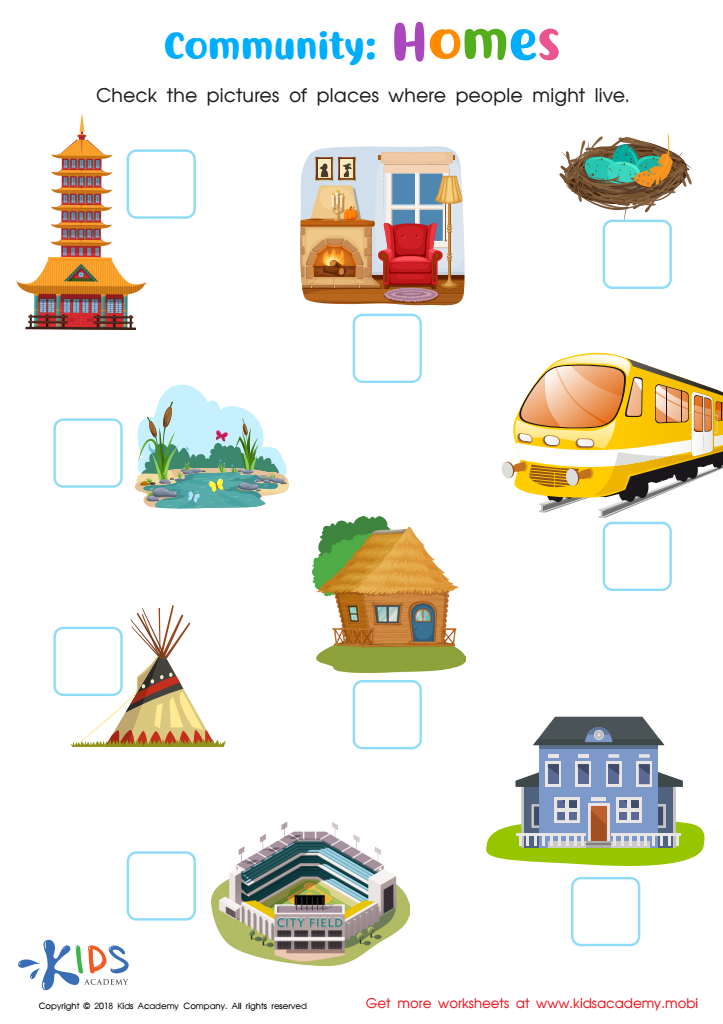
Community: Homes Worksheet
 Assign to My Students
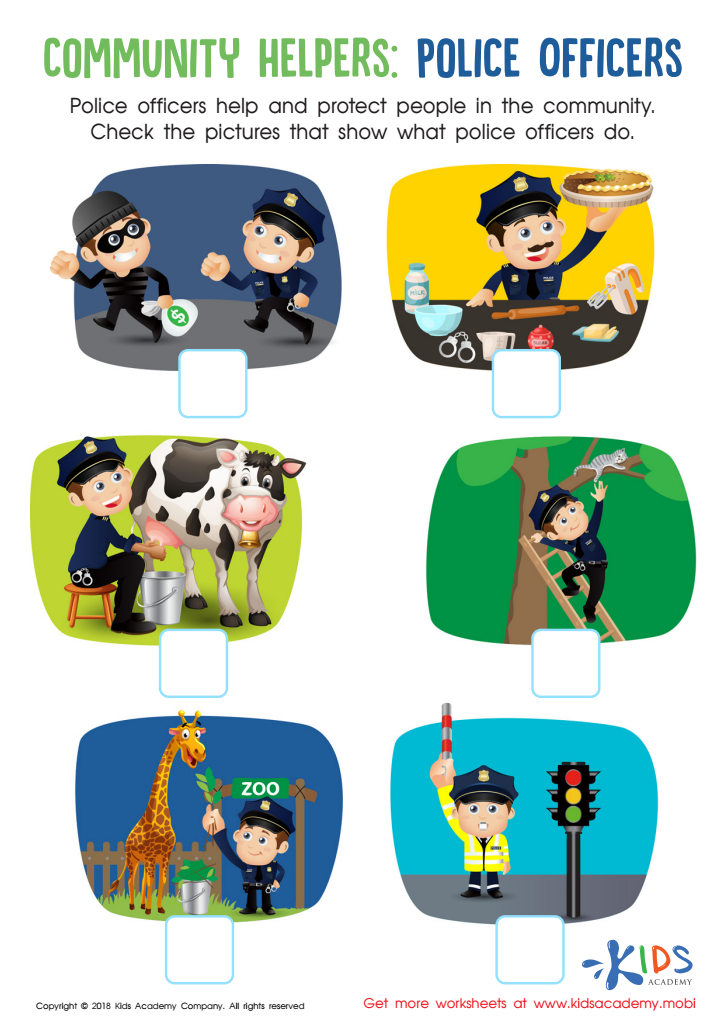
Police Officers Community Helpers Worksheet
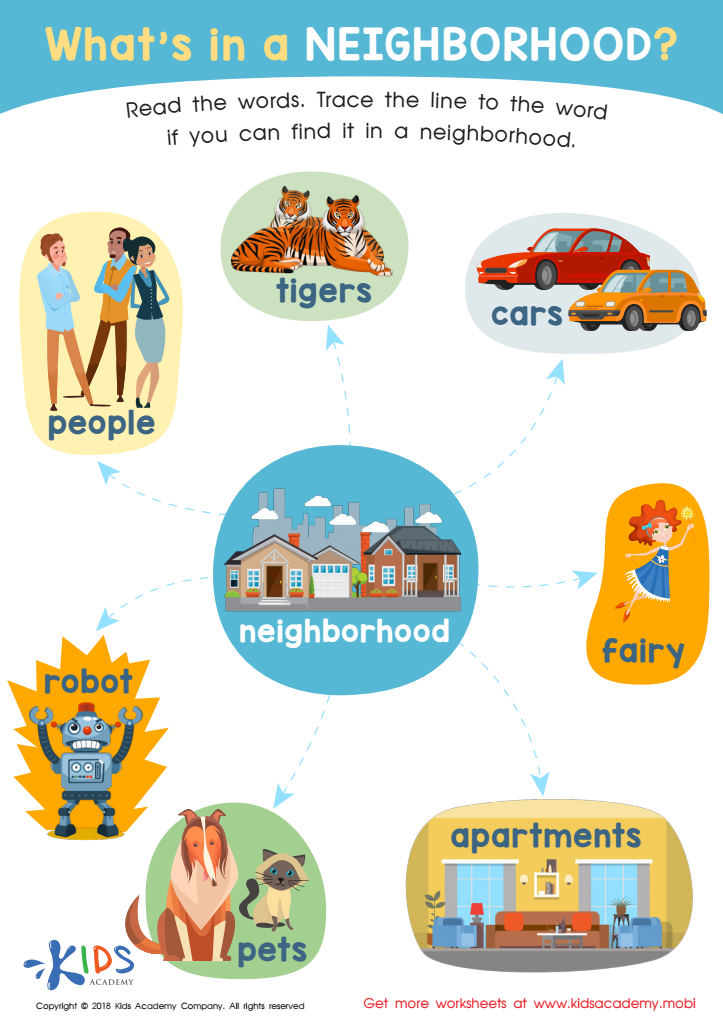
What's in a Neighborhood? Worksheet







Building vocabulary in early learners aged 4-6 is crucial for their cognitive and social development, laying the foundation for future academic success. During these formative years, children's brains are exceptionally receptive to language acquisition. A robust vocabulary enhances their comprehension and ability to express themselves clearly, fostering better communication skills. This is essential not just for academic tasks but for social interactions as well, promoting healthy relationships with peers and adults.
For teachers, integrating vocabulary-building activities into the classroom is vital because it directly impacts literacy. Children with a rich vocabulary can understand instructions better and engage more deeply with the curriculum, boosting overall learning outcomes. For parents, daily interactions and reading sessions increase word exposure, enabling children to pick up new words contextually.
Moreover, a well-developed vocabulary at an early age can contribute to a child’s confidence and curiosity, encouraging them to explore and ask questions. This sets a positive precedent for lifelong learning. Investing in vocabulary enrichment through conversations, reading, and play is a collaborative effort that pays dividends in a child's educational journey, social skills, and self-esteem. Therefore, both teachers and parents play a crucial role in creating a language-rich environment that nurtures growth and development.