Cultural awareness Normal Social Studies Worksheets for Ages 4-6
7 filtered results
-
From - To
Discover our “Cultural Awareness Normal Social Studies Worksheets” tailored for children aged 4-6! These engaging worksheets introduce young learners to diverse cultures and traditions, fostering respect and appreciation for differences. Designed to captivate curious minds, our activities include colorful illustrations and interactive tasks that encourage exploration of various cultural practices. With a focus on enhancing social skills and inclusive attitudes, these worksheets are perfect for both classroom and home learning. Help your child develop a deeper understanding of the world around them, promoting empathy and social awareness in a fun and engaging way. Start your cultural awareness journey today!
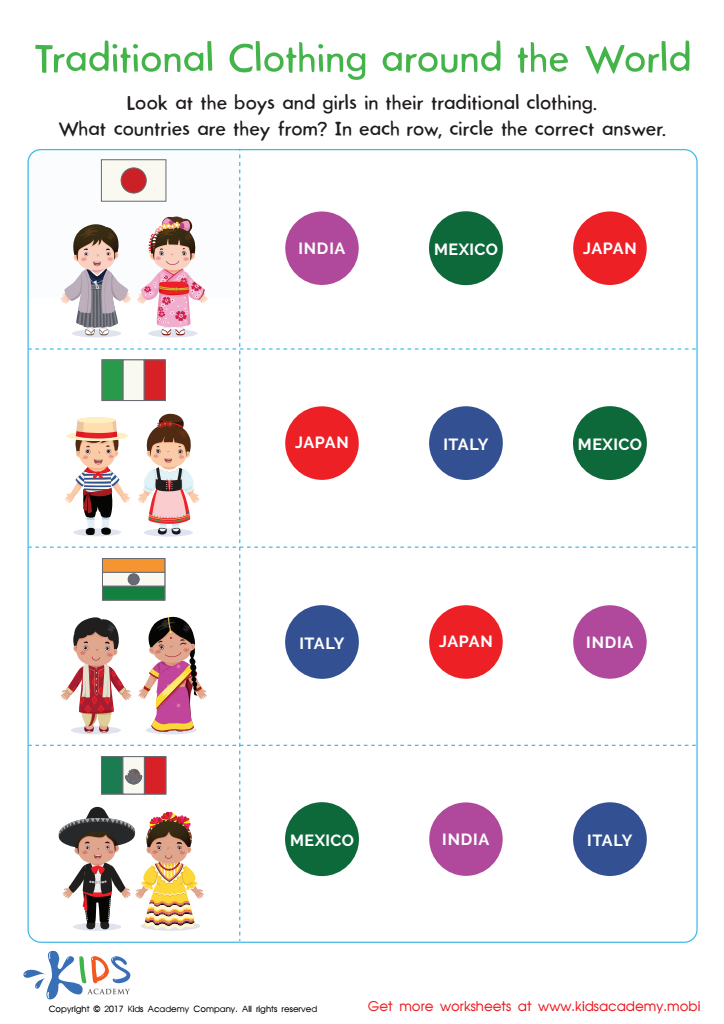
Traditional Clothing Worksheet
 Assign to My Students
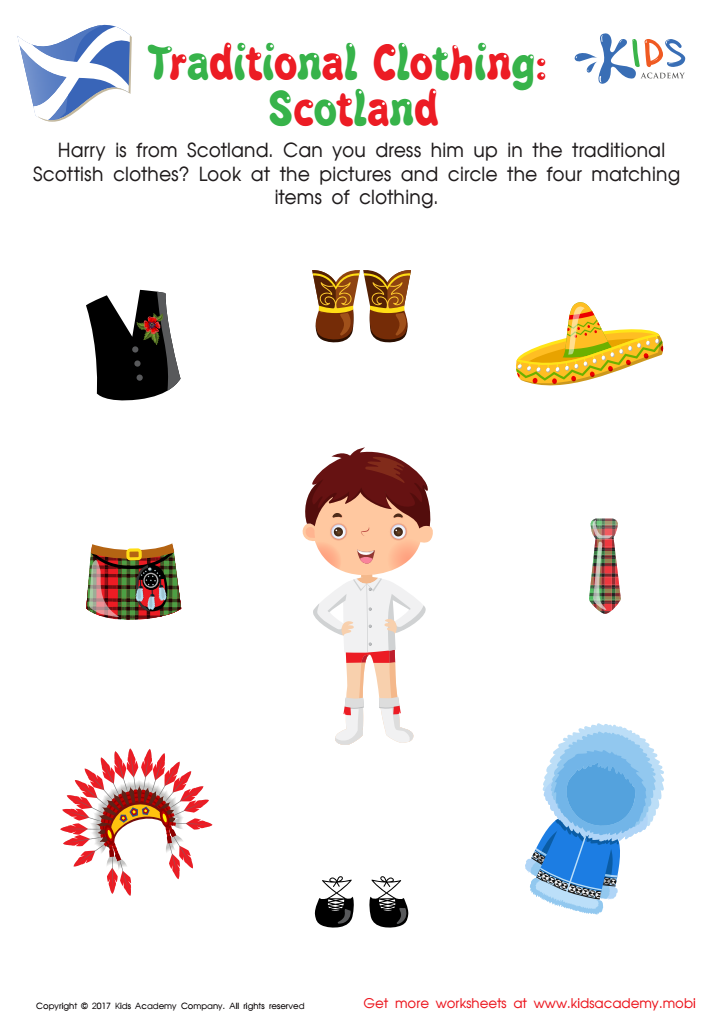
Traditional Clothing in Scotland Worksheet
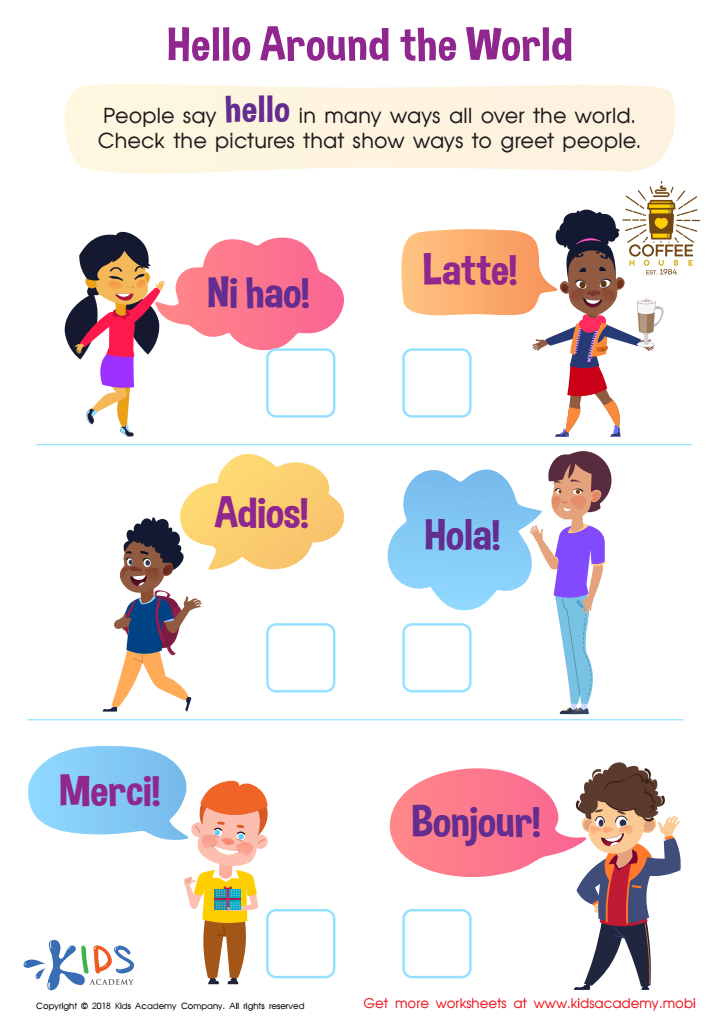
Hello Around the World Worksheet
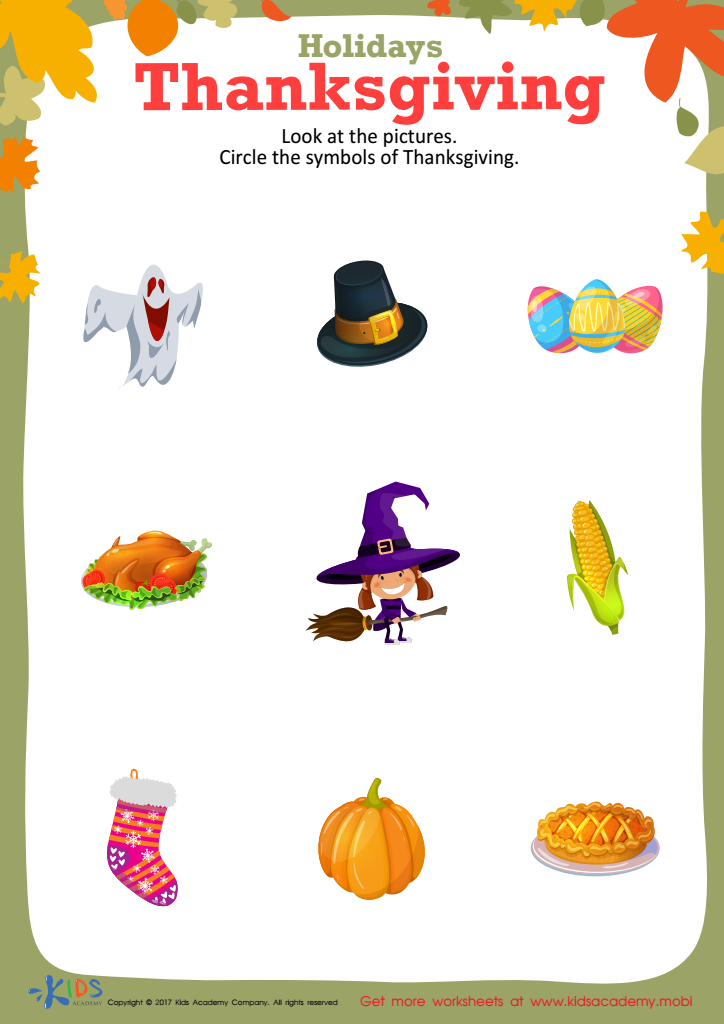
Thanksgiving Holiday Printable
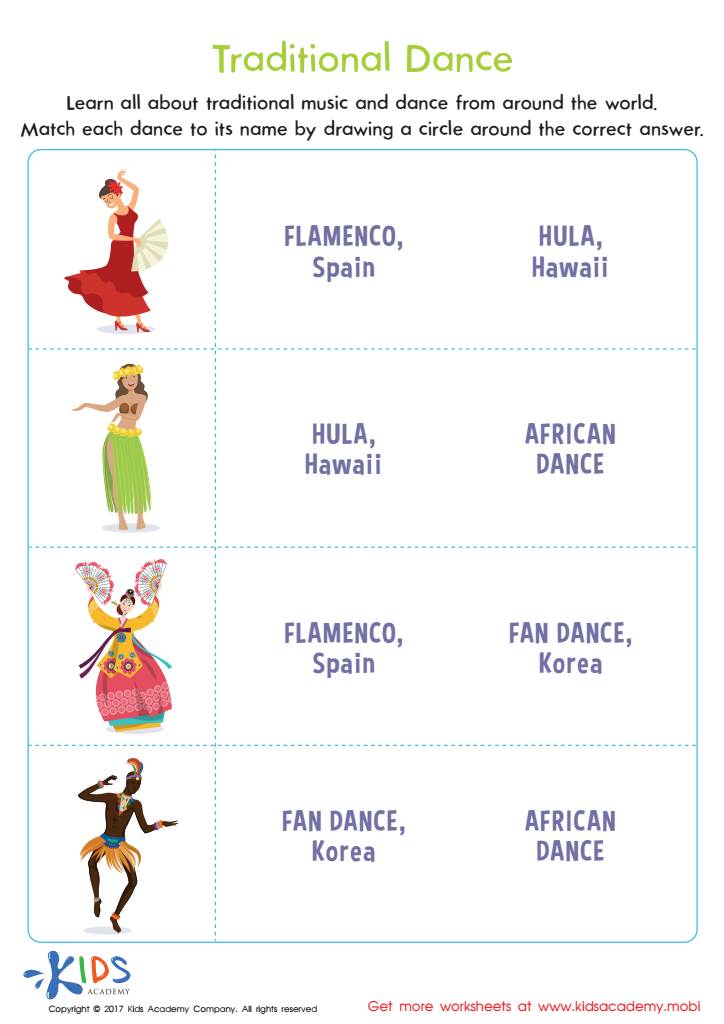
Traditional Dance Printable
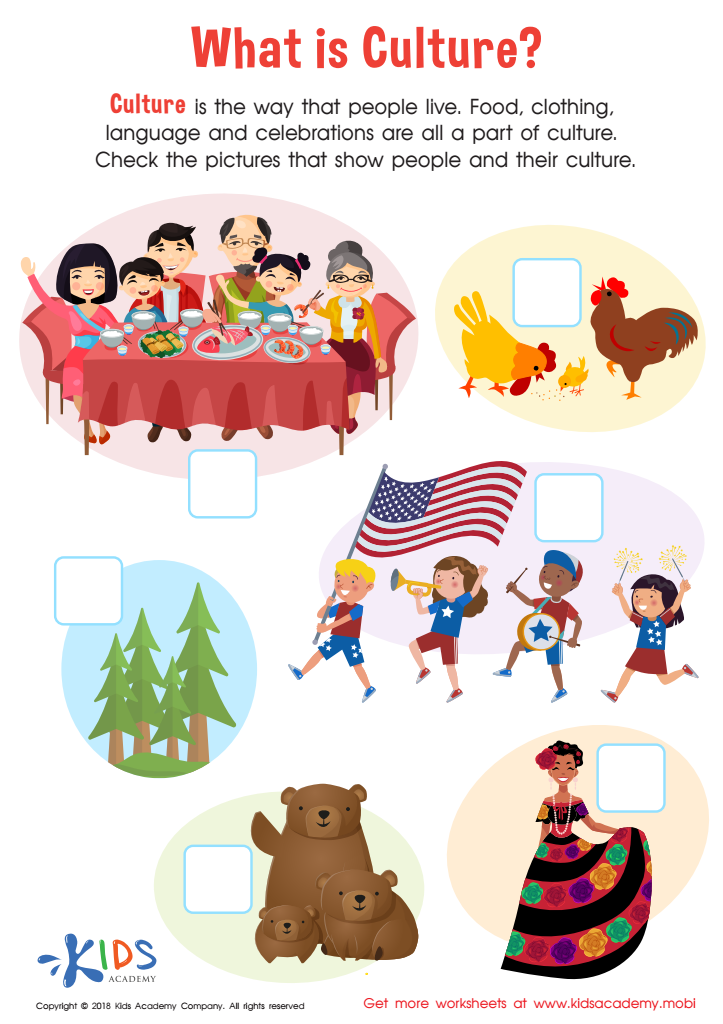
What Is Culture? Worksheet
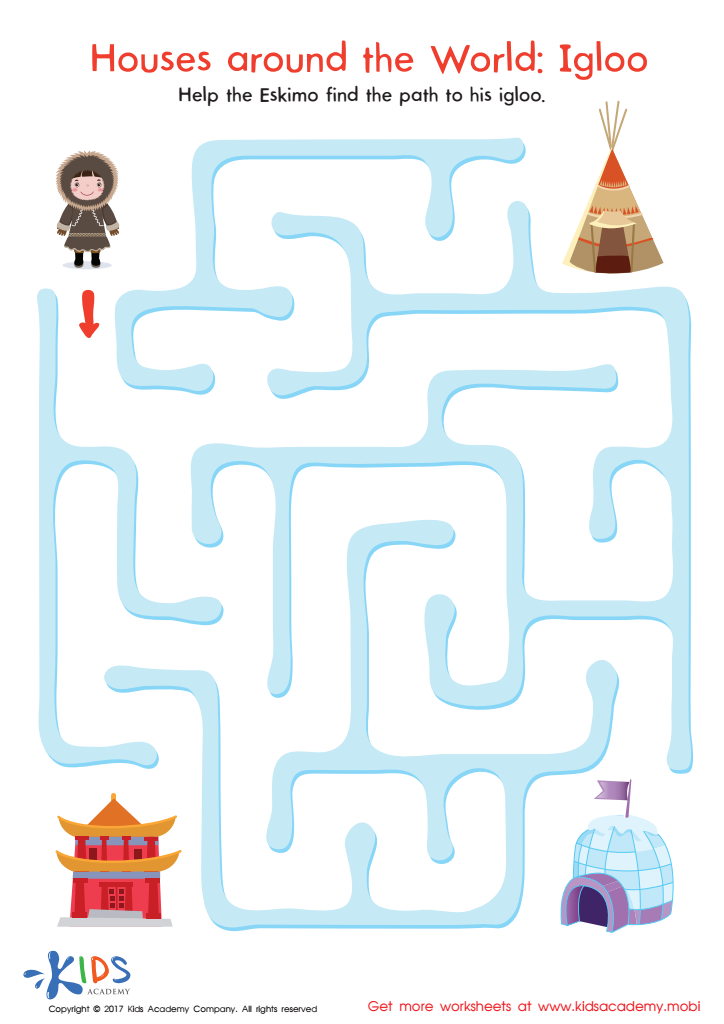
Houses Around the World: Igloo Printable






Cultural awareness in social studies for young children aged 4-6 is essential for fostering an inclusive and empathetic environment. Introducing diverse cultures helps children understand and appreciate the rich tapestry of human experience. At this formative age, children are naturally curious and eager to learn about their world, making it an ideal time to cultivate respect for differences.
Parents and teachers play a crucial role in shaping children's perspectives. By integrating cultural awareness into their learning, adults can help students discover similarities and differences among various cultures, developing their critical thinking skills and expanding their worldview. This foundational knowledge encourages acceptance and reduces prejudice, paving the way for healthier social interactions in school and later in life.
Moreover, culture influences individuals' values, traditions, and behaviors. By teaching young children about diverse practices, they learn the significance of inclusivity, enhancing their social skills and emotional intelligence. This learning experience cultivates a sense of belonging and boosts self-esteem in children from diverse backgrounds.
Ultimately, promoting cultural awareness in early education lays the groundwork for a more compassionate, inclusive society. It empowers children to navigate a diverse world with confidence and understanding, fostering relationships rooted in respect and empathy.