Matching skills Normal Social Studies Worksheets for Ages 4-6
3 filtered results
Difficulty Level
Grade
Age
-
From - To
Subject
Activity
Standards
Our "Matching Skills Normal Social Studies Worksheets for Ages 4-6" are designed to engage young learners while enhancing their cognitive development. These meticulously crafted worksheets help children improve their matching skills by connecting related social studies concepts such as community helpers, daily routines, and cultural landmarks. Ideal for ages 4-6, these fun and educational activities promote critical thinking, attention to detail, and reinforce foundational knowledge. Perfect for early grade classrooms or at-home learning, our worksheets make social studies exciting and help young students build the skills they need for future academic success. Download now to make learning a playful adventure!
Favorites
With answer key
Interactive
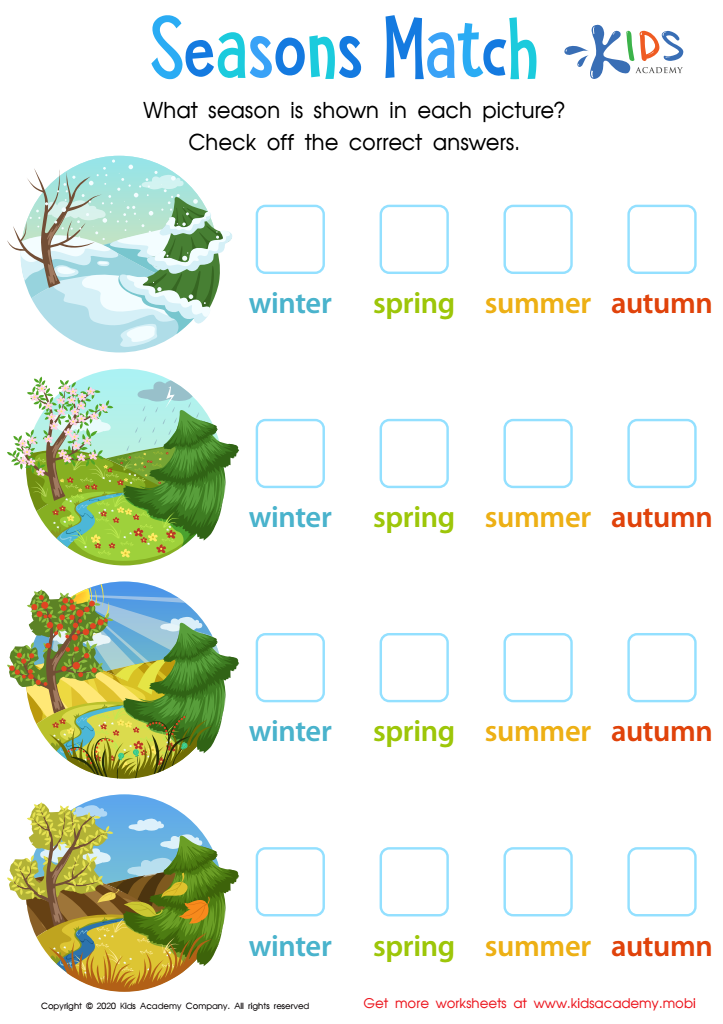
Seasons Match Worksheet
Preschoolers should begin learning about seasons and weather early. Most can tell what season it is by upcoming holidays or school activities. Test their knowledge with a printable PDF worksheet. It asks them to match each image with its corresponding season!
Seasons Match Worksheet
Worksheet
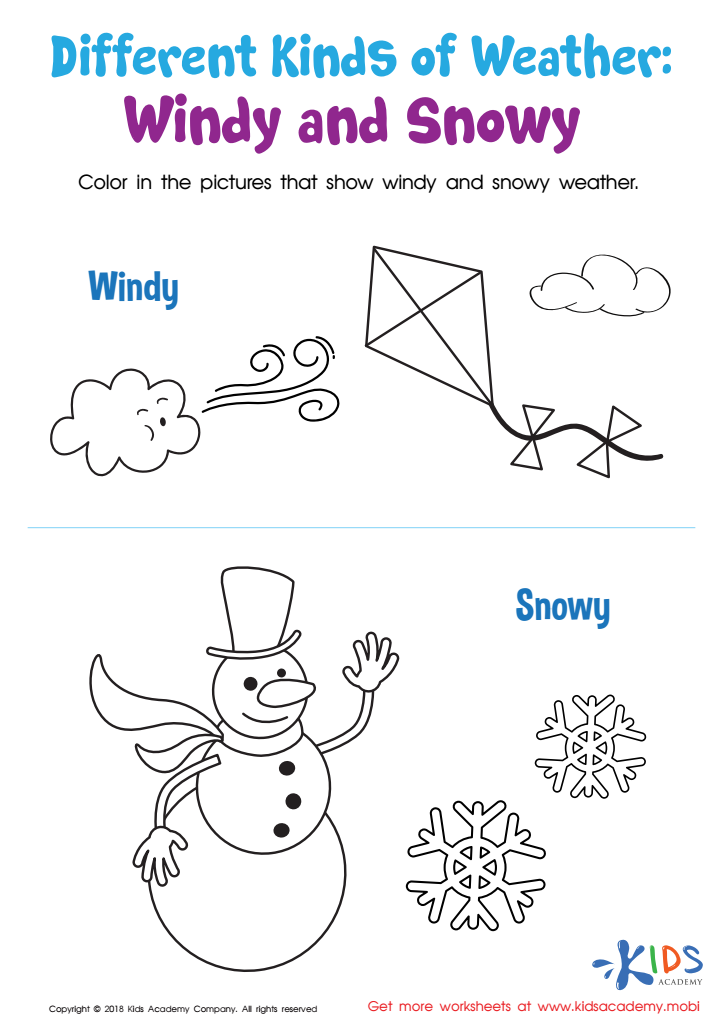
Different Kinds of Weather: Windy and Snowy Worksheet
Invite your little learner to practice their fine motor skills and learn about nature with this fun and charming PDF worksheet! Reinforce weather patterns and examine their environment as they color, giving them a foundation for understanding how weather affects them. No matter the weather, your learner will have a blast!
Download (PDF)
 Assign to My Students
Assign to My Students
Different Kinds of Weather: Windy and Snowy Worksheet
Worksheet
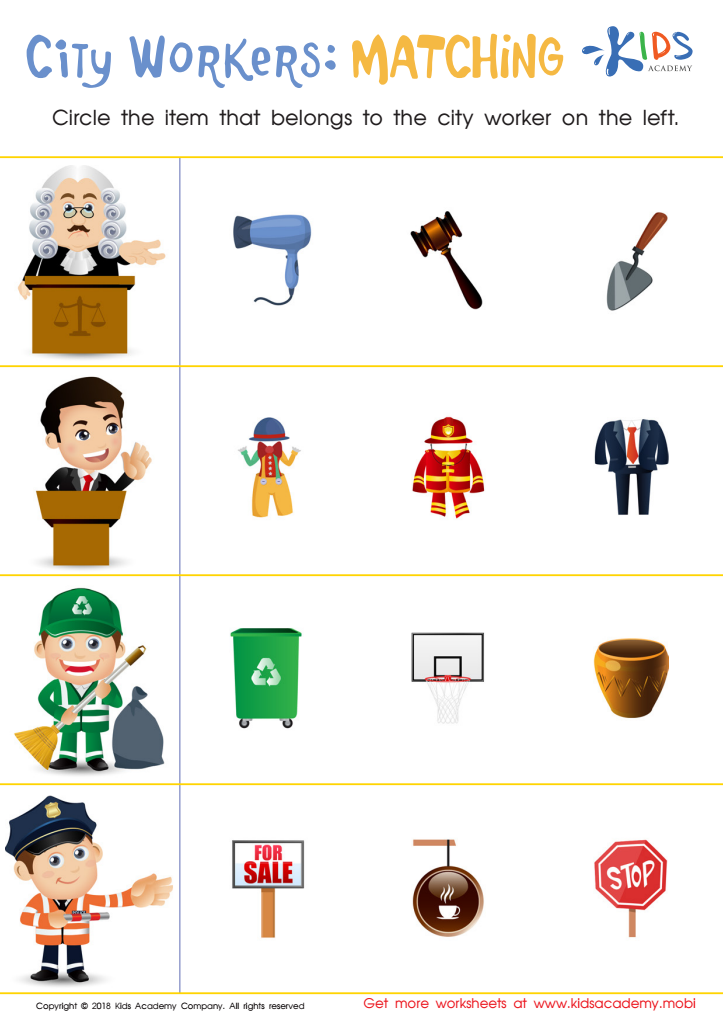
City Workers: Matching Worksheet
Examine the worksheet with your kid. Identify the individuals on the left and their jobs. Have your child circle the correct items on the right that pertain to the city workers. Help your child learn about city workers with this activity.
City Workers: Matching Worksheet
Worksheet
Join Kids Academy for Free
Who is primarily going to use this learning content?








Matching skills are crucial for young children, aged 4-6, as they form the foundation for cognitive development, especially in subjects like social studies. Encouraging children to match objects, colors, shapes, or patterns enhances their attention to detail and improves their critical thinking abilities. For example, when children match pictures of community helpers to their roles (like a firefighter with a firetruck), they begin to understand societal functions and roles, establishing a basic but significant preliminary understanding of how society operates.
Further, matching activities in social studies can spark curiosity about the world and the people in it. They help children understand similarities and differences, promoting early cultural awareness and social development. This is particularly important in a globalized world where interactions with diverse cultures and perspectives are commonplace.
Additionally, engaging in matching activities aids in developing fine motor skills and hand-eye coordination, vital for young learners who are still mastering physical movements. These skills are transferable and set the stage for more complex learning tasks in later academic pursuits.
Teachers and parents nurturing matching skills in social studies ensure that children are not just memorizing facts but developing a deeper understanding of concepts and relationships, making learning both meaningful and comprehensive at a critical developmental stage.