Capitalization rules Normal Writing Worksheets for Ages 4-6
3 filtered results
-
From - To
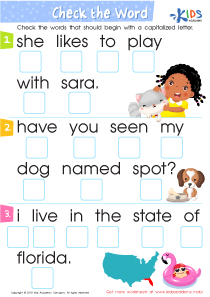
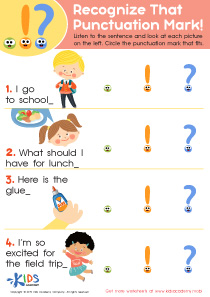
Unlock your child's writing potential with our “Capitalization Rules Normal Writing Worksheets” designed specifically for ages 4-6! These engaging worksheets introduce young learners to essential capitalization skills through fun and interactive activities. Children will explore the basics of starting sentences with capital letters, proper nouns, and the importance of capitalizing days and months. Each worksheet is crafted to make learning enjoyable, enhancing your child’s confidence in their writing ability. Perfect for at-home practice or classroom use, these resources promote creativity and build foundational skills, setting the stage for future literacy success. Start encouraging proper writing mechanics today!
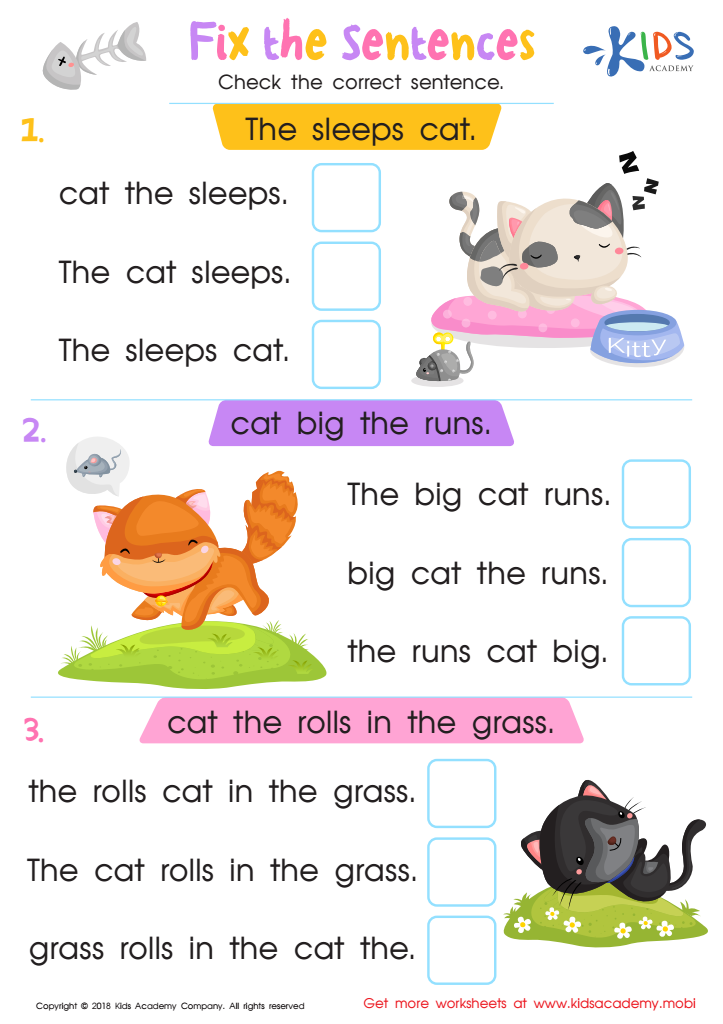
Fix the Sentences Worksheet
 Assign to My Students
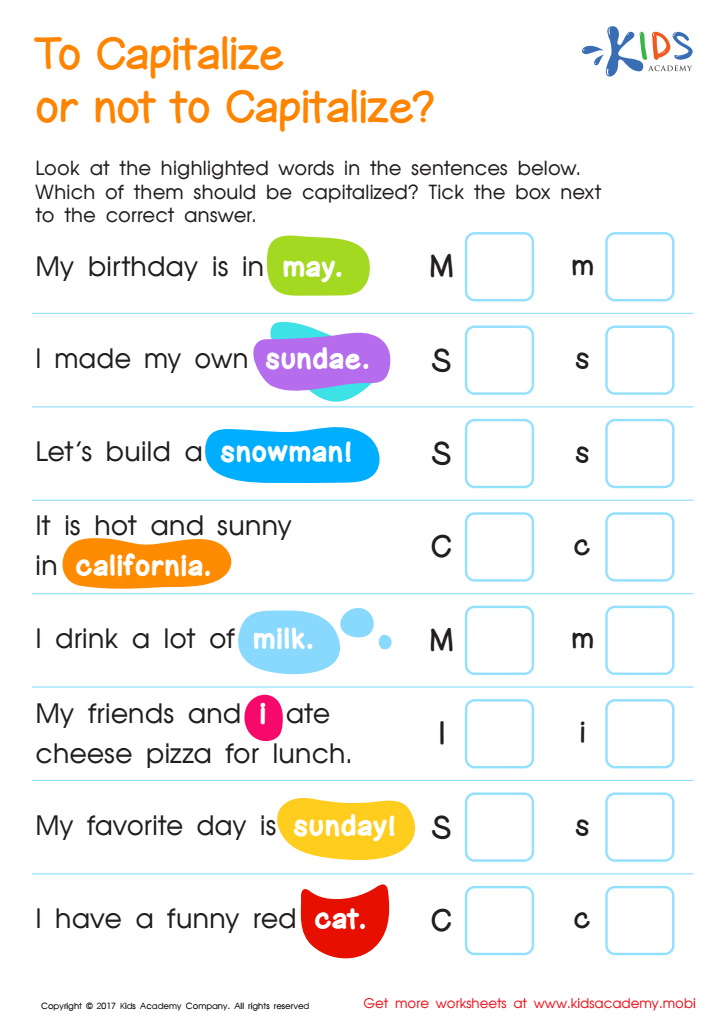
Capitalization: To Capitalize or Not? Printable
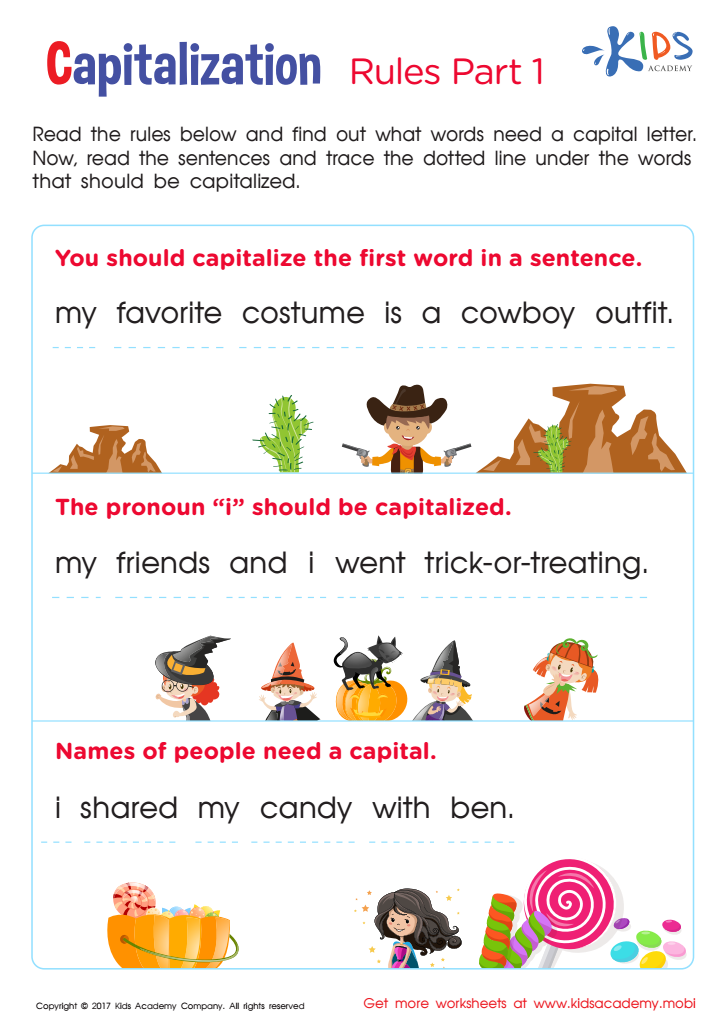
Capitalization Rules: Part 1 Worksheet







Capitalization rules are essential for children aged 4-6 as they form the foundation of effective writing and communication skills. Understanding when to use capital letters helps young learners convey clear messages and enhances their reading comprehension. It introduces them to language structure, meaning they will start to recognize the importance of beginning sentences with a capital letter, as well as the significance of proper nouns like names and places.
For teachers and parents, grasping capitalization rules aids in nurturing children's writing abilities, as they develop the sense of writing as a structured process. This understanding eventually fosters a sense of pride and accomplishment as children express their ideas more clearly.
Additionally, knowledge of capitalization supports phonics and decoding skills. When children see familiar patterns—like capital letters at the start of sentences—they become more adept at recognizing sentences and understanding their flow.
Encouraging correct capitalization from an early age not only builds foundational literacy skills but also empowers students to communicate effectively. By reinforcing these lessons, teachers and parents lay the groundwork for children to grow into confident, proficient readers and writers. Through consistent practice, children will internalize these rules, ultimately fostering a lifelong love of learning and literacy.