Vocabulary development Normal Writing Worksheets for Ages 4-6
4 filtered results
-
From - To
Enhance your child's vocabulary with our Vocabulary Development Normal Writing Worksheets for ages 4-6! Specifically designed to boost early learners' word skills, these worksheets ensure a solid foundation in language development by introducing an array of fun and educational activities. Children will engage in word tracing, matching, and sentence creation, fostering both comprehension and writing confidence. Perfect for classroom use or supplemental home practice, these worksheets are a valuable tool for parents and educators alike. Watch as your little ones build essential vocabulary, enhance reading capabilities, and develop proficient writing skills, all while having fun! Explore our collection today!
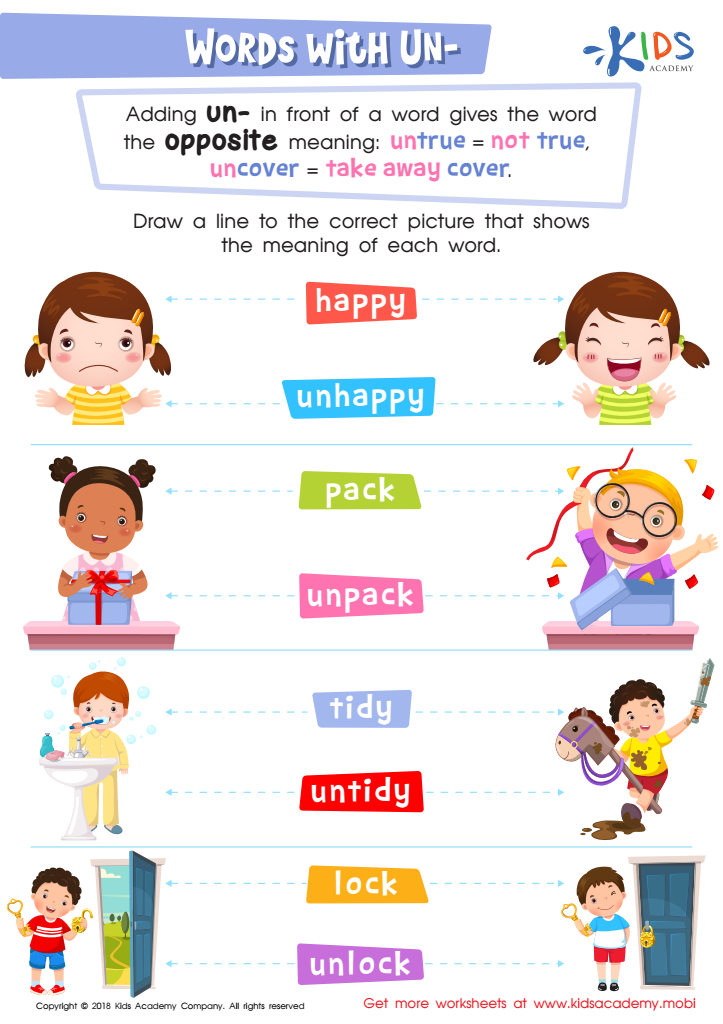
Words with Un– Worksheet
 Assign to My Students
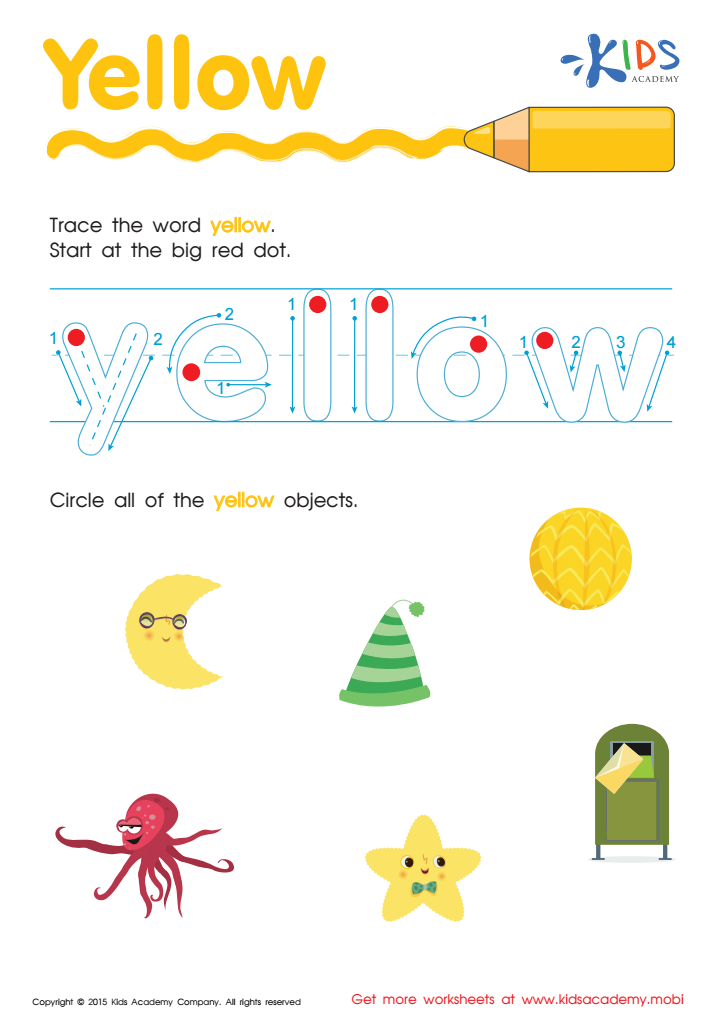
Yellow Tracing Color Words Worksheet
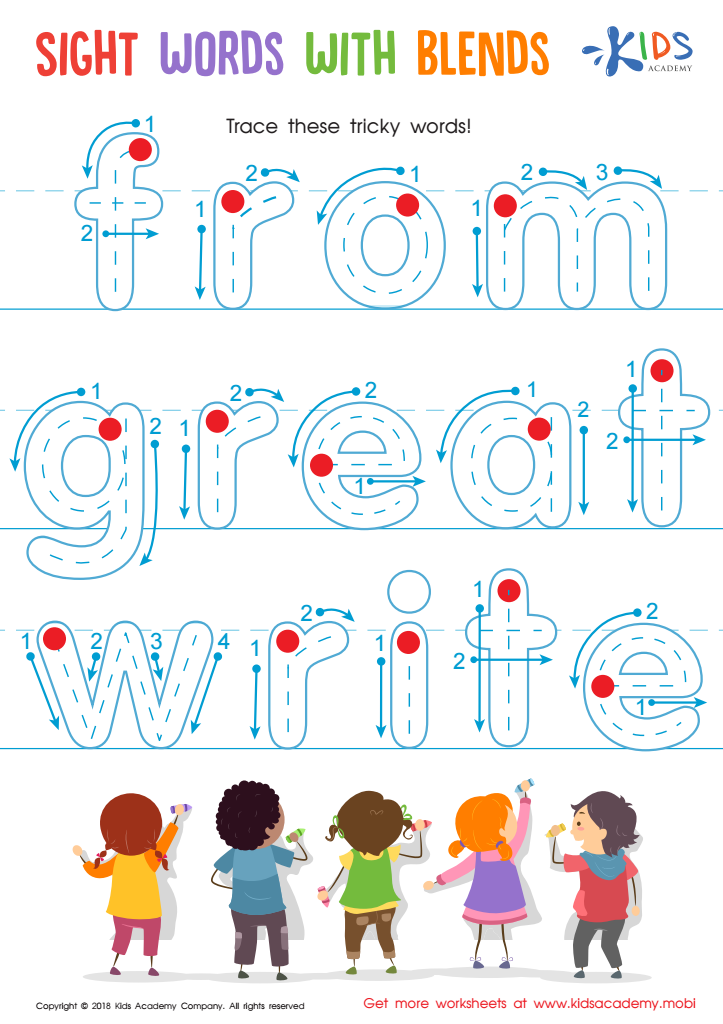
Sight Words with Blends Worksheet
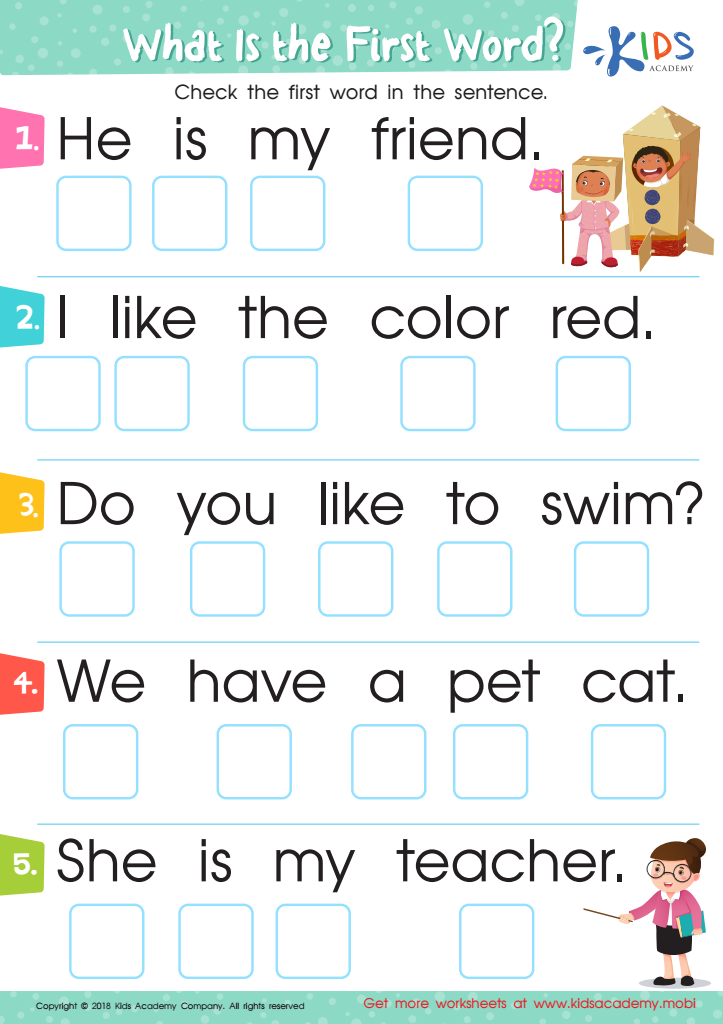
What is the First Word? Worksheet




.jpg)


Vocabulary development in children ages 4-6 is crucial for several reasons. First, it serves as the foundation for effective communication. When children have a broad vocabulary, they can express their thoughts, feelings, and needs more clearly and accurately, reducing frustrations stemming from misunderstandings.
Second, a rich vocabulary is closely linked to academic success. At this age, children are beginning to learn how to read, and a well-developed vocabulary helps them understand and decode new words more efficiently. Studies have shown that children with a larger vocabulary find it easier to comprehend what they read, which fosters a love for reading and learning in general.
Third, vocabulary development enhances cognitive skills. Learning new words strengthens memory, improves attention span, and encourages critical thinking. When children are exposed to diverse vocabulary, they become more adept at categorizing information, solving problems, and making connections between different concepts.
Additionally, social skills benefit greatly from a robust vocabulary. Children who can articulate their ideas effectively are better able to build relationships, collaborate with peers, and navigate social interactions with confidence.
In summary, parents and teachers should prioritize vocabulary development to support children's overall growth in communication, academic achievements, cognitive skills, and social interactions. Investing time in building a child's vocabulary offers lifelong benefits, setting the stage for future success.