Phonics development Normal Alphabet Worksheets for Ages 4-7
3 filtered results
-
From - To
Welcome to our Phonics Development Normal Alphabet Worksheets designed specifically for children ages 4-7! These engaging worksheets aim to enhance phonics skills, helping young learners connect letters with their corresponding sounds. With vibrant visuals and fun activities, children will practice letter recognition, sound identification, and basic word formation. Our easy-to-follow worksheets cater to various learning styles, making phonics acquisition enjoyable and effective. Ideal for both home and classroom use, these resources empower educators and parents to foster early literacy. Explore our collection today and support your child’s journey towards confident reading and writing!
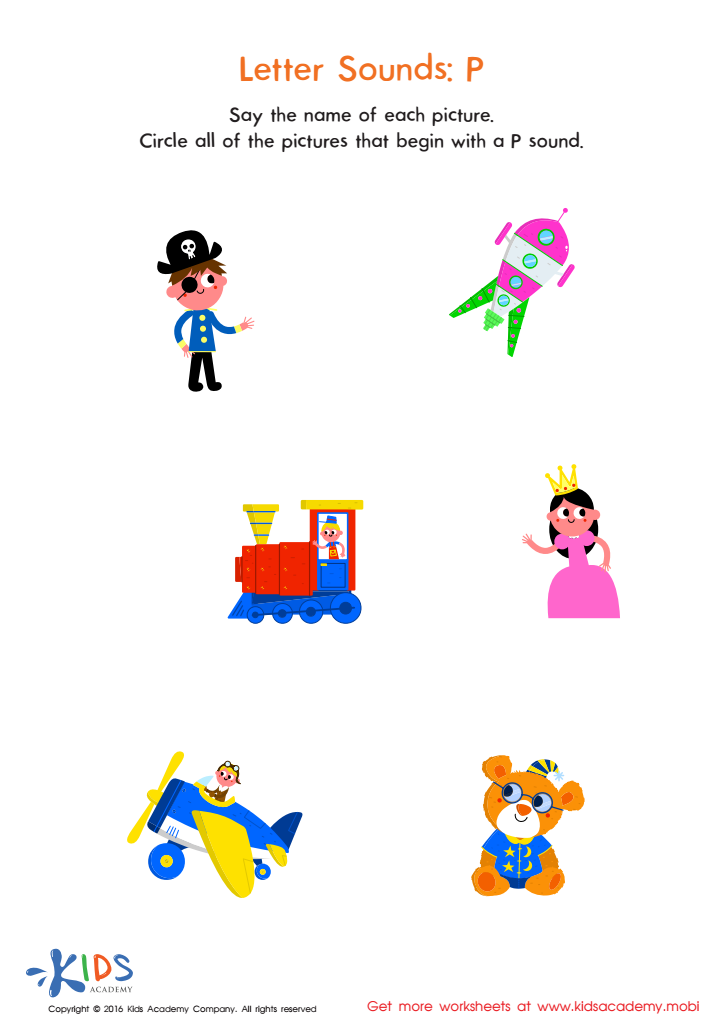
Letter P Sound Worksheet
 Assign to My Students
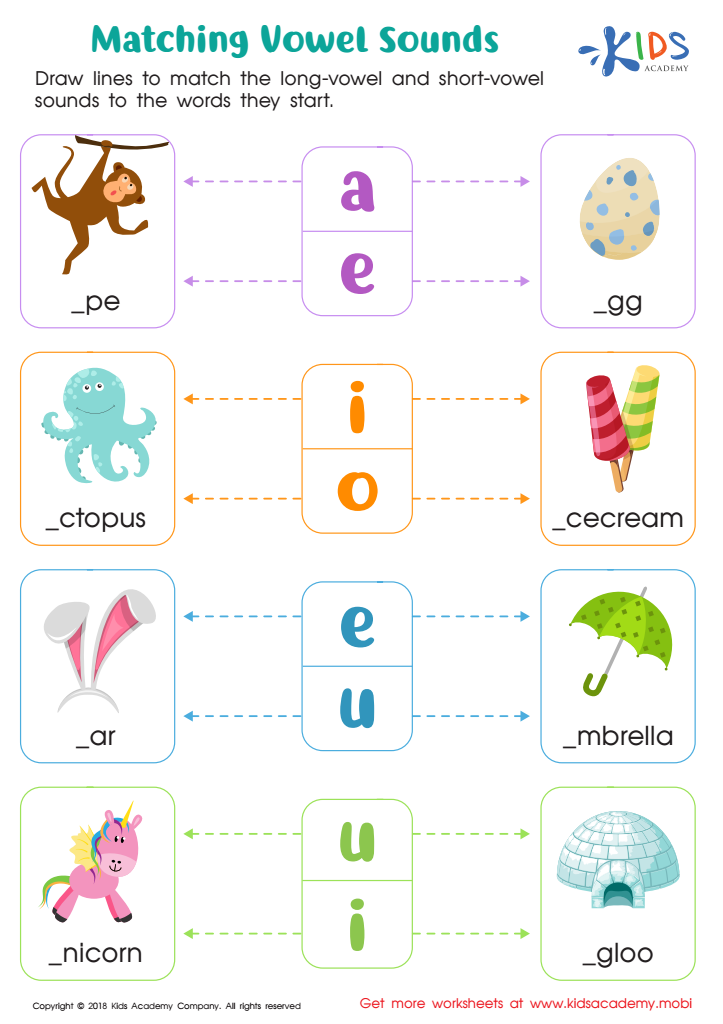
Matching Vowel Sounds Worksheet
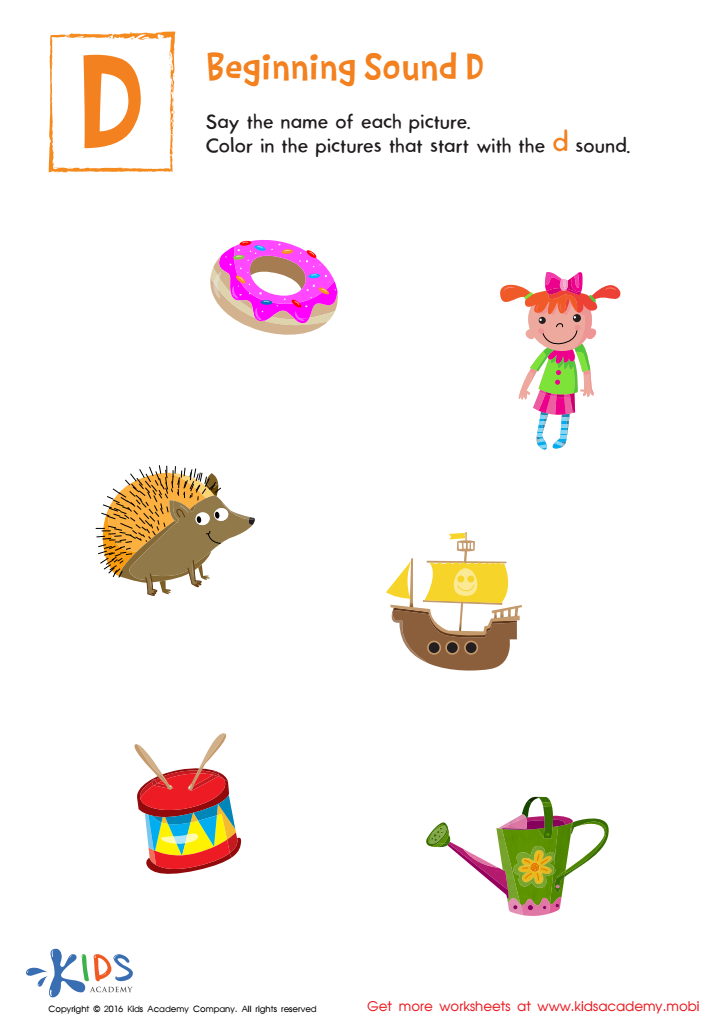
Beginning Sound D Worksheet







Phonics development is crucial for children aged 4-7 as it lays the foundation for successful reading and writing skills. Understanding the relationship between letters and sounds empowers young learners to decode unfamiliar words, boosting their confidence and comprehension. When children grasp phonics, they can sound out words independently, leading to enhanced fluency and a love for reading.
Moreover, early phonics instruction fosters overall language development. It aids in vocabulary acquisition and improves spelling abilities. Children who are proficient in phonics can express their thoughts more clearly, both orally and in writing. This skill not only supports literacy but also facilitates communication, critical thinking, and creative expression.
Parents and teachers play a pivotal role in this phase. Engaging in phonics activities, such as reading together, playing sound games, or encouraging writing, creates a rich learning environment that nurtures children's literacy. When adults prioritize phonics, they are investing in their child’s educational journey and opening doors to future academic successes.
In essence, caring about phonics development is about equipping children with essential tools for lifelong learning, ensuring they don't just learn to read, but also gravitate towards reading as a delightful and enriching experience.







