Sound differentiation Normal Alphabet Worksheets for Ages 4-7
3 filtered results
-
From - To
Enhance your child's phonemic awareness with our "Sound Differentiation Normal Alphabet Worksheets" designed for ages 4-7! These engaging and interactive worksheets provide young learners with a fun way to practice recognizing and distinguishing sounds associated with each letter of the alphabet. Ideal for early educators and parents alike, our resources support foundational literacy skills, helping kids build confidence in their reading abilities. With colorful illustrations and playful activities, these worksheets capture children's attention while reinforcing essential sound differentiation skills. Start laying the groundwork for successful reading and writing by exploring our collection today! Perfect for home or classroom use!
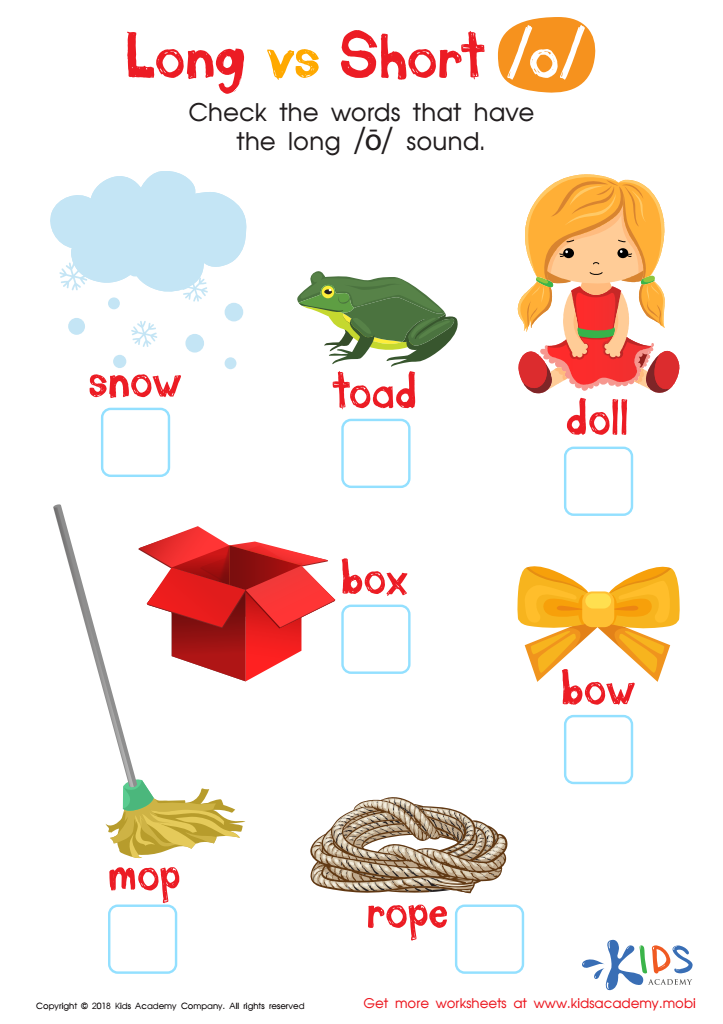
Long vs Short O Reading Worksheet
 Assign to My Students
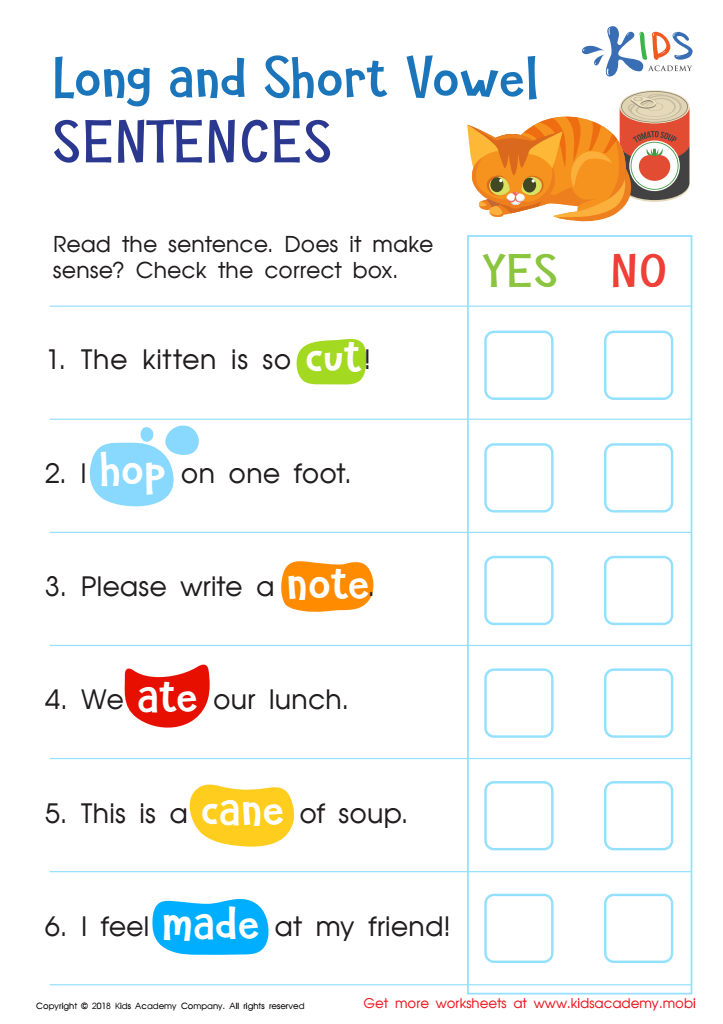
Long and Short Vowel Sentences: Assessment Worksheet
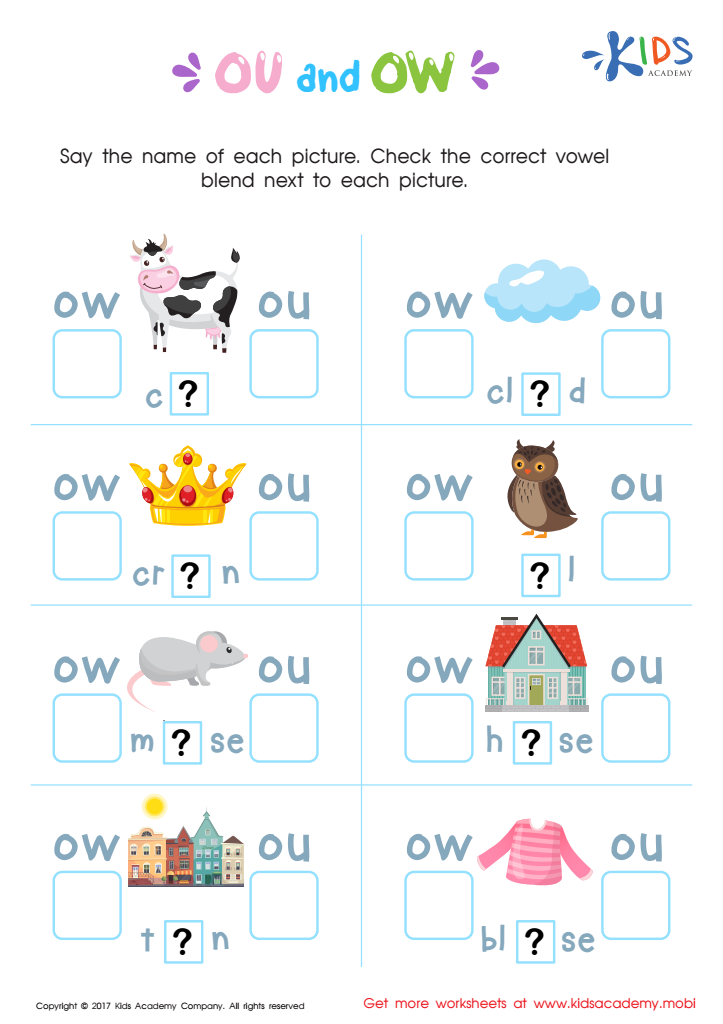
OU and OW Words Worksheet






Sound differentiation in normal alphabet for children aged 4-7 is crucial for early literacy development. During these formative years, children are learning to recognize and produce sounds, which forms the foundation for reading and writing. Understanding that letters represent different sounds helps them decode words, facilitating smoother reading progress.
Parents and teachers should prioritize sound differentiation, as it enhances phonemic awareness—the ability to hear, identify, and manipulate sounds in spoken words. This skill is essential for understanding that different letters or combinations can produce the same sound, and vice versa. For instance, knowing that "cat," "kite," and "candy" all start with the /k/ sound aids children in associating sounds with their written forms, bolstering their spelling and vocabulary.
Additionally, developing sound differentiation supports children's communication skills and boosts their confidence. Engaging in fun activities that highlight these sounds can create a love for language, ensuring that children feel motivated to explore reading and writing further. Overall, investing effort in sound differentiation lays a strong literary groundwork, enabling children to thrive academically and socially as they progress in their education.







