Word identification Normal Alphabet Worksheets for Ages 4-7
3 filtered results
-
From - To
Enhance your child's reading skills with our engaging Word Identification Normal Alphabet Worksheets, designed specifically for ages 4-7. These worksheets provide a fun and interactive way for young learners to recognize and identify words, fostering essential literacy development. Each worksheet includes bright, eye-catching illustrations and age-appropriate activities that stimulate interest and encourage practice. With a focus on familiar vocabulary and phonetic elements, children will build confidence in their reading abilities. Perfect for home or classroom use, these printable worksheets promote independent learning and can guide your child on their journey to becoming a proficient reader. Start their adventure in literacy today!
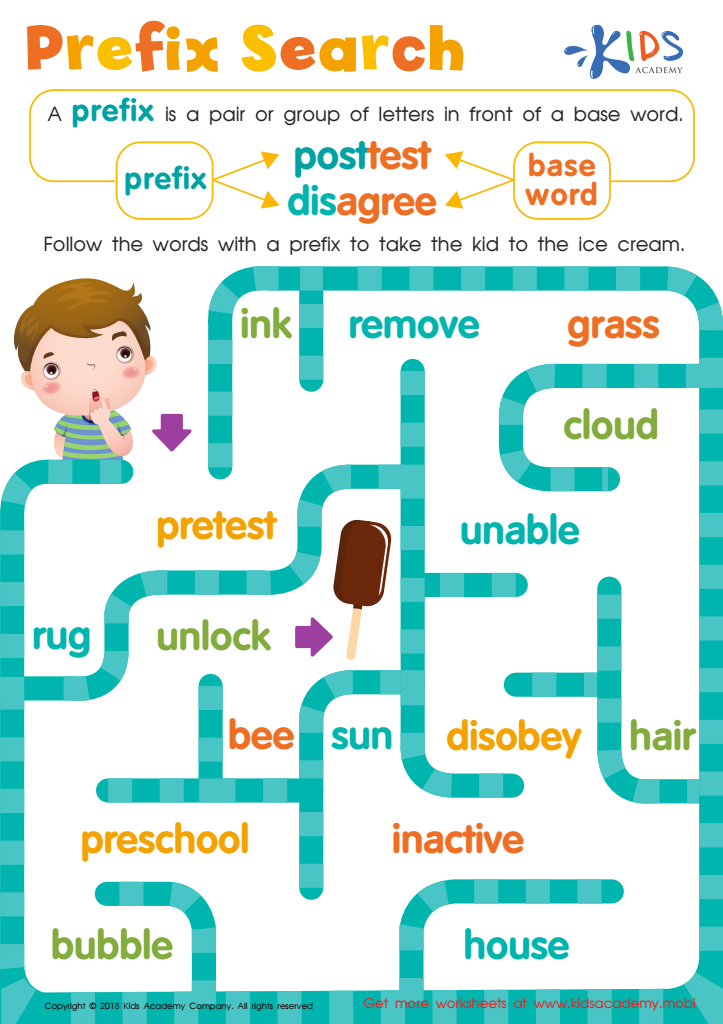
Reading: Prefix Search Worksheet
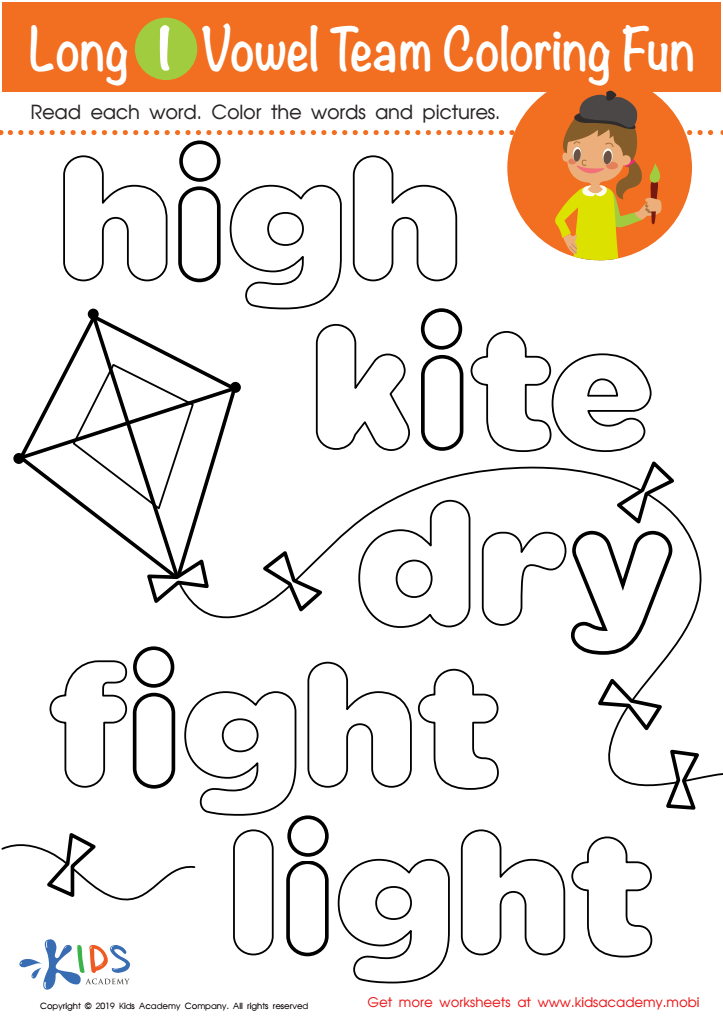
Long I Vowel Team Coloring Worksheet
 Assign to My Students
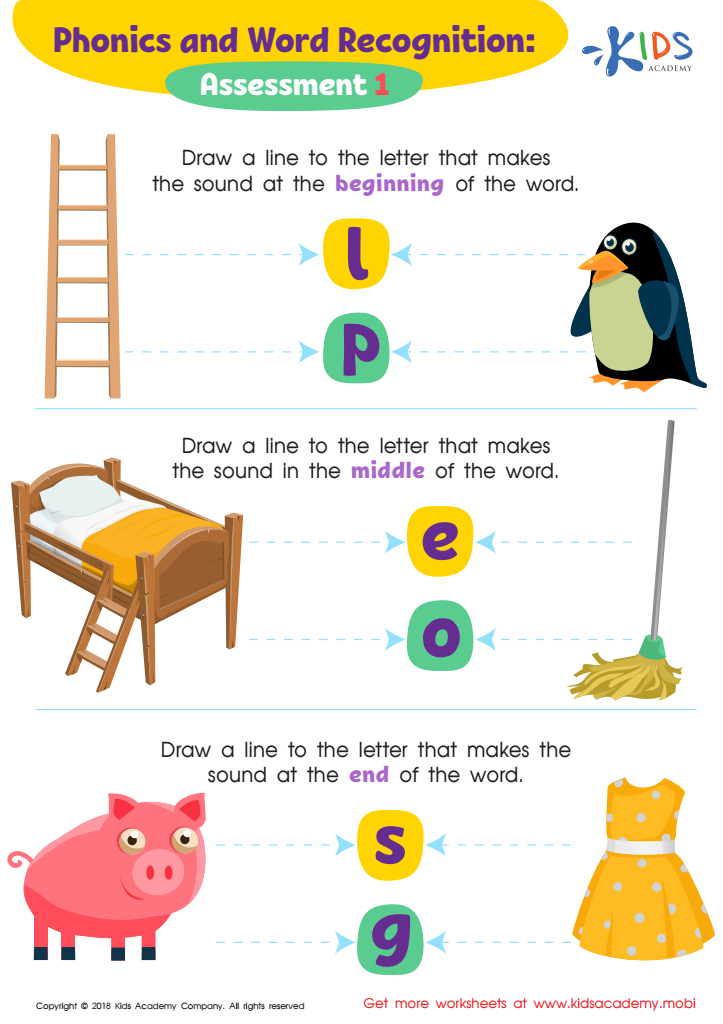
Phonics and Word Recognition: Assessment 1 ELA Worksheet




.jpg)



Word identification and understanding the normal alphabet for children aged 4-7 is crucial for several reasons. At this developmental stage, children begin to master foundational literacy skills, which are essential for their academic future. During these formative years, children learn to recognize letters and sounds, laying the groundwork for reading and writing. Understanding the normal alphabet aids in phonemic awareness, allowing children to decode and blend sounds, thereby enhancing their reading abilities.
Furthermore, effective word identification supports vocabulary development. As children engage with texts and practice reading, they encounter new words, which they can expand upon through meaningful activities, thus enriching their language skills. This literacy foundation also fosters cognitive development, as children learn to associate sounds with symbols and create meaning from text.
In addition to academic benefits, strong literacy skills contribute to increased confidence and motivation in young learners. When children can identify words and understand the alphabet proficiently, they are more likely to participate actively in classroom discussions and engage in reading activities. By prioritizing word identification, parents and teachers play a pivotal role in nurturing a child’s love for reading and lifelong learning. Ultimately, supporting this early literacy development sets the stage for success throughout their educational journey.







